 Save
Save There's a Tuesday evening I keep coming back to when my neighbor stopped by with a bottle of wine and complained about having nothing to eat, so I started caramelizing onions out of sheer stubbornness. Thirty minutes later, while those golden strands were still crackling in the pan, I threw together a chili oil that smelled like someone had bottled summer itself. We ate that pasta standing at the kitchen counter, and she asked for the recipe before finishing her first bite. That's when I realized this dish wasn't just about flavor—it was about how simple ingredients transform into something people actually crave.
I made this for my sister during her first week in a new apartment when her kitchen was still mostly boxes. She had pasta, and I raided her cupboards for olive oil and garlic—that's all you really need. By the time the onions were caramelized, her apartment smelled like a proper home, and she stopped worrying about the move for a while. Food does that sometimes.
Ingredients
- Pasta (12 oz): Spaghetti, penne, or linguine all work beautifully—choose whatever you have or love, but stick to a shape that catches sauce well.
- Yellow onion (1 large): The star of this show, and yellow onions caramelize into the deepest, sweetest version of themselves if you give them time and patience.
- Olive oil (2 tablespoons, plus 3 tablespoons extra virgin): Don't skip on the extra virgin for the chili oil—that's where you taste every drop.
- Garlic (3 cloves, plus 1 sliced clove): Fresh garlic is non-negotiable here, especially since you'll be infusing it into warm oil where every nuance matters.
- Red chili flakes (1 tablespoon): This is your heat control—start here and adjust based on what you're in the mood for that night.
- Smoked paprika (1 teaspoon): Regular paprika works, but smoked adds a subtle depth that makes people ask what your secret is.
- Soy sauce (1 teaspoon): A small amount that adds umami without making anyone guess there's soy in here.
- Parmesan cheese: Freshly grated makes all the difference—pre-grated has additives that keep it from melting quite right.
- Fresh basil or parsley: Finish with whatever herb you have on hand; the freshness cuts through the richness perfectly.
- Salt and black pepper: These aren't afterthoughts—they're what makes each layer taste intentional.
Tired of Takeout? 🥡
Get 10 meals you can make faster than delivery arrives. Seriously.
One email. No spam. Unsubscribe anytime.
Instructions
- Start your onions early:
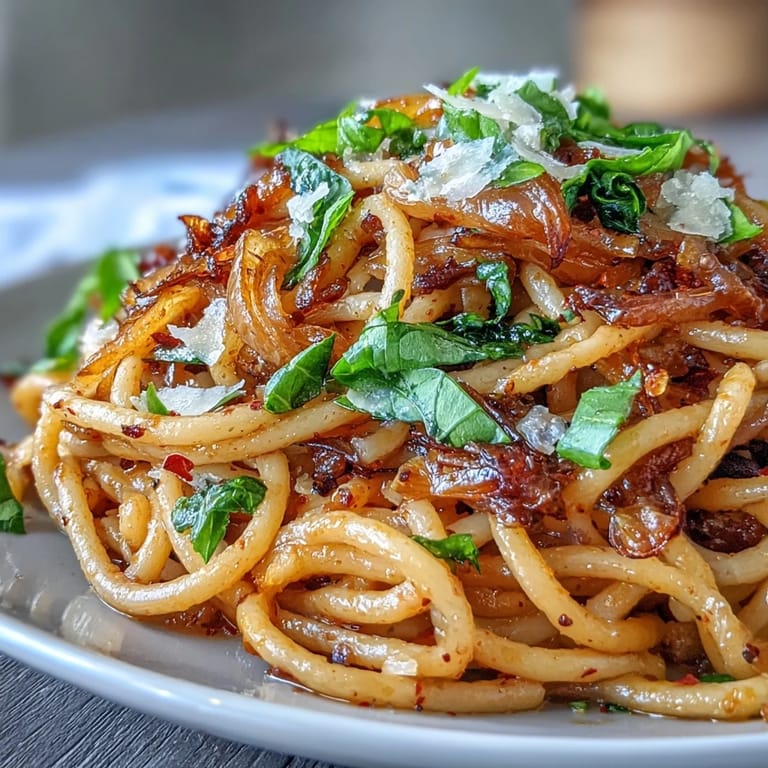
- Heat 2 tablespoons olive oil in a large skillet over medium heat, then add your thinly sliced onions with a pinch of salt. This is the patient part—stir occasionally for 25 to 30 minutes, letting them turn from pale and translucent into deep golden brown. The smell will shift about halfway through, becoming sweet and almost caramel-like, which is your signal you're on the right track.
- Finish the onions with garlic:
- In the last 5 minutes, add your minced garlic and stir constantly so it mellows and fragrant without burning into bitter flakes. Taste and adjust the salt and pepper until it tastes like comfort itself, then set the whole skillet aside.
- Build your chili oil:
- In a small saucepan over medium heat, warm 3 tablespoons of extra virgin olive oil, then add your sliced garlic clove and let it sizzle for a minute or two until fragrant. Add the chili flakes and smoked paprika, stirring for 2 to 3 minutes so the spices bloom and release their aromatics into the oil.
- Complete the chili oil base:
- Stir in 1 teaspoon of soy sauce, let it simmer for 2 minutes, then remove from heat—this is where it stops cooking and becomes the golden, spiced oil that will tie everything together. Don't walk away during this part; you want to catch it at the moment it smells like pure flavor.
- Cook your pasta properly:
- Bring a large pot of salted water to a rolling boil and cook your pasta according to package directions until it's al dente, which means tender but still with a slight bite. Right before you drain it, scoop out about 1 cup of that starchy pasta water—this liquid gold is what brings everything together.
- Bring it all together:
- Toss the hot pasta directly into the skillet with the caramelized onions, then drizzle the chili oil over top and toss everything with tongs or a pasta spoon until coated. Add pasta water a little at a time if the whole thing seems dry; you're looking for it to be silky, not soupy.
- Finish and serve:
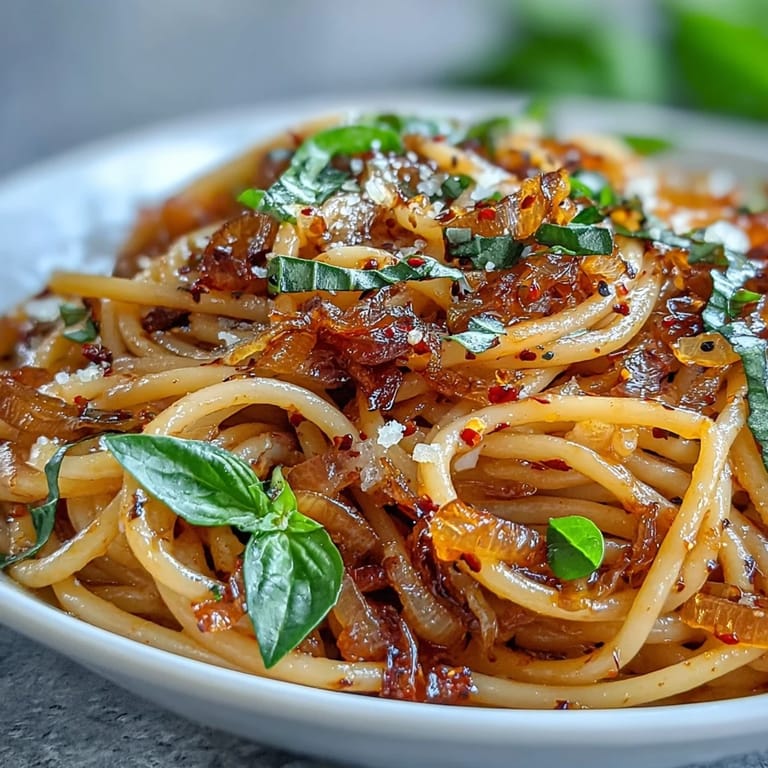
- Top each bowl with generous grated Parmesan, a handful of chopped basil or parsley, and extra chili flakes if you're feeling bold. Serve immediately while it's hot and the cheese is still melting into the pasta.
 Save
Save My roommate in grad school made a version of this on a night when we were all stressed about exams, and somehow twirling that pasta felt like the first normal thing any of us had done in weeks. That's when I understood that dishes like this aren't just recipes—they're small acts of care that remind you life is still happening even when everything feels overwhelming.
The Caramelization Secret
Caramelized onions aren't complicated, but they do require you to show up for them. I used to think the process was boring until I realized I could multitask—prep ingredients, pour a drink, or have a conversation while stirring every few minutes. The onions will go from translucent to pale gold to a deep mahogany color, and each stage smells different, which is your cue that chemistry is happening. Low and slow always wins.
Why Homemade Chili Oil Matters
Store-bought chili oil has its place, but when you bloom those flakes and paprika in warm olive oil yourself, you're releasing flavors that bottled versions can't compete with. The moment the garlic hits the oil and it starts to sizzle, you know something good is about to happen. This is the dish's backbone, so treat it with respect and your whole meal will taste intentional.
Making This Dish Your Own
This recipe is a framework, not a law—I've made it with red onions when I was out of yellow, with pine nuts scattered on top, with red pepper flakes if chili flakes were missing. The beautiful part is that as long as you nail the caramelized onions and the chili oil, everything else can flex based on what's in your pantry and what you're craving that night.
- If you're vegetarian or vegan, use a plant-based Parmesan alternative or skip the cheese entirely and let the chili oil shine.
- Add crispy breadcrumbs on top for texture, or a squeeze of fresh lemon juice if you want brightness cutting through the richness.
- Pair this with a crisp white wine, or just eat it standing up with good company and call it dinner.
 Save
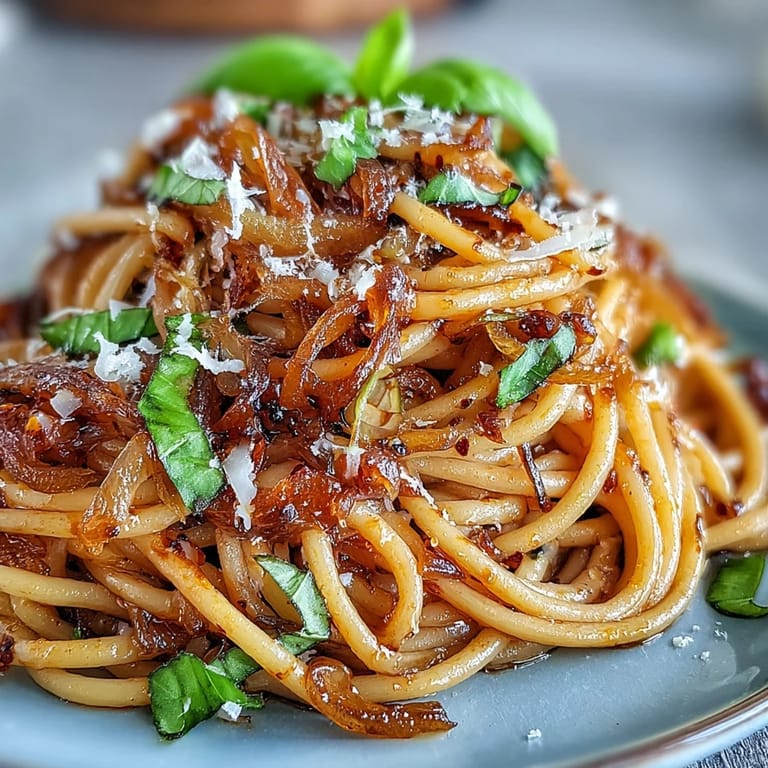
Save This pasta tastes like the kind of cooking that doesn't need to be complicated to be memorable. It's the sort of dish that turns an ordinary evening into something you'll want to repeat.
Kitchen Questions
- → How can I caramelize onions evenly?
Cook onions slowly over medium heat with occasional stirring until they turn golden brown and soft, ensuring deep caramelization without burning.
- → What pasta types work best with this dish?
Spaghetti, penne, or linguine work well, as they hold the chili oil and onion mixture nicely without overpowering the flavors.
- → How do I adjust the spiciness of the chili oil?
Modify the amount of red chili flakes to suit your heat preference or omit them for a milder flavor.
- → Can I prepare the chili oil in advance?
Yes, the chili oil can be made ahead and stored in an airtight container in the refrigerator for up to a week.
- → What herbs complement this pasta best?
Fresh basil or parsley adds brightness and freshness, balancing the rich onion and chili flavors perfectly.