 Save
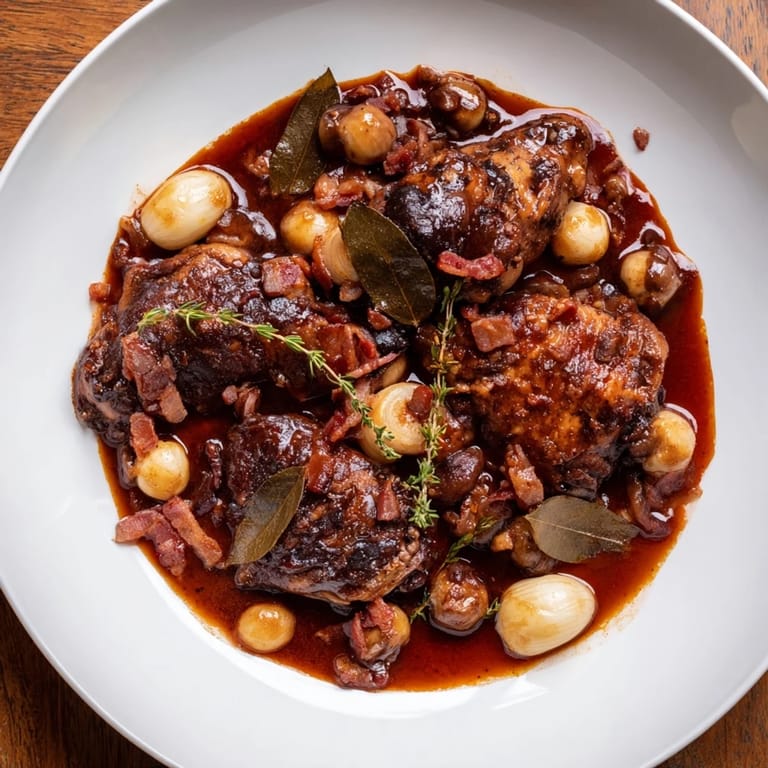
Save The first time I made coq au vin, I was trying to impress someone who actually knew French cuisine. I'd found a dog-eared cookbook at a market stall and read the recipe three times before attempting it, terrified I'd somehow mess up something so storied and French. What struck me most wasn't the complexity—it was how the kitchen filled with this intoxicating perfume of wine, thyme, and caramelized bacon within the first hour. By the time those mushrooms hit the pot, I realized this wasn't a fancy dish trying to be difficult. It was just good food, honestly made.
I made this for a dinner party on a rainy October evening, and what I remember most is my friend leaning against the kitchen counter, eyes closed, just breathing in the steam. She said it smelled like someone's grandmother's kitchen, but fancier. That's when I understood—coq au vin isn't trying to be restaurant food. It's the kind of dish that brings people together because it tastes like care.
Ingredients
- 1 whole chicken (about 1.5 kg), cut into 8 pieces: Thighs and drumsticks stay juicier than breasts, but mix is fine—just keep pieces roughly the same size so they cook evenly.
- 150 g smoked bacon or pancetta, diced: This is your flavor foundation; don't skip it or substitute with regular bacon if you can help it.
- 200 g pearl onions, peeled: Yes, peeling is tedious, but they caramelize into sweet little gems that make the dish.
- 250 g cremini or button mushrooms, cleaned and quartered: Brown them separately first—they'll taste nutty and won't waterlog the sauce.
- 2 medium carrots, sliced: Cut them thick enough to stay intact through two hours of simmering.
- 2 garlic cloves, minced: Fresh, not jarred—this matters.
- 750 ml dry red wine (e.g., Burgundy or Pinot Noir): Don't use anything you wouldn't drink; cheap wine makes a thin, bitter sauce.
- 250 ml chicken stock: Homemade is best, but good store-bought works.
- 2 tbsp tomato paste: This adds depth without making the dish taste tomatoey.
- 2 tbsp all-purpose flour: It thickens without lumping if you stir it in gently.
- 2 tbsp olive oil, divided: Use just enough to brown, not to fry.
- 2 tbsp unsalted butter: For the mushrooms—it makes them taste like restaurant food.
- 2 bay leaves and 4 sprigs fresh thyme: Dried thyme gets dusty and bitter in long cooking; fresh is worth it.
- Salt and freshly ground black pepper: Season at the end, after the sauce reduces.
Tired of Takeout? 🥡
Get 10 meals you can make faster than delivery arrives. Seriously.
One email. No spam. Unsubscribe anytime.
Instructions
- Dry and season your chicken:
- Pat each piece with paper towels until the skin looks almost chalky. This dries the surface so it browns instead of steams. Season generously—this is your only chance to get salt inside the meat.
- Crisp the bacon:
- In a large Dutch oven over medium heat, cook the bacon until the edges curl and char slightly. Let it rest on a plate; you've just made liquid gold for the rest of the dish.
- Brown the chicken in batches:
- Turn the heat to medium-high and brown the chicken in the bacon fat, skin-side down first. Don't crowd the pot. You're building flavor here, not cooking through—this takes patience.
- Soften the vegetables:
- Toss in the carrots, pearl onions, and garlic. Stir for about five minutes until they smell sweet and the onions start to turn golden at the edges.
- Make a paste with tomato and flour:
- Stir in the tomato paste and flour, coating everything. Cook for exactly one minute—this mellows the flavors and thickens the liquid later.
- Build the braise:
- Return the chicken and bacon, then pour in the wine and stock. Use a wooden spoon to scrape up every brown bit stuck to the bottom. Add the bay leaves and thyme, then bring everything to a gentle simmer.
- Let it cook low and slow:
- Cover the pot and reduce heat to low. After about 90 minutes, the chicken should be almost falling apart. You'll know it's done when a fork slides through the thigh meat without resistance.
- Brown the mushrooms separately:
- While the chicken braises, heat butter and a bit of oil in a skillet over medium-high heat. Quarter the mushrooms and brown them until golden on all sides—they should smell earthy and a little nutty. This keeps them from turning to mush in the sauce.
- Finish and adjust:
- For the last 15 minutes of cooking, uncover the pot so the sauce thickens slightly. Stir in the mushrooms and taste. Adjust salt and pepper—remember, the sauce will taste saltier once it reduces a bit more.
- Final touches:
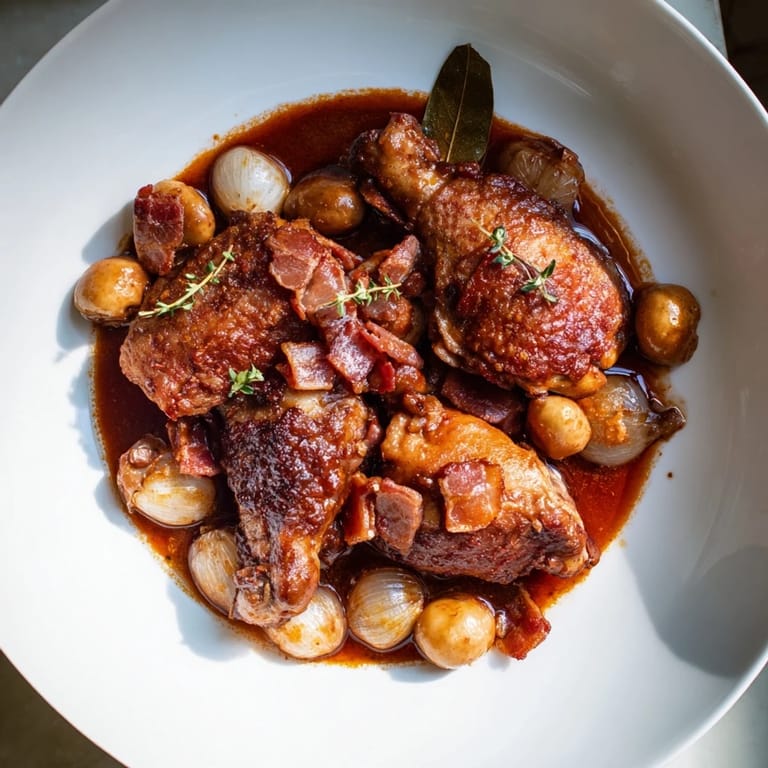
- Fish out the bay leaves and thyme sprigs. If the sauce still looks thin, let it simmer uncovered for a few more minutes. Serve in wide bowls so the sauce pools around the chicken.
 Save
Save What surprised me about coq au vin is how it reminded me that some of the world's greatest dishes aren't about complexity—they're about giving one pot and one good cut of meat the time and respect it deserves. It's peasant cooking dressed up, or fancy cooking brought back down to earth.
Choosing Your Wine and Stock
This is where people get nervous, but here's the truth: the wine flavors the entire dish, so don't reach for the cheapest bottle. A decent Burgundy or Pinot Noir—something you'd actually drink—makes a silky, complex sauce. The stock matters too. If you use the thin, salty kind from a carton, the whole thing tastes one-dimensional. Good stock brings body and depth. I learned this the hard way on my second attempt, when I cut corners on both.
Timing and Make-Ahead Magic
Coq au vin is one of those rare dishes that gets better with time. The flavors settle and marry overnight, and the meat gets even more tender. If you're cooking for a dinner party, make this the day before, then gently reheat it on the stove while you set the table. The chicken won't dry out—if anything, it'll taste deeper. On busy weeknights, you can also assemble everything through step five in the morning, then come home to a pot that just needs simmering.
What to Serve Alongside
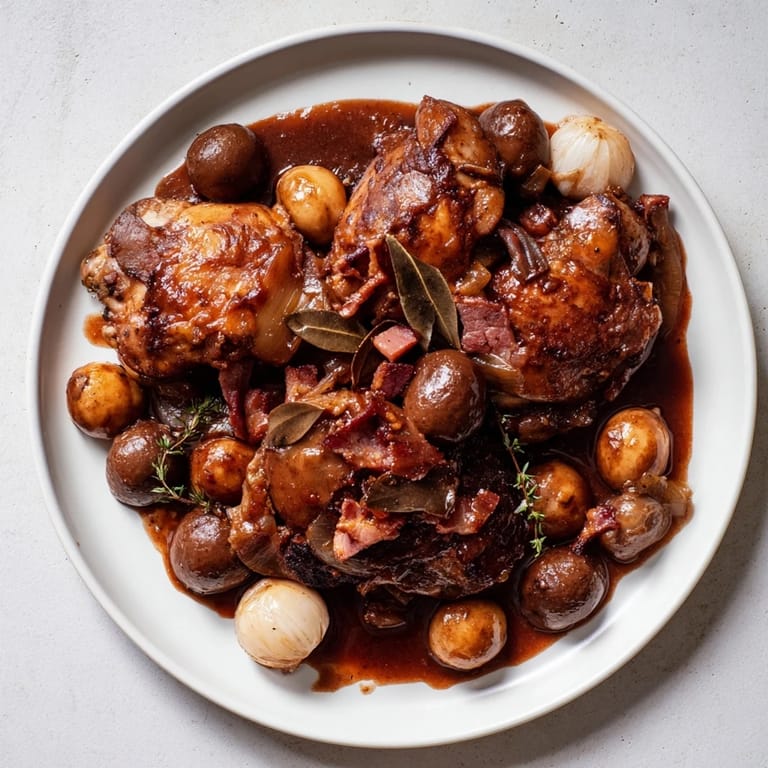
The sauce is rich and wine-dark, so it needs something to soak into. Creamy mashed potatoes are the classic move—they catch every drop of that beautiful liquid. Buttered egg noodles work beautifully too, or thick slices of crusty bread you can use to wipe your bowl clean, which is what my dinner guests did.
- Crusty bread to soak up every last bit of sauce.
- Mashed potatoes or buttered noodles to make the dish a complete meal.
- A simple green salad after to cut through the richness.
 Save
Save This is the kind of recipe that made me fall in love with cooking—not because it's difficult, but because it proves that good food is just about patience, good ingredients, and a willingness to let something simmer. Make it for people you want to linger at the table with.
Kitchen Questions
- → What type of wine is best for braising?
Dry red wines like Burgundy or Pinot Noir work best, providing depth and balance without overpowering the dish.
- → Can other cuts of chicken be used?
Yes, chicken thighs or bone-in pieces retain moisture well and are excellent for slow braising.
- → How do pearl onions enhance the dish?
Pearl onions add subtle sweetness and texture, complementing the rich sauce and tender chicken.
- → What’s the purpose of sautéing mushrooms separately?
Sautéing mushrooms beforehand intensifies their flavor and prevents them from becoming soggy during braising.
- → Can I substitute bacon in this dish?
Smoked pancetta or cured pork belly can be good alternatives, offering similar smoky richness.
- → How long should this dish be braised?
Approximately 1.5 to 2 hours on low heat ensures the chicken becomes tender and absorbs the sauce’s flavors.