 Save
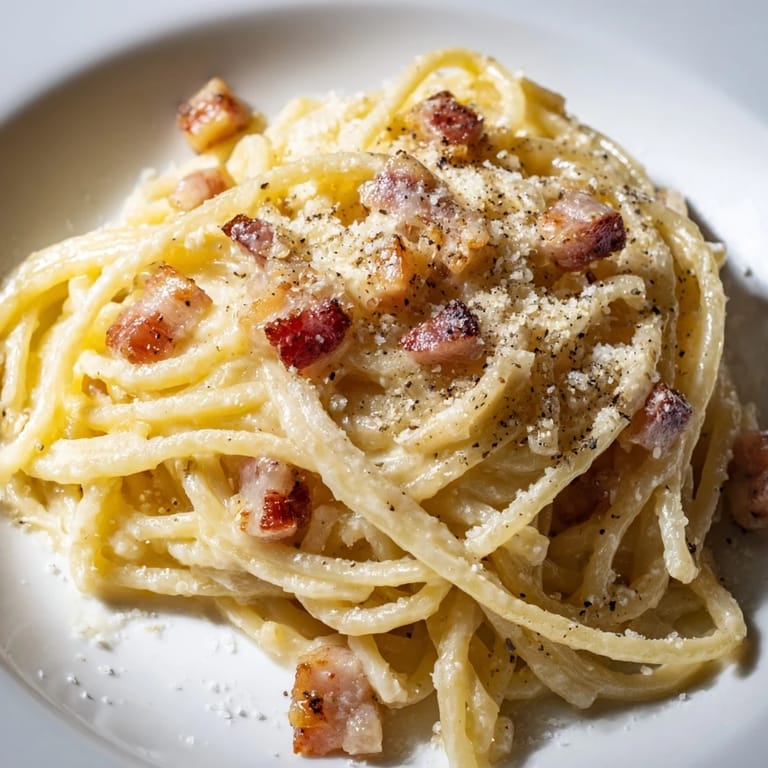
Save There's a particular magic in watching cream emerge from nothing but eggs and starch, and I discovered it quite by accident one weeknight when I was hungry and impatient. A friend had just returned from Rome raving about carbonara, and I thought, why not try it right now with what I have on hand? Twenty minutes later, I had the silkiest, most satisfying pasta I'd ever made, and suddenly I understood why Romans don't mess with tradition—sometimes the simplest idea, executed with care, beats everything else.
I made this for my partner on a rainy Tuesday when neither of us felt like ordering in, and the moment that first forkful hit the table, we both went quiet—the kind of quiet that only happens when food is unexpectedly good. It became our go-to weeknight dinner, the one thing we could make together without any stress, and now whenever someone says they can't cook, I tell them this recipe first.
Ingredients
- Dried spaghetti (200g): Good quality matters here because you taste the pasta itself, not just the sauce—look for bronze-cut if you can, it holds the sauce better.
- Large eggs (2): Room temperature ones blend more smoothly, and use the freshest you have because they're doing the heavy lifting as your sauce.
- Freshly grated Parmesan cheese (40g): Block cheese you grate yourself melts into the sauce like silk; pre-grated has additives that make it grainy, so truly don't skip this step.
- Freshly ground black pepper (1/4 tsp): Crack it yourself just before using—it's one of three main flavors here, so let it be loud.
- Bacon or pancetta, diced (100g): Pancetta is more traditional and milder, but bacon works beautifully too and adds its own smoky charm.
- Extra Parmesan and black pepper for serving: The generous finishing touch that makes each bite feel complete.
Tired of Takeout? 🥡
Get 10 meals you can make faster than delivery arrives. Seriously.
One email. No spam. Unsubscribe anytime.
Instructions
- Get your water ready:
- Fill a large pot with water, salt it generously until it tastes like the sea, and bring it to a rolling boil—you want it really hot and ready to go.
- Cook the pasta to al dente:
- Add spaghetti and stir occasionally, cooking until it has just a slight firmness when you bite it, then scoop out and reserve about 1/3 cup of the starchy cooking water before draining everything else.
- Whisk your sauce base:
- In a bowl, crack your eggs and whisk them together with the grated Parmesan and black pepper until completely smooth and combined—this is your sauce, so make sure it's really well mixed.
- Crisp the bacon:
- While the pasta finishes, heat a large skillet over medium heat and add your diced bacon, stirring occasionally until it's golden and crispy around the edges, about three to four minutes, then turn off the heat immediately.
- Bring it all together quickly:
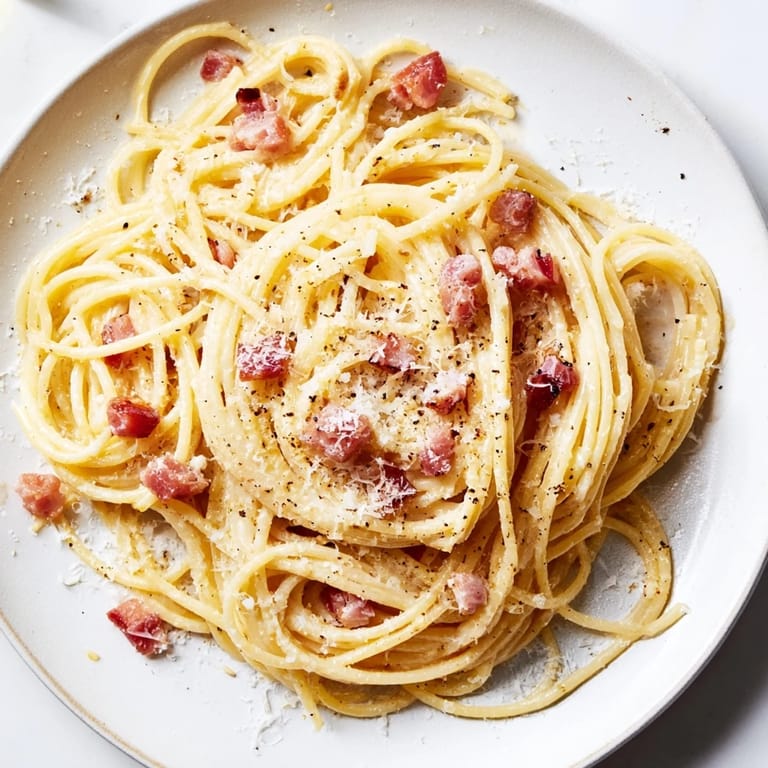
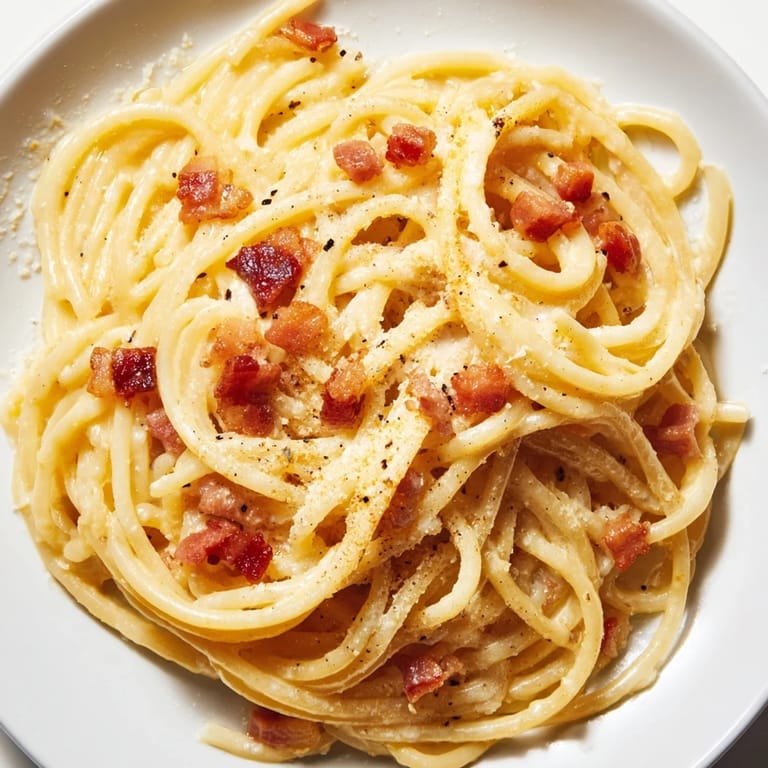
- Add the hot drained pasta straight to the skillet with the bacon—still off the heat—and pour in the egg mixture while tossing constantly with tongs. Add your reserved pasta water a splash at a time, tossing until you see a glossy, creamy sauce coating every strand.
- Serve right away:
- Plate immediately and crown each bowl with extra Parmesan and a twist of fresh black pepper, then eat before it cools down.
 Save
Save I've learned that this dish teaches you something valuable if you let it: that sometimes the best meals aren't about complexity or fancy ingredients, but about respecting the ingredients you have and treating them with intention. Every time I make it, I think about that first rainy Tuesday and smile.
The Secret to Silky Sauce
The egg mixture doesn't cook in the traditional sense—it emulsifies with the heat and starch from the pasta, creating something that looks impossible but tastes inevitable. The key is constant motion and low temperature; rush it or let it get too hot and you've made scrambled eggs on noodles instead of carbonara. I've learned this by doing it wrong first, and now whenever I taste that silkiness, I feel a little proud.
Timing and Temperature Matter
There's a rhythm to this dish that you'll feel after the first time you make it: the pasta cooking while the bacon crisps, the egg mixture waiting patiently in its bowl, everything timed so nothing sits around getting cold. It's not difficult, but it does ask you to pay attention and move with intention rather than drifting through the steps.
Making It Your Own
While tradition keeps carbonara simple for a reason, there are small ways to play with it once you understand the basics. I've added a minced garlic clove to the bacon for warmth, swapped Pecorino Romano for Parmesan when I wanted something sharper, and even tried a pinch of red pepper flakes for heat. Each change shifts the flavor slightly, and that's when cooking becomes fun.
- If you want earthiness, add a small minced garlic clove to the bacon as it crisps, then fish it out before tossing with pasta.
- Pecorino Romano gives you a more authentic Roman bite if that's the direction you want to go.
- A tiny pinch of red pepper flakes adds a whisper of heat that plays beautifully against the richness.
 Save
Save This recipe has taught me that sometimes the most memorable meals come from the simplest ideas, made with focus and respect. Make it tonight and discover why Romans have been making carbonara the same way for generations.
Kitchen Questions
- → How do I prevent the eggs from scrambling?
Remove the pan from direct heat before adding the egg mixture, then toss vigorously while gradually adding reserved pasta water to create a smooth, creamy sauce.
- → Can I substitute bacon with another ingredient?
Pancetta works beautifully as an alternative, providing a similar savory and crispy texture.
- → What's the best way to cook spaghetti for this dish?
Cook spaghetti in well-salted boiling water until al dente, then reserve some pasta water before draining to help form the sauce.
- → How is the creamy sauce made without cream?
The sauce combines whisked eggs and freshly grated Parmesan, thickened and emulsified with pasta water and tossed with hot pasta for a silky texture.
- → Can I add garlic to enhance the flavor?
Yes, add a clove of minced garlic to the bacon while cooking for an extra layer of aroma, then remove before tossing pasta.