 Save
Save My neighbor Yuki showed up one evening with a handful of kale from her garden and a crumpled recipe card she'd brought back from Istanbul, asking if I wanted to experiment. That night, layering crispy filo sheets while she told stories about market vendors folding börek in the early morning light, something clicked—this wasn't just a recipe, it was an invitation to make something with your hands that feels both elegant and impossibly simple.
I made this for a potluck where everyone was supposed to bring something "impressive," and I watched a skeptic take a first bite, pause, and then immediately go back for seconds without saying a word. That silence said everything—sometimes the quietest moment is when food actually speaks.
Ingredients
- Fresh kale, 250 g, stems removed and chopped: Kale holds up beautifully when cooked, staying slightly textured rather than turning to mush like softer greens might; I learned to remove the thick stems first, which nobody wants to bite into.
- Medium onion, finely chopped: The onion becomes almost invisible as it softens, adding sweetness and body to the filling without announcing itself.
- Garlic, 2 cloves, minced: Two cloves keeps things subtle—too much and you'll overpower the delicate cheese and herb balance.
- Feta cheese, 200 g, crumbled: Buy the best feta you can find because it's literally half your filling; cheap feta tastes thin and salty, while good feta tastes tangy and rich.
- Ricotta cheese, 100 g: This softens everything and makes the filling creamy without making it heavy, and it also stretches your feta further without losing flavor.
- Filo pastry, 8 sheets: Keep it cold until the moment you use it, and work quickly—filo dries out faster than you'd think, but it's less dramatic than people claim if you brush each layer with oil.
- Large eggs, 3: The eggs bind everything and add richness; they're what makes the filling set up properly rather than staying loose.
- Whole milk, 100 ml: This creates a custard-like binder that keeps the filling moist as the börek bakes.
- Olive oil, 50 ml plus extra for brushing: Don't skimp on the oil for brushing the filo—it's what creates those crispy, golden layers you're after.
- Ground black pepper, 1/2 tsp: Freshly cracked pepper tastes brighter than pre-ground; add it just before baking so the flavor stays sharp.
- Nutmeg, 1/4 tsp optional: A whisper of nutmeg lifts the kale and cheese in a way that's hard to identify but impossible to ignore once you taste it.
- Fresh dill, 1 tbsp chopped optional: Dill and feta are best friends; even a small amount changes the whole personality of the dish.
- Sea salt, 1/2 tsp adjusted to taste: Taste your filling before adding all the salt since feta is already salty; you might only need a quarter teaspoon.
Tired of Takeout? 🥡
Get 10 meals you can make faster than delivery arrives. Seriously.
One email. No spam. Unsubscribe anytime.
Instructions
- Set the stage:
- Heat your oven to 180°C and lightly brush a 23 cm tart dish with olive oil, making sure to get into the corners and up the sides. This prevents sticking and helps everything brown evenly.
- Soften the aromatics:
- Pour olive oil into a large skillet over medium heat, then add your chopped onion, letting it turn soft and golden (about 4 minutes) before adding the minced garlic. You'll smell when it's right—that sweet, mellowed-out onion fragrance that fills your kitchen.
- Wilt the kale:
- Add your chopped kale to the skillet and stir until it releases its water and collapses into something tender, roughly 3 to 5 minutes depending on how fresh your kale is. Let it cool slightly so the heat doesn't scramble your eggs later.
- Build your filling:
- In a separate bowl, whisk together your eggs, milk, and 50 ml olive oil until combined, then stir in the crumbled feta, ricotta, pepper, nutmeg, dill, and salt. Fold in your cooled kale mixture gently, keeping some texture rather than beating it into oblivion.
- Layer the foundation:
- Lay your first sheet of filo into the oiled dish so it drapes over the edges, then brush it lightly with olive oil—think a gentle swipe, not a soak. Repeat with three more sheets, rotating each one slightly so you build an even base and the corners don't get too thick.
- Fill and seal:
- Spoon your kale and cheese mixture evenly across the filo base, then layer your remaining four filo sheets on top, brushing each with oil and tucking the edges down the sides to seal everything in. The overhang becomes your protective seal.
- Bake until golden:
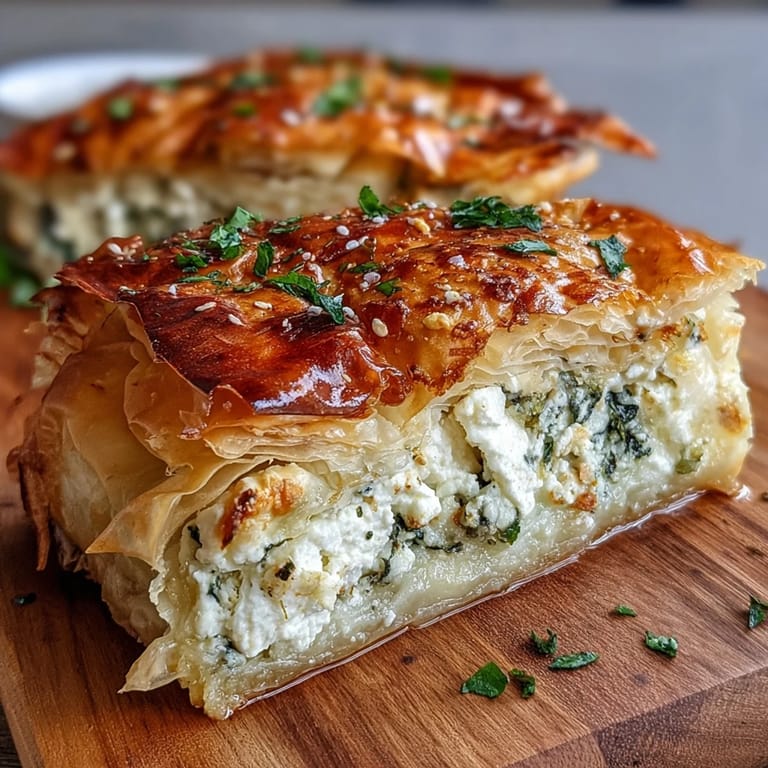
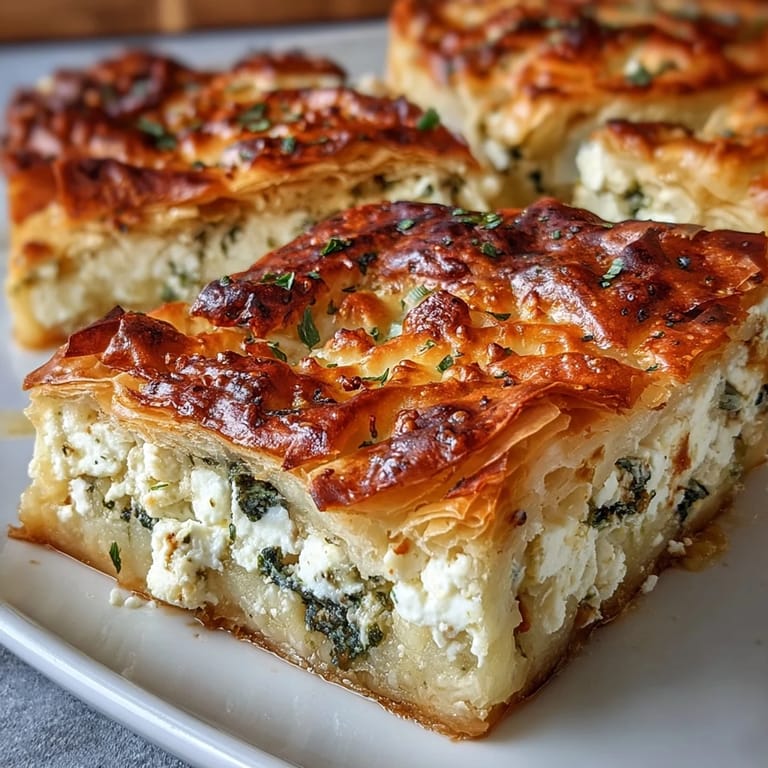
- Slide everything into the oven for 30 to 35 minutes, watching until the pastry turns a deep golden brown and you can hear it crisping up. The filling will puff slightly and feel set when you shake the dish gently.
- Rest and serve:
- Let the börek cool for 10 minutes—this sounds like nothing but it helps everything set so your slices stay clean rather than falling apart. Serve warm or even room temperature with fresh lemon wedges and a simple salad.
 Save
Save My partner walked into the kitchen while this was baking and just breathed in deeply without saying anything, and that's when I knew the smell alone—nutmeg and caramelized onion and toasting filo—had already done half the work. Food does that sometimes, it arrives before it's even plated.
Why Filo Matters Here
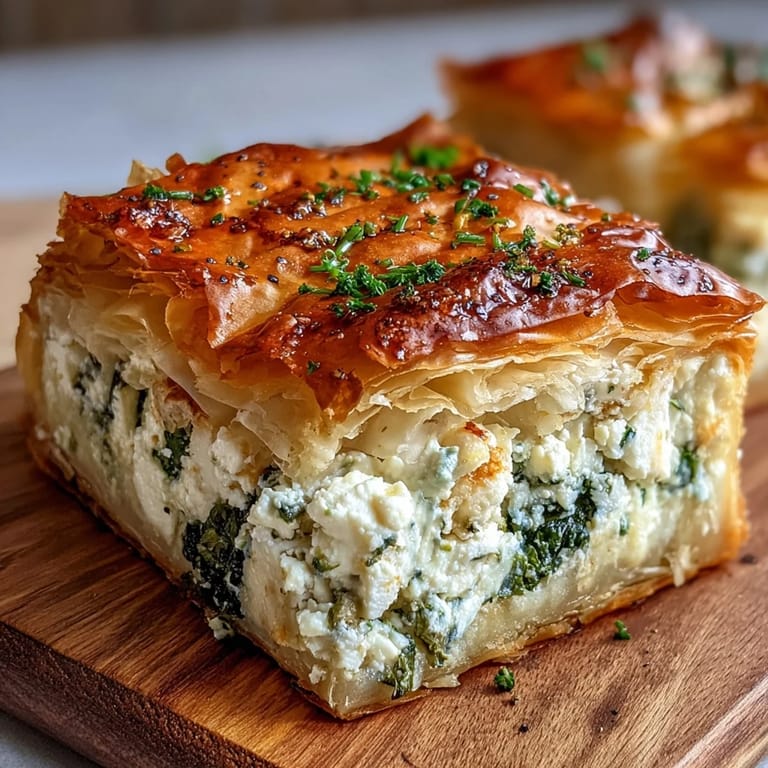
Filo is honestly therapy for your hands once you get past the initial nervousness—each layer brushed with oil becomes almost meditative, and you end up with something that sounds fancy but only requires patience and attention. The oil is the secret, not some mysterious technique; each sheet gets its own light coating, and that's what transforms paper-thin pastry into something shatteringly crisp rather than tough or chewy.
The Kale and Cheese Conversation
Kale and feta seem like they shouldn't work together—one's bitter and substantial, the other's salty and sharp—but when you cook the kale until it's soft and then bind it with creamy ricotta and custard, they become partners instead of opponents. The key is not fighting their natural flavors but letting them settle into each other through gentle cooking and good cheese.
Making It Your Own
This recipe is genuinely flexible without becoming wishy-washy, which is rare and worth celebrating. I've made it with spinach when kale wasn't in season, added a pinch of red pepper flakes when I wanted heat, and even stirred in a handful of dried cranberries when I was feeling experimental—it held together because the structure of filo, eggs, and cheese is solid.
- Swap kale for spinach or Swiss chard if that's what you have or prefer; just squeeze out excess moisture after cooking so your filling doesn't get watery.
- A small pinch of red pepper flakes adds a subtle kick without making it spicy, and it complements the earthiness of the greens beautifully.
- Serve alongside a crisp white wine and a simple green salad dressed with lemon, letting the börek be the star without competing flavors on the plate.
 Save
Save This börek has become my go-to when I want to cook something that feels generous and intentional, something that shows up looking like you care without demanding hours of your day. It's the kind of recipe that reminds you why you like cooking in the first place.
Kitchen Questions
- → Can I use frozen kale instead of fresh?
Yes, you can use frozen kale. Thaw it completely, squeeze out excess moisture, and proceed with the filling. Fresh kale provides better texture, but frozen works well in a pinch.
- → How do I prevent the filo pastry from drying out?
Keep unused filo sheets covered with a damp tea towel while working. Brush each layer generously with olive oil to keep them pliable and ensure a crispy, golden finish.
- → Can I make this börek ahead of time?
Absolutely. Assemble the börek up to 24 hours in advance, cover tightly with plastic wrap, and refrigerate. Bake just before serving for the best crispy texture.
- → What cheese can I substitute for feta?
Goat cheese or crumbled halloumi work wonderfully. For a milder flavor, try a combination of mozzarella and parmesan, though you'll lose some of the traditional tangy profile.
- → How should I store leftovers?
Store cooled börek in an airtight container in the refrigerator for up to 3 days. Reheat in a 180°C oven for 10-15 minutes to restore crispness. Avoid microwaving as it makes the pastry soggy.
- → Can I freeze this dish?
Yes, freeze unbaked börek wrapped tightly in plastic wrap and foil for up to 2 months. Bake from frozen, adding 10-15 minutes to the cooking time.