 Save
Save My neighbor Marco taught me minestrone wasn't about following rules but about using what you had on hand. One rainy Tuesday, he showed up with a bag of vegetables from his garden and started chopping without a recipe in sight, filling his kitchen with the smell of sautéed onions and garlic. By the time his soup was simmering, I understood that minestrone is less a dish and more a philosophy—humble, forgiving, and endlessly adaptable. It became my go-to when I wanted something warm without pretension, a soup that tastes like someone actually cares about feeding you well.
I made this for my sister the winter she moved into a tiny apartment with a kitchenette barely bigger than a shoe box. She was overwhelmed and stressed, convinced she couldn't cook anymore without a proper kitchen, but we stood there stirring this soup together and watched her shoulders relax. By the time we tasted it, she was laughing about how something so good could come from such a cramped space. That's when minestrone stopped being just soup and became proof that constraints don't matter nearly as much as intention.
Ingredients
- Olive oil: Use a decent quality one if you can—it's one of the few ingredients you actually taste here, and it makes a real difference in how warm and inviting the finished soup feels.
- Yellow onion: The foundation of everything; don't skip the sauté, because those first five minutes transform the onion from sharp to sweet.
- Carrots and celery: This trio with the onion is the classic soffritto base that every Italian cook knows by heart, and it builds the whole flavor profile of the soup.
- Garlic: Minced fine and added at the right moment so it flavors everything without turning bitter.
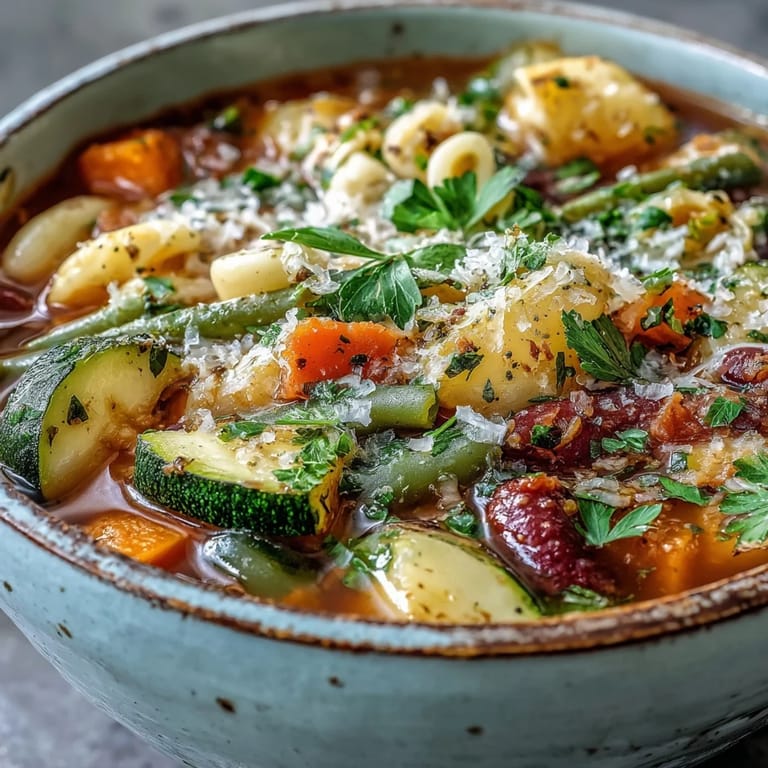
- Zucchini and potato: The potato gives body and creaminess as it breaks down slightly, while the zucchini stays delicate and adds freshness.
- Green beans: They add a little snap and color that lingers even after simmering.
- Diced tomatoes: Canned is absolutely fine here—sometimes better than fresh because the acidity is consistent and the tomatoes have already been broken down.
- Cannellini beans: Creamy white beans that soften into the broth and make this soup actually filling enough to be a meal.
- Small pasta: Ditalini is traditional, but honestly any small shape works; the pasta absorbs the broth and softens to tender in about ten minutes.
- Vegetable broth: The quality of this matters more than people think—a thin, flavorless broth will make the whole soup taste thin.
- Dried Italian herbs: A blend of oregano, basil, and thyme that keeps the flavor honest and recognizable without being complicated.
- Bay leaf: It sits quietly in the pot adding depth, and you must remember to fish it out before serving.
- Spinach or kale: Added at the very end so it stays bright and doesn't turn to mush, adding color and a subtle green flavor.
- Fresh parsley: A handful scattered on top adds freshness that makes the whole bowl come alive.
- Parmesan cheese: Optional, but when you grate it over a hot bowl, it melts slightly and adds a salty, savory depth.
Tired of Takeout? 🥡
Get 10 meals you can make faster than delivery arrives. Seriously.
One email. No spam. Unsubscribe anytime.
Instructions
- Build your base:
- Heat the olive oil in a large pot over medium heat, then add the diced onion, sliced carrots, and celery. You want to listen for that gentle sizzle and watch as the vegetables start to turn translucent at the edges—this takes about five minutes and it's worth not rushing.
- Deepen the flavor:
- Stir in the minced garlic, diced zucchini, diced potato, and chopped green beans, cooking for another three minutes. The kitchen should smell absolutely alive at this point, with garlic floating through everything.
- Build the broth:
- Pour in the canned diced tomatoes, drained cannellini beans, vegetable broth, dried Italian herbs, and the bay leaf. Stir everything together and bring it to a boil—you'll see the surface start to dance and bubble at the edges first.
- Let it simmer:
- Reduce the heat to low, cover the pot, and let it bubble gently for twenty minutes. The vegetables will soften and everything will start melding together into something unified and warm.
- Add the pasta:
- Stir in your small pasta and leave the lid off this time. The pasta will take eight to ten minutes to become tender, and you'll notice the broth getting slightly thicker as the pasta releases its starch.
- Finish with greens:
- Remove the bay leaf carefully, then add your spinach or kale and cook for just two minutes until it turns bright green and wilts down. Don't skip this step because it adds life to the finish.
- Taste and season:
- Taste the soup and add salt and pepper until it tastes like something you'd actually want to eat. Go easy on the salt because the broth and beans already have some inherent saltiness.
- Serve with care:
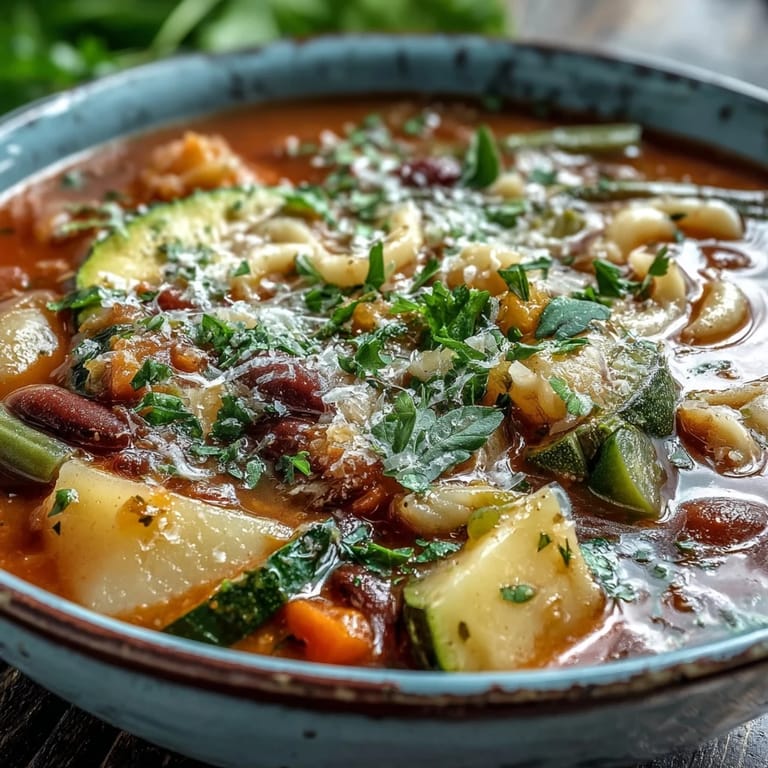
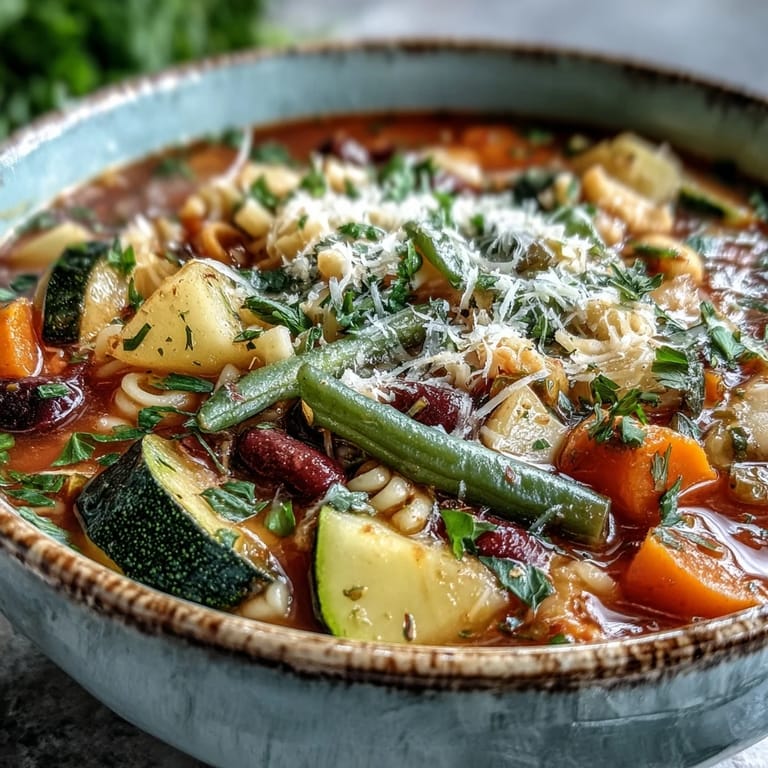
- Ladle the soup into bowls, scatter fresh parsley over the top, and add grated Parmesan if you're using it. Let each person customize their own bowl because that's part of the pleasure.
 Save
Save There's something about minestrone that makes people feel cared for in a way that fancier soups don't quite manage. I made a giant pot for my cousin's potluck, and I watched people go back for seconds without even thinking about it, just talking and eating and clearly comfortable. That's when I realized this soup isn't trying to impress anyone—it's just trying to nourish you, and somehow that's more powerful than any amount of culinary cleverness.
Vegetables You Can Swap
The beauty of minestrone is that it genuinely doesn't care what vegetables you use, as long as you're thoughtful about how they cook. Diced cabbage, fresh peas, sliced mushrooms, diced bell peppers, chopped kale instead of spinach—they all work beautifully here. I once made it with whatever was left in my crisper drawer on a Wednesday, and honestly it was better than the version I made with carefully chosen vegetables. The only real rule is to cut everything into roughly the same size so it cooks evenly and looks cohesive in the bowl.
Making It Your Own
Some people add a Parmesan rind while it simmers, letting it steep in the broth and then removing it before serving—this adds an umami depth that makes the whole soup taste rounder and more complex. Others swear by a splash of red wine or a squeeze of lemon juice at the end to brighten everything up. My mother insists on serving it with crusty bread for soaking up the last of the broth, which I've learned to respect because she's right.
Storage and Reheating
This soup keeps beautifully in the refrigerator for up to four days, and the flavors actually deepen as it sits. The pasta will absorb more broth each day, so when you reheat it, you might need to add a splash of water or extra broth to get back to the consistency you want. It also freezes well if you leave it to cool completely first, though the pasta texture will be softer when thawed.
- Let leftovers cool completely before storing so condensation doesn't water down the flavors.
- Reheat gently on the stovetop rather than the microwave, which can make the vegetables mushy.
- Add fresh parsley and Parmesan only after reheating, so they taste bright and not cooked.
 Save
Save Minestrone taught me that the best meals don't have to be complicated or impressive—they just have to be made with attention and served with kindness. Every time I make this soup, I'm reminded that sometimes the most nourishing thing we can offer someone is something warm and honest.
Kitchen Questions
- → What vegetables work best in minestrone?
Traditional minestrone includes onions, carrots, celery, zucchini, potatoes, and green beans. You can also add seasonal vegetables like cabbage, peas, or Swiss chard. The key is using firm vegetables that hold their shape during simmering.
- → Can I make minestrone gluten-free?
Absolutely. Simply substitute regular pasta with gluten-free varieties like brown rice penne, quinoa pasta, or corn-based shells. The cooking time may vary slightly, so check the package instructions and adjust accordingly.
- → How long does minestrone keep in the refrigerator?
Stored in an airtight container, minestrone keeps well for 4-5 days in the refrigerator. The pasta will absorb some liquid, so you may need to add extra broth when reheating. The flavors actually develop and improve over time.
- → Can I freeze minestrone soup?
Yes, minestrone freezes beautifully for up to 3 months. For best results, slightly undercook the pasta before freezing, as it will continue cooking when reheated. Thaw overnight in the refrigerator and warm gently on the stove.
- → What's the secret to richer flavor?
Adding a Parmesan rind during simmering infuses the broth with deep umami notes. Simply remove it before serving. Also, sautéing the aromatic vegetables thoroughly before adding liquid builds a solid flavor foundation.
- → What pasta shape works best?
Small pasta shapes like ditalini, elbow macaroni, shells, or small tubes work perfectly as they fit on the spoon. Avoid long strands or large shapes that overwhelm the vegetables. The pasta should complement, not compete with the ingredients.