 Save
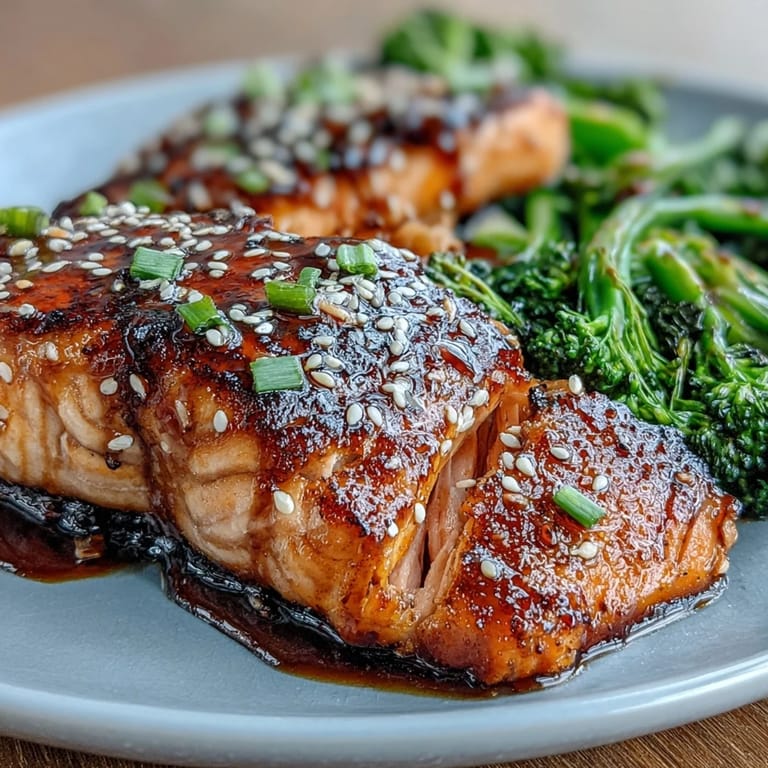
Save There's something about the smell of salmon hitting a hot pan that makes me feel like I'm cooking something special, even on a random Tuesday night. My neighbor once stopped by just as I was finishing this dish, and the aroma of caramelized honey and ginger pulled her right into the kitchen. She ended up staying for dinner, and watching her face light up at that first bite of the glossy, tender salmon made me realize this wasn't just easy weeknight cooking—it was the kind of meal that makes people slow down and actually taste their food.
I made this for my partner the night before we moved apartments, and somehow cooking something this elegant in a half-packed kitchen felt grounding. We ate it standing up off mismatched plates, and I remember thinking how the richness of that glaze made everything feel less chaotic. It became our unofficial housewarming meal in the new place three weeks later, and now it's permanently stuck in rotation when we want something that feels like we tried but actually demands very little from us.
Ingredients
- Salmon fillets (150 g each, skin-on or skinless): The skin crisps beautifully and holds flavor, but skinless works just fine if that's your preference—just watch it doesn't dry out in the oven.
- Soy sauce (low sodium recommended): This is the savory backbone of your glaze, so using low sodium gives you control over the salt level rather than letting the dish run away from you.
- Honey: It caramelizes and balances the salty soy with warmth; never use artificial sweeteners here because the glaze needs that real honey texture.
- Rice vinegar: The acidity cuts through the richness and keeps the glaze from tasting one-dimensional.
- Sesame oil: Use toasted sesame oil for the glaze and a neutral option works fine, but toasted gives you that nutty depth that makes people ask what the secret ingredient is.
- Fresh ginger and garlic: Minced fresh versions only—the dried versions turn bitter in this glaze and you'll taste the difference immediately.
- Broccoli florets (about 400 g): Cut them roughly the same size so they cook evenly, and don't go smaller than you think or they'll disappear into mush.
- Toasted sesame seeds: These are the finishing flourish that adds texture and toasted flavor, so don't skip them or use the raw kind.
- Spring onions and lime wedges: These feel optional but they're actually doing work—the sharpness of lime wakes up the richness and spring onions add a fresh bite at the end.
Tired of Takeout? 🥡
Get 10 meals you can make faster than delivery arrives. Seriously.
One email. No spam. Unsubscribe anytime.
Instructions
- Get your oven and pan ready:
- Preheat your oven to 200°C (400°F) and line a baking sheet with parchment paper if you're not using a skillet. Pat your salmon fillets completely dry—this is the moment that separates a golden exterior from a steamed one, so don't skip it.
- Season the salmon:
- Give both sides a generous pinch of salt and freshly ground black pepper, tasting as you go since the soy glaze will also bring saltiness.
- Make your glaze:
- In a small bowl, whisk together the soy sauce, honey, rice vinegar, sesame oil, minced garlic, and grated ginger until the honey fully dissolves and everything looks cohesive. This takes about a minute of whisking, and you'll know it's ready when there are no honey streaks left.
- Sear the salmon:
- Heat olive oil in a large oven-safe skillet over medium-high heat until it shimmers—you want it hot enough that the salmon sizzles immediately when it hits the pan. Place fillets skin-side down if using skin-on and sear for 2 to 3 minutes until the skin is golden and crispy, then flip them gently.
- Glaze and finish cooking:
- Pour that glaze right over the salmon, then transfer the whole skillet to the oven (or move fillets to your prepared baking sheet and brush generously with glaze). Roast for 7 to 9 minutes—the salmon is done when it flakes easily with a fork and the center is barely opaque.
- Cook the broccoli while salmon roasts:
- Bring a pot of salted water to a rolling boil and add your broccoli florets, blanching them for exactly 2 minutes so they stay crisp-tender. Drain and immediately rinse them under cold water to stop the cooking dead—this is what keeps them from turning into mush.
- Toast the broccoli in sesame oil:
- Heat sesame oil in a large pan over medium heat, add the blanched broccoli, and sauté for 2 to 3 minutes until it's heated through and just beginning to caramelize at the edges. Sprinkle with toasted sesame seeds and season with a pinch of salt, tasting as you go.
- Plate and finish:
- Divide the sesame broccoli among your serving plates, top each with a glazed salmon fillet, and garnish with sliced spring onions and a lime wedge on the side. The brightness of lime squeezed over everything at the table makes it taste even better.
 Save
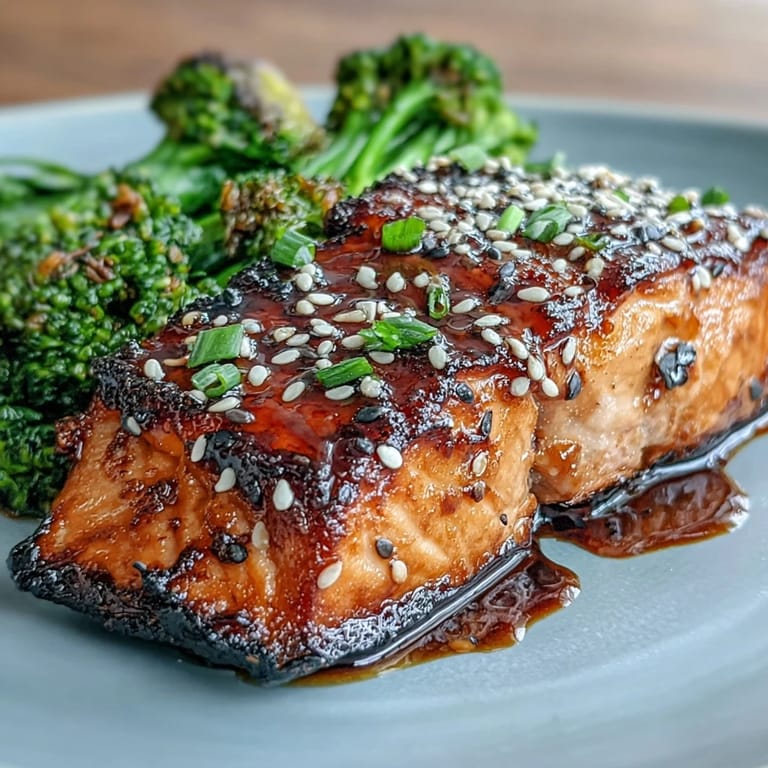
Save The first time I served this to my family, my mom asked if I'd been holding out on them all these years, which somehow felt like the highest compliment. There was something about seeing everyone so engaged with their plates—squeezing lime, soaking broccoli in that glaze residue—that made me understand why simple, well-executed food matters more than elaborate recipes ever could.
Why Salmon Loves This Glaze
Salmon's natural richness needs something bright and a little bit sharp to really sing, and that's exactly what the combination of soy, honey, and rice vinegar does. The honey caramelizes in the oven's heat, creating this almost lacquered exterior that catches the light, while the soy and vinegar keep it from tasting sweet. I learned this by accident once when I skipped the vinegar, and the glaze felt one-dimensional—adding it back in changed everything.
The Secret to Crispy Broccoli
Most people either blanch broccoli and then forget about it or sauté it from raw and end up with stuff that's soft and watery. The two-step method here—blanching first, then a quick sauté in sesame oil—gives you florets that stay bright green and actually have texture underneath. That brief ice bath after blanching stops the cooking immediately, and then the sesame oil hits them hot enough to develop little caramelized edges without breaking them down.
Making It Your Own
This recipe is sturdy enough to experiment with, and I've made it with broccolini, green beans, and even bok choy depending on what looked good at the market. A pinch of red pepper flakes stirred into the glaze adds heat without overwhelming the other flavors, and I've also tried a tiny splash of fish sauce when I wanted something deeper. If you want to turn this into more of a complete meal without adding much time, jasmine rice or quinoa soaks up the extra glaze beautifully.
- Fresh ginger grated right before cooking tastes noticeably brighter than ginger that's been sitting in your fridge for weeks.
- If your salmon fillets are particularly thick, give them an extra 2 to 3 minutes in the oven rather than cranking the heat higher.
- The glaze recipe makes slightly more than you need, so you can spoon extra over the broccoli or rice if you want more of that sticky coating.
 Save
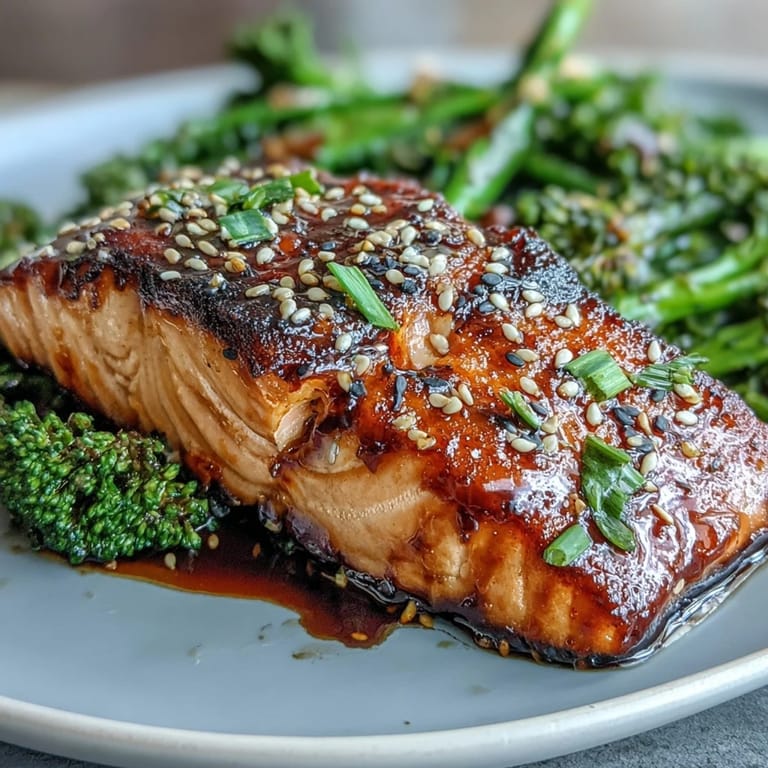
Save This is the kind of recipe that makes weeknight cooking feel less like a chore and more like something you actually look forward to. It's reliable, it tastes far better than it has any right to given how little time you spend on it, and somehow it always makes people feel cared for.
Kitchen Questions
- → How should I prepare the salmon for glazing?
Pat the salmon dry and season lightly with salt and pepper before searing it in olive oil. This helps seal in juices before applying the glaze.
- → What is the best way to cook the broccoli?
Blanch broccoli florets briefly in boiling salted water, then quickly sauté with sesame oil and toasted sesame seeds for a tender crisp texture and nutty flavor.
- → Can I use fresh ginger and garlic instead of powder?
Yes, using freshly grated ginger and minced garlic enhances the aromatic quality of the glaze dramatically.
- → Is it necessary to use an oven-safe skillet?
An oven-safe skillet simplifies the process by allowing searing on the stovetop and roasting in the oven without transferring the salmon.
- → What other vegetables pair well with this dish?
Broccolini, green beans, or snap peas prepared similarly with sesame oil and seeds make excellent alternatives alongside salmon.
- → How can I add a spicy kick to this dish?
Incorporate red pepper flakes into the honey-soy glaze for a subtle heat that complements the glaze's sweetness.