 Save
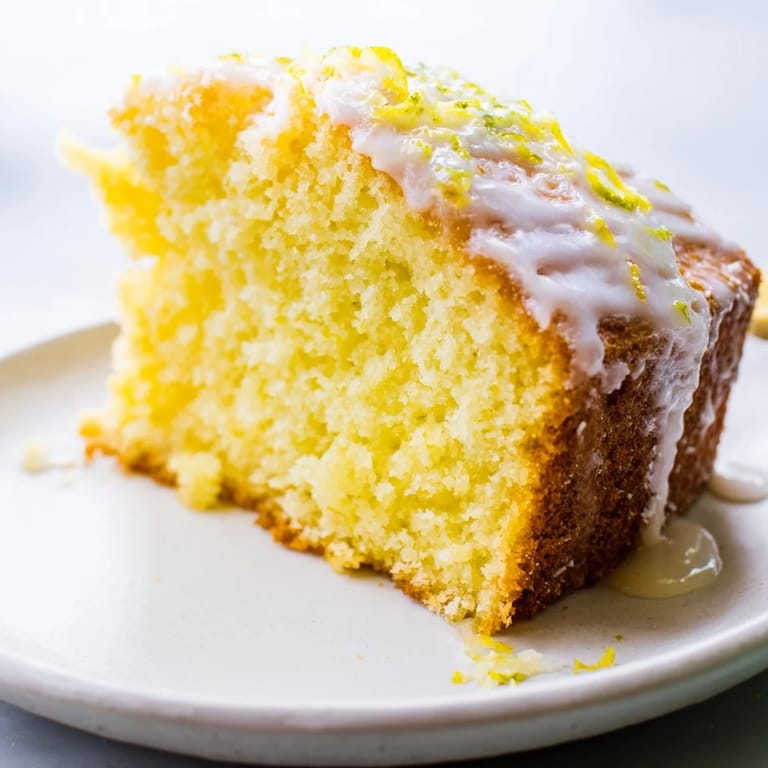
Save I discovered this cake entirely by accident one rainy afternoon when my blender sat on the counter next to a container of Greek yogurt, and I realized I didn't have the patience to drag out my mixer. The result was so unexpectedly tender and bright that it became my go-to when I needed something comforting but not heavy. What started as kitchen laziness turned into the easiest cake I've ever made, one that somehow tastes more sophisticated than the effort it requires.
I baked this for a friend who'd just moved into her first apartment, and watching her face light up when she bit into a slice made me realize this wasn't just a convenient recipe, it was the kind of thing that made someone feel cared for without any fuss. She kept asking why a cake this simple tasted so refined, and honestly, I think it's because the lemon does most of the work for you.
Ingredients
- Plain Greek yogurt: This adds moisture and a subtle tang that prevents the cake from tasting one-dimensional. Full-fat is worth it.
- Eggs: Three large ones give the cake structure and richness without needing butter.
- Vegetable oil: Keeps the crumb tender and prevents it from drying out as it sits.
- Granulated sugar: One cup balances the tartness of the lemon beautifully.
- Lemon zest: Use a microplane and don't shy away; two lemons worth gives you real flavor.
- Fresh lemon juice: Store-bought works, but fresh tastes noticeably brighter.
- Vanilla extract: A teaspoon rounds out the flavor without making itself known.
- All-purpose flour: One and a half cups is all you need for the structure.
- Baking powder: Two teaspoons give you a gentle rise without heaviness.
- Salt: A quarter teaspoon is the secret to depth; don't skip it.
- Powdered sugar and lemon juice for glaze: Optional but worth the two minutes it takes to drizzle.
Tired of Takeout? 🥡
Get 10 meals you can make faster than delivery arrives. Seriously.
One email. No spam. Unsubscribe anytime.
Instructions
- Set up your oven:
- Preheat to 350°F and grease your loaf pan well, or line it with parchment for zero-stress removal later.
- Blend the wet ingredients:
- Combine yogurt, eggs, oil, sugar, lemon zest, juice, and vanilla in your blender. Thirty seconds is all it takes; you want it smooth and pale yellow.
- Add the dry ingredients:
- Sprinkle the flour, baking powder, and salt on top, then pulse gently until just combined. This is the moment where restraint matters; overmixing makes the cake tough.
- Pour and smooth:
- Transfer the batter to your pan and run a spatula across the top to even it out.
- Bake:
- Set a timer for 35 to 40 minutes. You'll know it's done when a toothpick poked in the center comes out clean or with just a few moist crumbs clinging to it.
- Cool with patience:
- Let it rest in the pan for 10 minutes so it sets, then turn it out onto a cooling rack. Cutting into it while warm is tempting but will result in crumbling.
- Add the glaze:
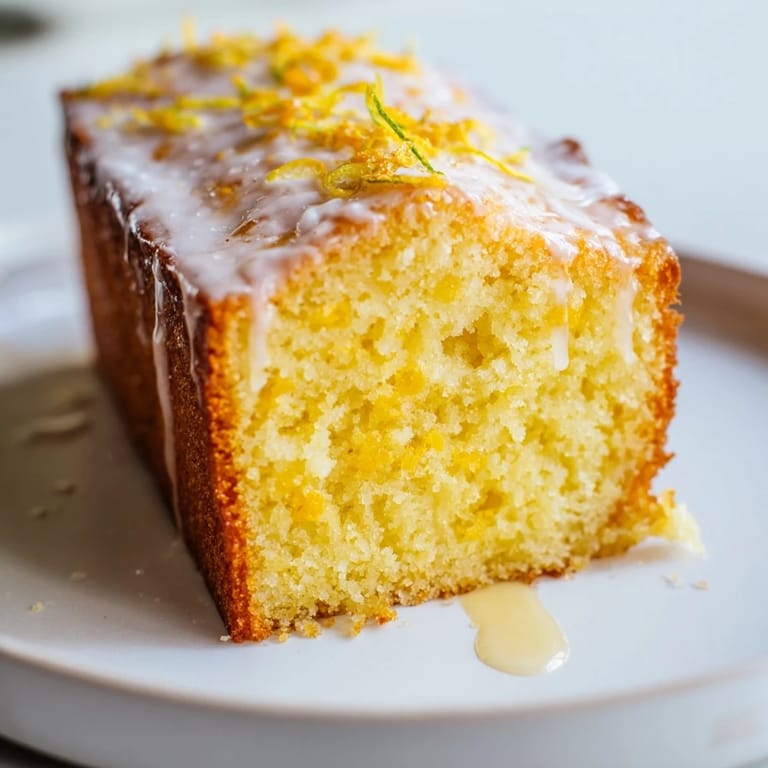
- Once completely cool, whisk powdered sugar with lemon juice until it reaches a drizzle consistency and pour it over the top in loose lines.
 Save
Save My grandmother tasted this cake and said it reminded her of something she used to make in the 1970s but could never quite recreate. The fact that I'd stumbled onto something close to a memory she'd almost lost made the whole kitchen feel warmer.
Why Lemon Belongs in Breakfast
There's something about the brightness of lemon first thing in the morning that feels less indulgent than chocolate and more like an actual meal. I started slicing this cake for breakfast, pairing it with coffee or tea, and it somehow became the thing I craved on days when I needed a little lift. The tartness wakes you up, the yogurt makes it feel substantial, and you don't have that heavy sugar crash that comes with sweeter cakes.
The Blender Advantage
The blender method is not just convenient; it actually changes how the cake turns out. Everything gets emulsified together smoothly, which means the fat distributes evenly, and you end up with a more tender crumb than you'd get with traditional creaming methods. No stand mixer needed, no multiple bowls, no whipping egg whites separately. It's the kind of shortcut that doesn't actually sacrifice quality.
Serving and Storing
This cake keeps beautifully for three days wrapped in plastic, and it actually tastes better the next day once the flavors have settled. It pairs surprisingly well with Earl Grey tea, a glass of cold Moscato, or even just a dollop of whipped cream and fresh berries. Think of it as the kind of cake that works at breakfast, at tea time, or whenever you want something that tastes special but doesn't demand hours in the kitchen.
- Store covered at room temperature for up to three days, or wrap well and freeze for up to a month.
- Bring frozen slices back to room temperature before serving to let the crumb soften.
- The glaze can be made hours ahead; add it just before serving for the best shine.
 Save
Save This cake has become the recipe I reach for when I want to feel like I've done something worthwhile in the kitchen without any of the stress. It's proof that simple ingredients and a little lemon can create something worth savoring.
Kitchen Questions
- → What gives the cake its tangy flavor?
The combination of fresh lemon zest, lemon juice, and Greek yogurt provides the bright, tangy notes in this cake.
- → Can I use regular yogurt instead of Greek yogurt?
Yes, plain whole-milk yogurt can be substituted, though the texture may be slightly lighter.
- → Is a blender necessary for preparation?
A blender quickly combines ingredients for a smooth batter, but mixing by hand with a whisk is possible.
- → How do I know when the cake is done?
Bake until a toothpick inserted in the center comes out clean, typically after 35–40 minutes.
- → What serving suggestions complement this cake?
Serve with fresh berries, a dollop of whipped cream, or pair it with Earl Grey tea or Moscato for a delightful treat.