 Save
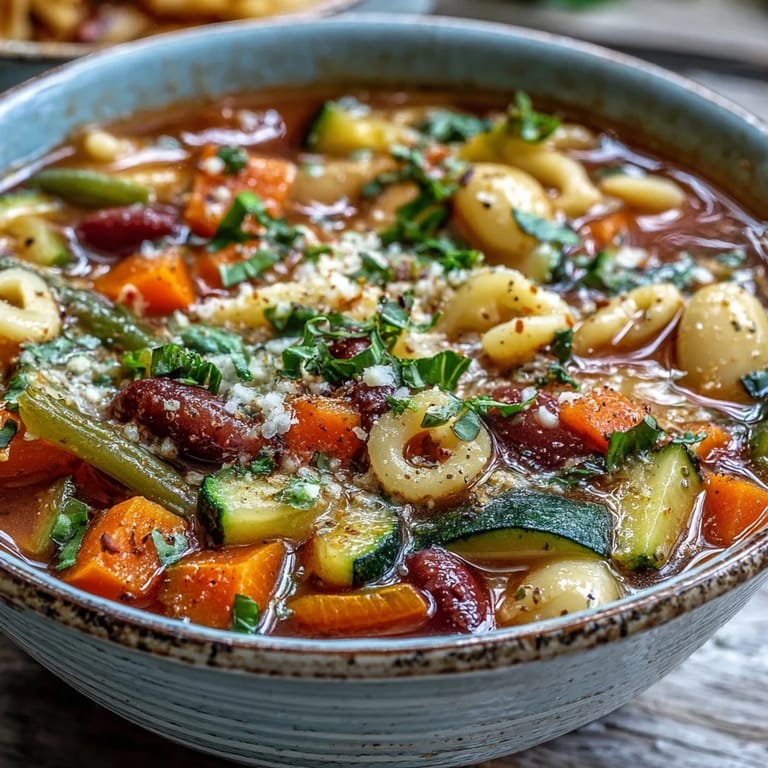
Save There's something about the smell of sautéing onions and garlic that makes me drop everything I'm doing and head to the kitchen. One rainy Tuesday, I found myself with an overflowing produce drawer and a craving for something warm that didn't feel like starting from scratch. That's when minestrone showed up—not as a recipe I'd planned, but as the obvious answer to what my kitchen was telling me to make. It's the kind of soup that listens to what you have on hand and turns it into something that tastes like it took all day, even when you've only spent an hour with it.
My neighbor once stopped by just as I was ladling this into bowls, and the next thing I knew, she was sitting at my kitchen table with a spoon in hand, telling me stories I'd never heard before about her nonna's kitchen in Sicily. That's when I realized minestrone does something beyond nourishment—it creates a moment where people slow down and actually talk to each other. Every time I make it now, I remember that afternoon and set out an extra bowl, just in case.
Ingredients
- Olive oil: Two tablespoons is your foundation—use something you actually enjoy tasting, because it matters in something this simple.
- Onion and garlic: These two do the heavy lifting in the first few minutes, building flavor that carries through the entire pot.
- Carrots, celery, zucchini, potato, and green beans: Each one adds texture and sweetness; don't skip any because they create the layered vegetable base that makes this soup sing.
- Diced tomatoes: The can is perfectly fine—fresh tomatoes in winter are a disappointment, but canned ones captured at their peak never let you down.
- Vegetable broth and water: Four cups broth plus two cups water gives you the right balance between flavor and lightness without being either too weak or too heavy.
- Cannellini beans: Creamy and mild, they add protein and substance without overpowering the vegetables.
- Pasta: Small shapes like ditalini are best because they stay tender and distribute evenly throughout rather than clumping together.
- Dried oregano and basil: These go in early with the broth, so their flavors meld into the liquid rather than sitting on top.
- Bay leaf, salt, and pepper: Don't skip the bay leaf—it's subtle but it's the secret that makes people ask what your ingredient is.
- Fresh parsley and basil: Stir these in at the end; their brightness is what transforms a good soup into one you'll crave.
- Parmesan cheese: Optional, but a modest handful grated over the top creates little pockets of umami that make every spoonful feel special.
Tired of Takeout? 🥡
Get 10 meals you can make faster than delivery arrives. Seriously.
One email. No spam. Unsubscribe anytime.
Instructions
- Start with the aromatics:
- Heat your olive oil over medium heat and let the onion and garlic sizzle for a few minutes until they become soft and fragrant, filling your kitchen with that unmistakable smell that means something good is beginning.
- Build your vegetable base:
- Add the carrots, celery, zucchini, potato, and green beans, letting them soften slightly for five or six minutes so they release their flavors into the oil and create a flavorful bed.
- Pour in the liquid and seasonings:
- Stir in the tomatoes with their juices, broth, water, and all the dried herbs, then bring everything to a rolling boil so the flavors can meld together.
- Let it simmer gently:
- Reduce the heat and cover the pot, allowing fifteen minutes for the vegetables to become fully tender and the flavors to deepen and marry.
- Add the beans and pasta:
- Uncover the pot and stir in the cannellini beans and pasta, then simmer uncovered for ten to twelve minutes until the pasta is tender but not mushy and the vegetables yield easily to a spoon.
- Finish with fresh herbs:
- Remove the bay leaf, then stir in the fresh parsley and basil so their bright flavors wake up everything you've built, tasting as you go to adjust salt and pepper to your preference.
- Serve with intention:
- Ladle into bowls and shower with Parmesan if you'd like, then serve while it's hot enough to create steam and release all those aromas you've been anticipating.
 Save
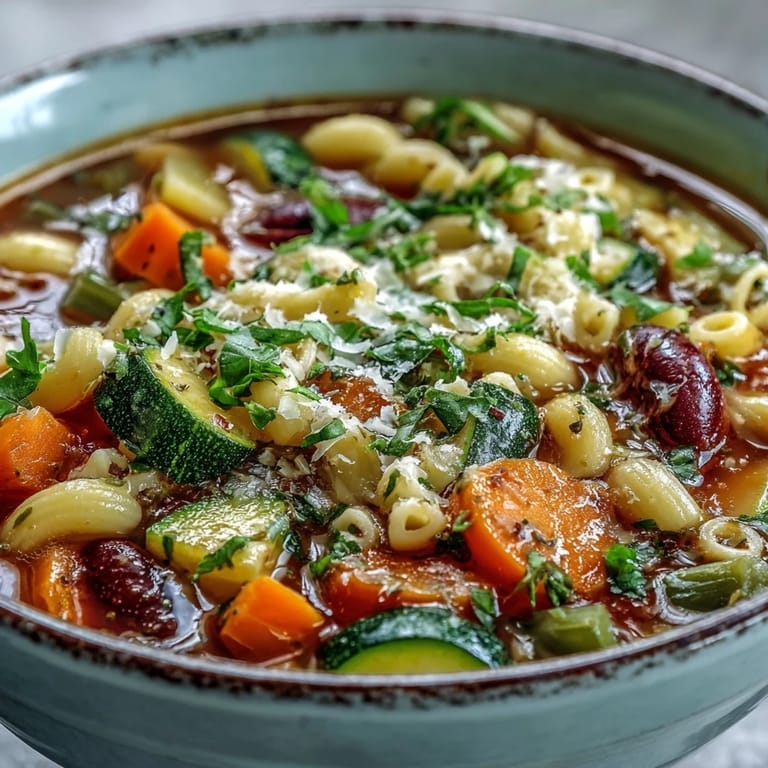
Save I made this soup for my partner when he was coming down with something and couldn't be bothered with food, and he ate two bowls without saying much beyond thank you. That silence meant more than any compliment—it was the soup doing what it's meant to do, nourishing someone back toward feeling okay. Now whenever he's not feeling well, it's the first thing he asks for.
When Vegetables Are Past Their Prime
Minestrone is the recipe I turn to when my produce drawer has become a science experiment and I'm running out of time to use things up. Slightly soft zucchini, carrots that are a bit wrinkled, celery that's lost its snap—this soup welcomes them all because everything gets cut into small pieces and cooked down into tenderness anyway. There's something freeing about knowing that imperfection is actually the point.
Playing With Seasons and Substitutions
I've made this soup in winter with hearty kale stirred in at the end, in early fall with tender spinach, and one time I used fresh corn when summer was refusing to let go. The beauty of minestrone is that it's flexible enough to celebrate what's actually available right now rather than forcing a recipe onto the season. Pancetta adds smokiness if you're cooking for someone who eats meat, and extra beans make it more substantial if you need it to be more of a main course than a side.
The Details That Matter
This soup tastes better the day after you make it because the flavors have had time to get to know each other and deepen overnight in the refrigerator. I often make it on a weekend and look forward to reheating a bowl on a weeknight when I don't have the energy to cook. Here's what really makes the difference between ordinary and memorable.
- Use good olive oil because you can actually taste it in something this straightforward, and it deserves to be something you enjoy.
- Don't rush the simmering time—this is when all the flavors actually come together, so set a timer and let the pot do its work undisturbed.
- Fresh herbs at the end are non-negotiable because they're what lift the entire dish from comforting to actually delicious.
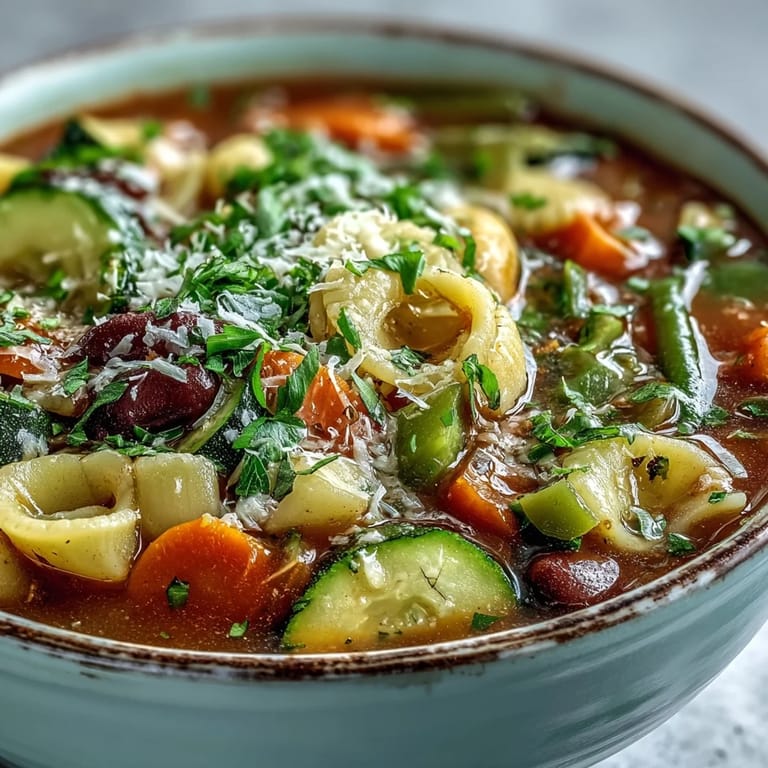 Save
Save Minestrone reminds me that the most satisfying meals are often the simplest ones, the ones where good ingredients and patience do most of the talking. There's a reason this soup has survived for generations in Italian kitchens—it works because it listens.
Kitchen Questions
- → What vegetables work best in minestrone?
Classic minestrone includes carrots, celery, onions, zucchini, green beans, and potatoes. You can also add spinach, kale, cabbage, or tomatoes based on seasonality and preference.
- → Can I make minestrone soup ahead of time?
Yes, minestrone actually tastes better the next day as flavors meld. Store in the refrigerator for up to 4 days. Add pasta when reheating to prevent it from becoming too soft.
- → Is minestrone suitable for freezing?
Freeze minestrone without the pasta for best results. The pasta can become mushy when frozen. Add fresh pasta when reheating for optimal texture. Freezes well for up to 3 months.
- → How can I make minestrone vegan?
Simply omit the Parmesan cheese garnish or use a plant-based alternative. The broth and base ingredients are naturally vegan, making this an easy adaptation.
- → What pasta shapes work in minestrone?
Small pasta shapes like ditalini, elbow macaroni, shells, or small tubes work best. They cook evenly and provide a satisfying bite in every spoonful.
- → Can I use dried herbs instead of fresh?
Yes, dried oregano and basil work beautifully during cooking. Add fresh parsley and basil at the end for a bright, aromatic finish that elevates the overall flavor.