 Save
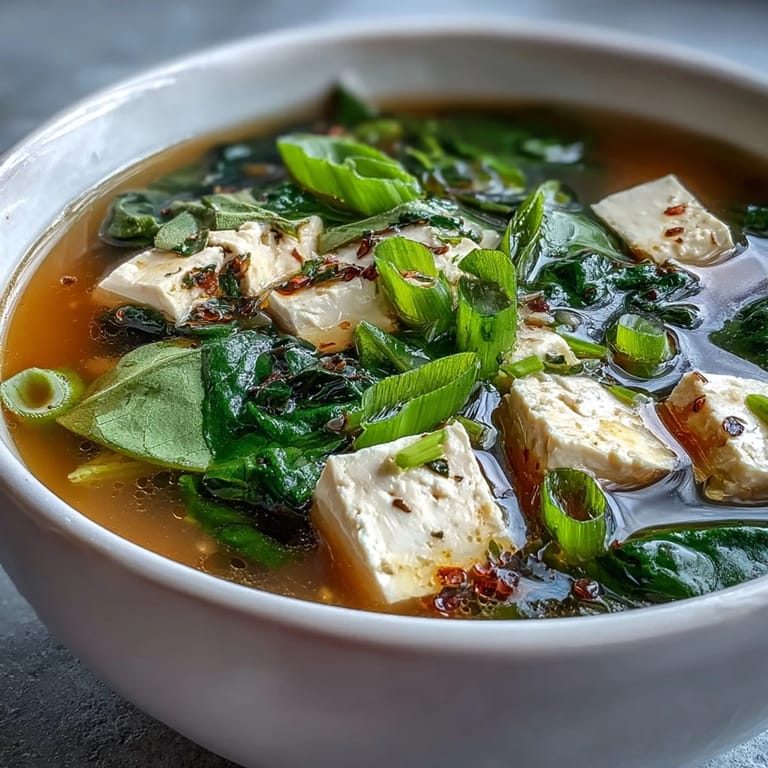
Save There is something quietly profound about a bowl of miso soup. In Japan, it is more than a dish — it is a daily ritual, a gentle greeting to the morning or a soothing close to a long day. This recipe for Miso Soup with Tofu, Spinach, and Green Onions captures that spirit beautifully: a savory, golden broth built on a kombu-based dashi, enriched with creamy tofu, brightened by fresh spinach, and finished with the subtle sharpness of sliced green onions. Ready in just 20 minutes, it is the kind of recipe that rewards simplicity — a few honest ingredients, a little patience, and the result is something deeply nourishing.
Save The secret to a truly great miso soup lies in restraint. The dashi forms the soul of the broth — a clean, umami-rich base that makes every sip feel grounding. The miso paste is never boiled; instead, it is gently dissolved in a ladleful of warm stock and folded back into the pot, preserving its living cultures and its nuanced, slightly sweet depth. The tofu is silky and mild, absorbing the broth around it, while the spinach wilts into something tender and vivid. Finally, the green onions are stirred in off the heat, their freshness cutting through the richness like a breath of cool air. This is soup as meditation — straightforward, intentional, and quietly extraordinary.
Ingredients
Tired of Takeout? 🥡
Get 10 meals you can make faster than delivery arrives. Seriously.
One email. No spam. Unsubscribe anytime.
- Broth
- 4 cups (1 liter) dashi stock (use kombu-based for vegetarian)
- 3 tablespoons white or yellow miso paste
- Vegetables & Tofu
- 120 g (4 oz) firm tofu, cut into 1/2-inch cubes
- 2 cups (60 g) fresh spinach leaves, washed and roughly chopped
- 2 green onions (scallions), thinly sliced
Instructions
- Step 1 — Simmer the dashi
- In a medium saucepan, bring the dashi stock to a gentle simmer over medium heat.
- Step 2 — Dissolve the miso
- Place the miso paste in a small bowl. Ladle about 1/2 cup of hot dashi into the bowl and whisk until the miso dissolves completely, then return the mixture to the saucepan. Do not let the soup boil after adding miso.
- Step 3 — Add the tofu
- Add the tofu cubes to the pot and simmer gently for 2–3 minutes until heated through.
- Step 4 — Wilt the spinach
- Stir in the spinach and cook for 1–2 minutes until just wilted.
- Step 5 — Finish with green onions
- Remove the soup from heat. Stir in the sliced green onions.
- Step 6 — Serve
- Ladle into bowls and serve immediately.
Zusatztipps für die Zubereitung
Die wichtigste Regel bei der Zubereitung von Misosuppe ist, das Miso niemals aufkochen zu lassen. Hohe Temperaturen zerstören die wertvollen Enzyme und Aromen der Misopaste. Lösen Sie die Paste daher immer in einer kleinen Menge heißer — aber nicht kochender — Dashi-Brühe auf, bevor Sie sie in den Topf geben. Verwenden Sie für eine vollständig vegetarische Version unbedingt eine Kombu-basierte Dashi ohne Fischbestandteile. Der Tofu sollte bereits in gleichmäßige Würfel von etwa 1,5 cm geschnitten sein, damit er gleichmäßig erwärmt wird. Die Spinatblätter nur kurz garen — 1 bis 2 Minuten genügen, damit sie ihre leuchtende Farbe und ihre zarte Textur behalten.
Varianten und Anpassungen
Diese Misosuppe ist eine wunderbare Grundlage, die sich leicht abwandeln lässt. Für mehr Umami können Sie getrocknete Shiitake-Pilze oder frische Enoki-Pilze hinzufügen. Wakame-Algen, kurz in Wasser eingeweicht und abgetropft, verleihen der Suppe eine typisch japanische Note und einen angenehm salzigen Geschmack. Ein paar Tropfen Sesamöl am Ende runden das Aroma wunderschön ab. Wer es etwas herzhafter mag, kann die Menge der Misopaste leicht erhöhen. Für eine mildere Variante eignet sich weißes Shiro-Miso besonders gut. Die Suppe lässt sich auch mit weichem Seidentofu zubereiten, der ihr eine noch cremigere Textur verleiht.
Serviervorschläge
Misosuppe mit Tofu, Spinat und Frühlingszwiebeln passt hervorragend als Beilage zu gedämpftem Reis, Onigiri oder einem einfachen japanischen Salat. Als leichte Mahlzeit für sich genommen ist sie ideal zum Mittag- oder Abendessen. Servieren Sie die Suppe in traditionellen japanischen Lackschalen oder tiefen Keramikschalen, um das Erlebnis vollständig zu machen. Da sich der Miso beim Stehen absetzt, empfiehlt es sich, die Suppe sofort nach der Zubereitung zu genießen — frisch aus dem Topf, dampfend heiß und aromatisch.
 Save
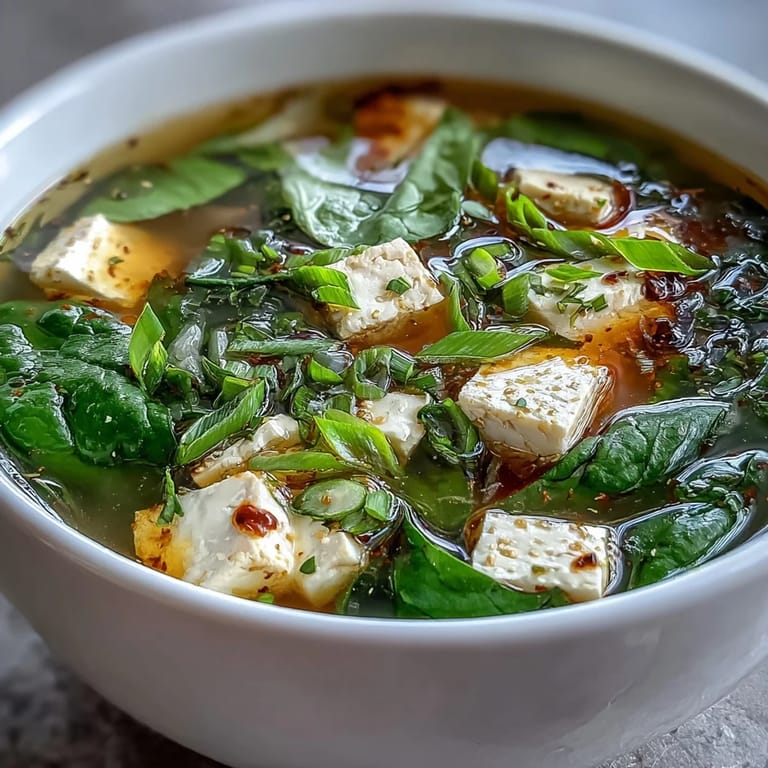
Save Whether you are new to Japanese cooking or returning to a beloved classic, this Miso Soup with Tofu, Spinach, and Green Onions offers something rare in the kitchen: the feeling of having made something genuinely good, with very little effort. Its warmth is immediate, its flavor is layered, and its simplicity is the whole point. Keep this recipe close — it is the kind of dish that becomes a quiet habit, a small act of care for yourself or for the people you love. Serve it steaming hot, savor it slowly, and let it remind you that the most meaningful meals are often the most uncomplicated ones.
Kitchen Questions
- → What type of miso is best for this soup?
White or yellow miso paste works best, offering a mild and slightly sweet flavor that complements the tofu and spinach.
- → Can this dish be made vegan?
Yes, by using kombu-based dashi stock and omitting any fish ingredients, it becomes fully vegan-friendly.
- → How should tofu be prepared for this dish?
Firm tofu cut into 1/2-inch cubes is ideal, gently simmered to warm through without breaking apart.
- → Why shouldn’t the soup boil after adding miso?
Boiling miso can degrade its delicate flavors and reduce its nutritional benefits, so it’s best to keep the heat gentle.
- → What are some good additions to vary this broth?
Mushrooms, wakame seaweed, or a dash of sesame oil can add extra depth and umami to the broth.
- → Are there any allergen concerns?
This dish contains soy from tofu and miso, and some miso or dashi may contain gluten, so checking labels is advised.