 Save
Save I'll never forget the moment I first created this Monarch Butterfly Wings platter for my sister's garden party last spring. She'd been hosting a butterfly-themed brunch, and I wanted to bring something as visually magical as the real monarchs we'd spotted on her milkweed plants that morning. Standing in my kitchen, surrounded by vibrant orange bell peppers, glossy black olives, and jewel-like grapes, I realized I could build something that would make everyone pause mid-conversation just to admire it. That day, I discovered that food could be art, and art could be delicious.
I remember my nephew asking if the platter was actually edible or if it belonged in a museum. When I handed him a piece of roasted sweet potato with a cheddar cube and black olive, his eyes lit up. That's when I understood—this recipe isn't just about feeding people, it's about giving them permission to play with their food again, to slow down and see the beauty in what nourishes us.
Ingredients
- Sweet potato, thinly sliced and roasted (1 large): Roasting brings out natural sweetness and creates that tender texture that contrasts beautifully with crisp vegetables. I learned to slice them thin—about a quarter-inch—so they roast evenly and get slightly caramelized at the edges.
- Carrot, peeled and sliced into thin rounds (1 large): The raw crunch here matters; it's your textural anchor. Peel first, then use a mandoline if you have one for those perfect, thin coins.
- Orange bell pepper, deseeded and sliced into strips (1): This is brightness personified. The sweetness of raw pepper plays against the earthiness of the other elements beautifully.
- Cheddar cheese, cubed (1 cup): Sharp cheddar works better than mild—it stands up to the other bold colors and flavors. Cut into roughly half-inch cubes so they nestle between the vegetables.
- Black olives, pitted and halved (1 cup): These are your wing edges. Use the good ones if you can; they deserve to be the stars of this show.
- Black grapes, halved (1 cup): Their jewel-like quality adds sophistication. Halving them lets them nestle into gaps and creates visual texture.
- Black sesame or black rice crackers (1/2 cup): These add crunch and fill visual space. Arrange them last so they stay crisp.
- Balsamic glaze (1/4 cup): Just a whisper—this is for highlighting, not drowning. A light drizzle makes the black elements shimmer.
- Cucumber, sliced lengthwise into sticks: This is your butterfly's body, the spine everything else radiates from. Choose a firm cucumber so the sticks hold their shape.
- Cream cheese, softened (1/4 cup): This is your edible glue and your detailing tool. Softening it first makes it easier to pipe or dot onto the platter.
- Fresh dill or microgreens (optional): These become antennae, adding that final touch of whimsy and elegance.
Tired of Takeout? 🥡
Get 10 meals you can make faster than delivery arrives. Seriously.
One email. No spam. Unsubscribe anytime.
Instructions
- Prep like you're a painter laying out colors:
- Before you touch the platter, have everything ready and visible. Roast your sweet potato slices at 400°F for about 15 minutes until they're golden and tender, then let them cool. Slice your vegetables with intention—this is where the magic begins. Arrange small bowls of each ingredient around your workspace so you can see the full palette you're working with.
- Create the butterfly's spine:
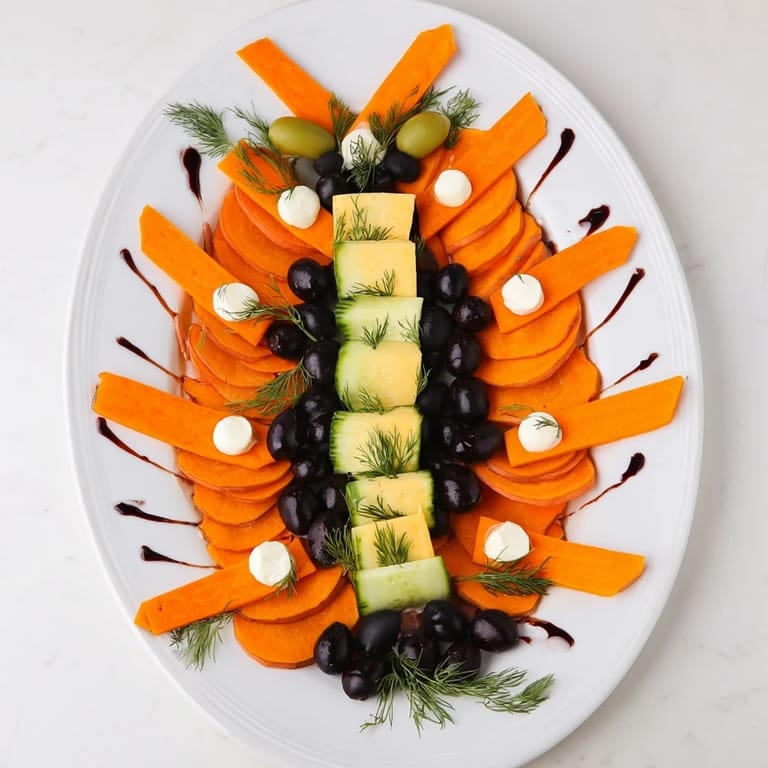
- Lay your cucumber sticks down the center of your platter, lengthwise, creating a clean line that divides left from right. This is your anchor, your guide. Step back and look at it—does it feel centered? Adjust until it feels right to your eye.
- Fan out the orange wings with confidence:
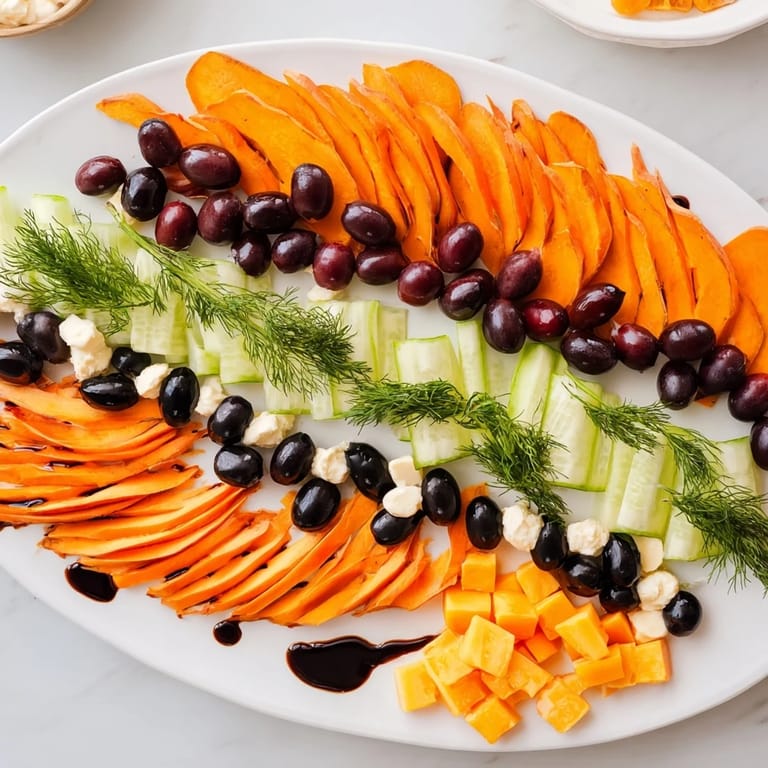
- Starting from the top of the cucumber line and working outward, arrange your orange elements—sweet potato, carrot rounds, bell pepper strips, and cheddar cubes—in a symmetrical pattern on both sides. Think of it like feathers radiating outward. Leave small gaps; you'll fill these with black elements. The upper sections should be slightly larger than the lower ones, mimicking a real monarch's proportions.
- Add the dramatic black accents:
- Now comes the satisfying part. Fill the spaces and edges with black olives, black grapes halved-side down for that gleaming look, and scattered crackers. Arrange the olives along what would be the outer edge of each wing—this creates that signature monarch silhouette. Let some grapes cluster together; let some sit alone. There's no perfect here, just intentional.
- Add the delicate details:
- Using a small spoon, dot softened cream cheese along the black wing edges in small, deliberate spots. These white dots are the authentic finishing touch that makes people lean in closer. Space them like you're dotting a constellation.
- Hint at dimension with glaze:
- With a very light hand, drizzle just a touch of balsamic glaze over the black elements. You're not painting; you're suggesting. The glaze should catch the light and make those olives shimmer.
- Crown it with antennae:
- Place a small tuft of dill or microgreens at the top of your cucumber body. This is the final flourish—it signals that this is a living, breathing creature.
- Serve with grace:
- Bring it to the table whole, let people admire it for a moment, then encourage them to start building their own bites. The first person to take something is always brave; thank them for breaking the spell.
 Save
Save What I treasure most about this recipe is how it brought people together without a single moment at the stove. Guests who usually sit back, eating whatever's set before them, instead became active participants. They were choosing, combining, tasting with intention. Food became conversation, and the table became animated in a way I'd never quite seen before.
Why This Works as Party Food
This platter thrives at gatherings because it solves so many hosting challenges at once. There's no last-minute reheating, no stress about timing, no kitchen anxiety. You can prep everything hours ahead, keep components separate if needed, and assemble just before guests arrive. It's naturally vegetarian and easily adapted for gluten-free diets. But beyond logistics, it works because it gives people permission to slow down. In our world of pre-plated courses and individual servings, this encourages grazing, conversation, and the kind of thoughtful eating we've almost forgotten how to do.
The Art of Color on a Plate
I've learned that orange and black together create an intensity that's almost electric. This isn't just about making things look pretty—it's about creating a visual narrative. The warmth of the orange elements feels inviting and appetizing, while the black creates structure and sophistication. The contrast makes each color more vivid. When you're arranging, trust your instincts about balance. If one side looks heavier, it probably is. Adjust until your eye feels satisfied.
Variations and Personal Touches
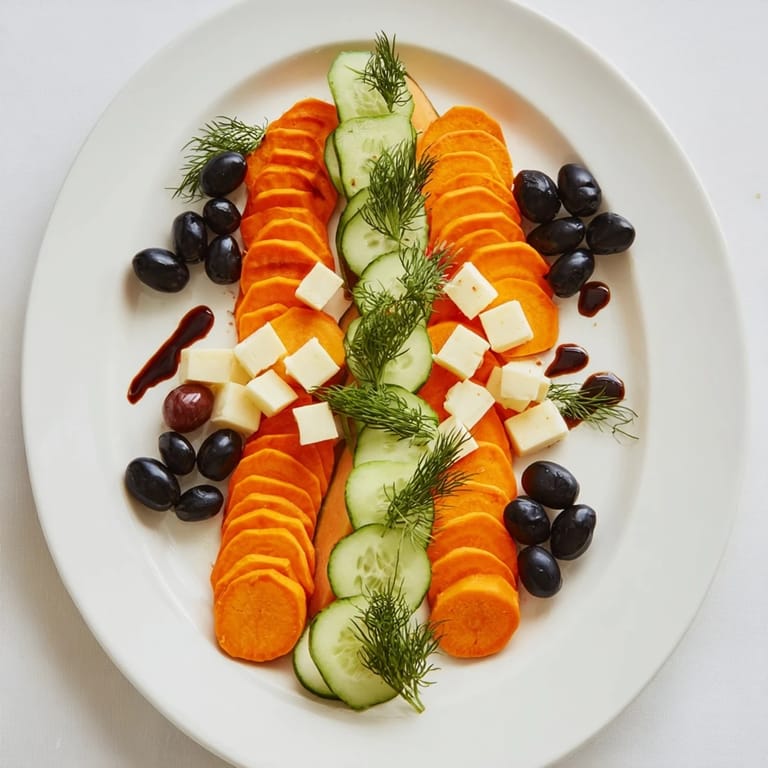
Once you understand the basic structure—orange wings, black accents, central cucumber spine—you can play. I've made versions with roasted butternut squash instead of sweet potato, with purple carrot slivers woven through for extra elegance, and once, memorably, with orange cherry tomatoes for a summery twist. Each version tells a different story depending on what I found at the market that morning. This recipe isn't a rigid formula; it's a framework for creativity. Change it to match your ingredients, your aesthetic, your mood.
- Try roasted butternut squash or orange cherry tomatoes as orange element alternatives.
- Add thin slices of purple carrot or beet for unexpected color contrast and earthy sweetness.
- Consider serving alongside a crisp white wine or sparkling water with fresh citrus—the acidity cuts through the richness perfectly.
 Save
Save This recipe taught me that sometimes the most memorable food moments aren't about complicated techniques or rare ingredients—they're about taking time to see beauty in simple things and sharing that vision with people you care about. Make this when you want to remind yourself and others that eating is, first and foremost, a joy.
Kitchen Questions
- → What ingredients create the orange wing sections?
Thin roasted sweet potato slices, carrot rounds, orange bell pepper strips, and cubed cheddar cheese are arranged to form the vibrant orange parts of the wings.
- → How are the black details on the wings formed?
Black olives, halved black grapes, and black sesame or rice crackers fill the gaps, mimicking the characteristic black edges and spots of monarch wings.
- → What is the purpose of the cucumber slices in the center?
Cucumber sticks form the central body line of the butterfly, providing a base for symmetrical wing arrangement and an appealing fresh crunch.
- → How is the creamy white dot effect achieved?
Softened cream cheese is dotted along the black edges to replicate the white spots on monarch butterfly wings, adding both texture and visual contrast.
- → Are there suggestions to enhance the color palette?
For extra flair, roasted butternut squash, orange cherry tomatoes, or purple carrot slices can be swapped in for the orange elements to add variety and depth.
- → What serving suggestions pair well with this platter?
This colorful display pairs nicely with a crisp white wine or sparkling water with citrus to complement the fresh, vibrant flavors.