 Save
Save I'll never forget the first time I stepped into a riad in Marrakech, with its intricate zellige tile patterns adorning every wall. That night, I was served a platter that took my breath away—not just for its flavors, but for how it was presented. Each small bowl held a different treasure: creamy hummus here, smoky baba ganoush there, jewel-toned dips surrounded by briny olives and vibrant vegetables. It felt like edible art, and I knew I had to recreate that magic at home.
My friend Sarah showed up unannounced on a Friday evening, and instead of panicking, I threw together a Moroccan tile mosaic for us. As we picked and shared, passing olives and tearing bread, something shifted—suddenly we weren't just catching up, we were traveling together through flavors and stories. That's when I realized this platter wasn't just food; it was an invitation.
Ingredients
- Classic hummus: The creamy backbone that lets other flavors shine—make sure it's silky and well-seasoned, as this is your canvas
- Baba ganoush: Smoky and luxurious, it adds depth that people always ask about
- Muhammara: The show-stopper dip that tastes complex but comes together in minutes, bringing warmth and richness
- Labneh or Greek yogurt: A cooling contrast drizzled with olive oil and zaatar—don't skip the zaatar, it's the finishing touch that ties everything together
- Roasted red peppers: Buy them jarred if you're short on time; their sweetness balances the savory elements beautifully
- Marinated artichoke hearts: These bring a tender, tangy dimension that keeps people reaching back
- Moroccan carrot salad: Fresh and herbaceous, the lemon and cumin make this feel alive on the palate
- Preserved lemon slices: This is the secret ingredient—their intense, salty-sour punch transforms everything they touch
- Mixed Moroccan olives: Quality matters here; get a mix of colors and flavors if you can
- Quick-pickled red onions: Homemade is worth the five minutes—they add a sharp brightness that cuts through the richness
- Cornichons or baby gherkins: Their crisp bite is the palate cleanser everyone needs
- Roasted almonds and pistachios: Toast them yourself if possible for a warmth that's impossible to buy pre-roasted
- Toasted sesame seeds: A gentle nuttiness that catches in your teeth and leaves you wanting more
- Baguette or pita: Your delivery vehicle—toast it to crispness so it doesn't get lost next to bold flavors
- Pomegranate seeds: They're as much about color as they are about taste, adding a jewel-like beauty
- Fresh mint and cilantro: These aren't just garnish; they're flavor bridges that make you taste everything differently
- Sumac: A whisper of tartness that you can't quite place but absolutely need
- Extra virgin olive oil: The final drizzle—use one you love because everyone will taste it
Tired of Takeout? 🥡
Get 10 meals you can make faster than delivery arrives. Seriously.
One email. No spam. Unsubscribe anytime.
Instructions
- Gather your vessels:
- Set out 8 to 12 small colorful bowls or ramekins—this is where the magic begins. Each bowl is a canvas, and the colors matter. I like to use deep blues and terracottas that echo the zellige tiles. Take a moment to arrange them on your board or tray as you work; this way you're not scrambling at the end.
- Prepare your dips:
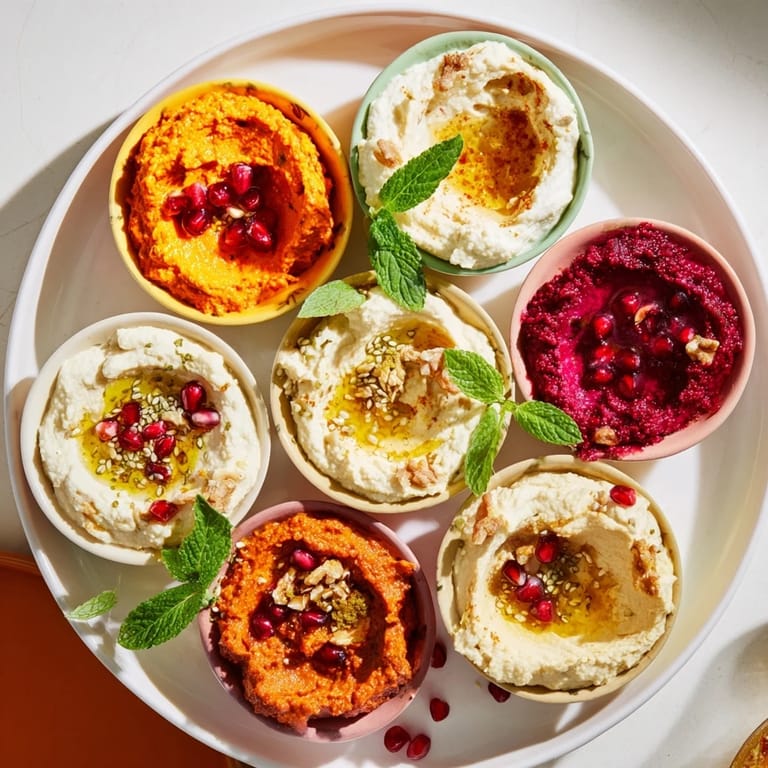
- If you're making hummus, baba ganoush, or muhammara from scratch, do this first—they need a little time to meld and taste even better the next day, so this is the perfect make-ahead step. If you're buying them prepared, that's absolutely fine. Pour each into its own bowl and let them breathe. For the yogurt dip, drizzle generously with olive oil and sprinkle zaatar across the top like you're painting—this little gesture elevates everything.
- Arrange your marinated vegetables:
- In separate bowls, place your roasted red peppers, artichoke hearts, Moroccan carrot salad, and preserved lemon slices. Let them show off individually; don't crowd them. The brightness of these bowls will create visual rhythm across your platter.
- Create your pickle and olive situation:
- In their own bowls, arrange mixed olives, quick-pickled red onions (which take just five minutes to make—vinegar, salt, a few minutes), and cornichons. These salty, briny elements are what keep people coming back for more bread.
- Toast your bread and crackers:
- While you're assembling, slide your baguette slices and pita into a warm oven or toaster. You want them golden and crisp enough to hold the weight of generous dips without breaking. Set them aside to cool slightly—warm bread is a gift.
- Distribute nuts and seeds:
- In two or three small bowls, place your roasted almonds, pistachios, and toasted sesame seeds. These provide texture and a moment of satisfaction between tastes of dips and vegetables.
- Create your mosaic:
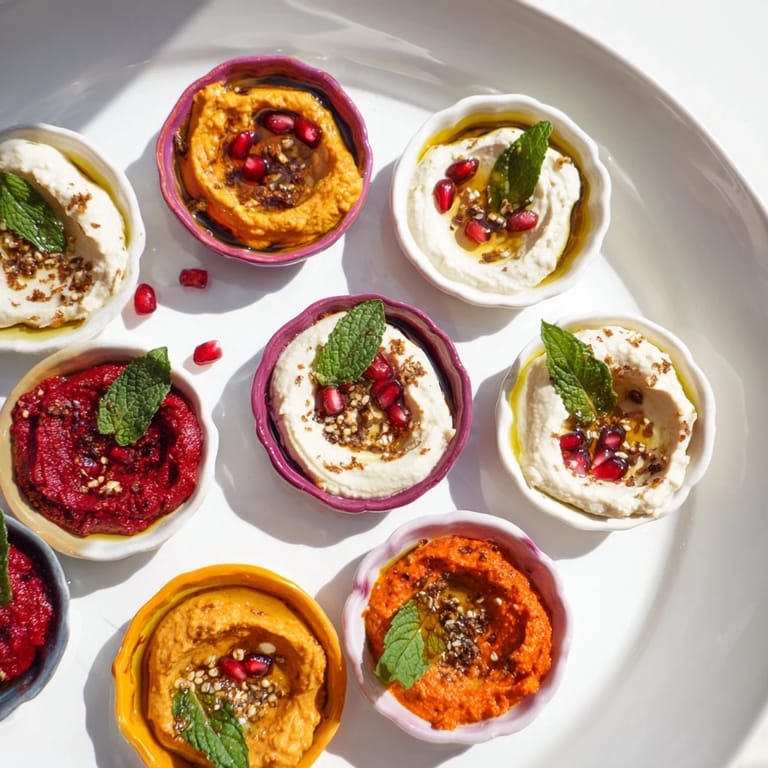
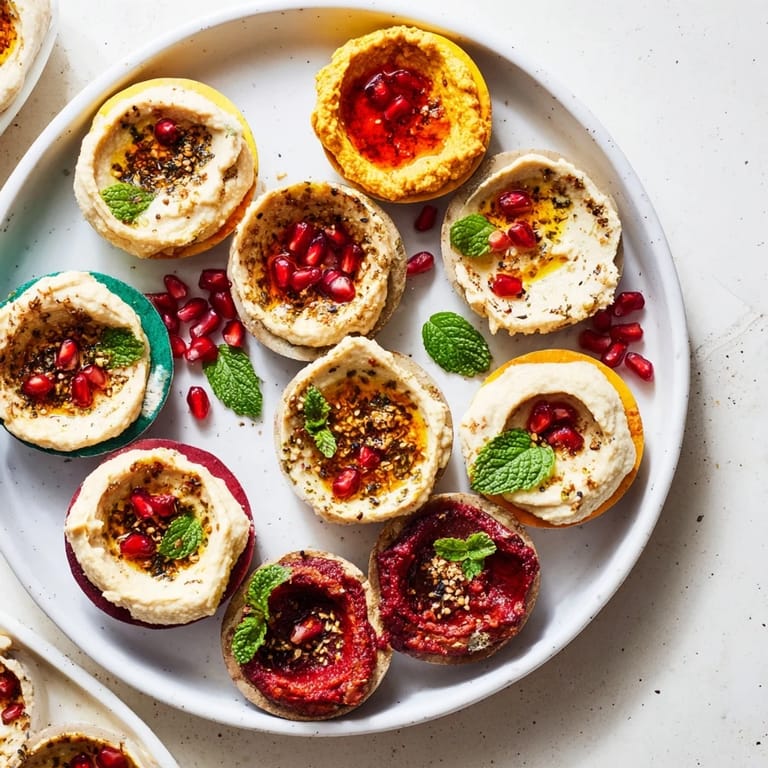
- This is the moment. On your large board or tray, arrange all your bowls in a pattern that feels balanced and visually appealing. Leave small gaps between them—these are where your fresh herbs and pomegranate seeds go. Fill the spaces with scattered mint leaves and cilantro, letting them spill naturally like plants growing between tiles. Scatter pomegranate seeds throughout for pops of ruby red. Sprinkle sumac lightly across open spaces. Step back and look at it like you're looking at actual tilework—does it make you happy? If yes, you're ready.
- The final flourish:
- Just before serving, drizzle your best olive oil over the dips and around the vegetables. This isn't just functional; it's beautiful and tells people this meal was made with care.
- Invite people to play:
- Set out small spoons for the dips and let your guests build their own combinations. The magic of this platter is in the discovery and mixing—there's no wrong way to eat it.
 Save
Save I brought a version of this to a potluck last year, and what I remember most isn't the empty bowls by the end—it's watching a stranger and an old friend discover preserved lemons together, their faces lighting up with that moment of understanding. That's what this platter does; it creates those little moments of connection between bites.
The Art of Assembly
The beauty of this platter lives in how it looks as much as how it tastes. Think of yourself as an artist arranging tiles. The colors should flow and balance—don't cluster all the bright reds together or all the greens. Use height variation by stacking some items or piling nuts higher in their bowls. The fresh herbs aren't just decoration; they bridge the visual gaps and add freshness between every bite. I learned this from an actual tile maker in Fez, who told me that the spaces between the patterns are just as important as the patterns themselves. Same rule applies here.
Making It Ahead
Most of this platter thrives on being made in stages. The dips are happier if prepared a day or two in advance, letting their flavors deepen and merge. The marinated vegetables improve over time, too. The morning of serving, prep your pickled onions, toast your bread, and prep your fresh herbs. Then, about 30 minutes before guests arrive, arrange everything on the board and leave it uncovered on the counter. Room-temperature food tastes so much better than cold food, and the herbs stay perky when not covered.
Variations and Additions
This platter is endlessly customizable, and that's part of its charm. In summer, add grilled summer vegetables—zucchini, eggplant—brushed with olive oil and seasoned with sumac. In winter, consider roasted beets or caramelized onions. If you want protein, crumbled merguez sausage or grilled halloumi can be their own small bowl. For a vegan version, cashew cream or tahini-based dips replace the yogurt, and everything else already works. Dried fruit like apricots or dates add sweetness, and additional dips like beet hummus or za'atar-spiced yogurt expand the flavor story. The key is to keep every element distinct and let it shine in its own bowl rather than mixing too many things together.
- Seasonal vegetables can be roasted, grilled, or pickled and arranged in their own space
- Protein additions should be treated as a bowl item, not scattered across everything
- Additional dips work best when they differ in color and flavor from what's already there
 Save
Save This platter is more than appetizers arranged on a board. It's an invitation for people to slow down, explore, and taste the world together. Every time you make it, you'll remember why.
Kitchen Questions
- → What dips are included in the mosaic platter?
The platter includes classic hummus, baba ganoush, muhammara (red pepper and walnut dip), and labneh or Greek yogurt drizzled with olive oil and zaatar.
- → Can this platter be made vegan?
Yes, simply omit the labneh or substitute it with a plant-based yogurt to make it vegan-friendly.
- → How should the platter be arranged?
Arrange dips, marinated vegetables, olives, nuts, and garnishes in small colorful bowls on a large tray to mimic a vibrant mosaic pattern.
- → Are there gluten-free options for serving?
Yes, use gluten-free crackers instead of bread to keep the platter gluten-free.
- → What garnishes enhance the platter’s flavor?
Fresh mint, cilantro, pomegranate seeds, sumac, and extra virgin olive oil are used to garnish and enhance the flavor.
- → Can additional ingredients be added?
Seasonal vegetables, dried fruits, grilled halloumi, or merguez sausage can be added to customize the platter.