 Save
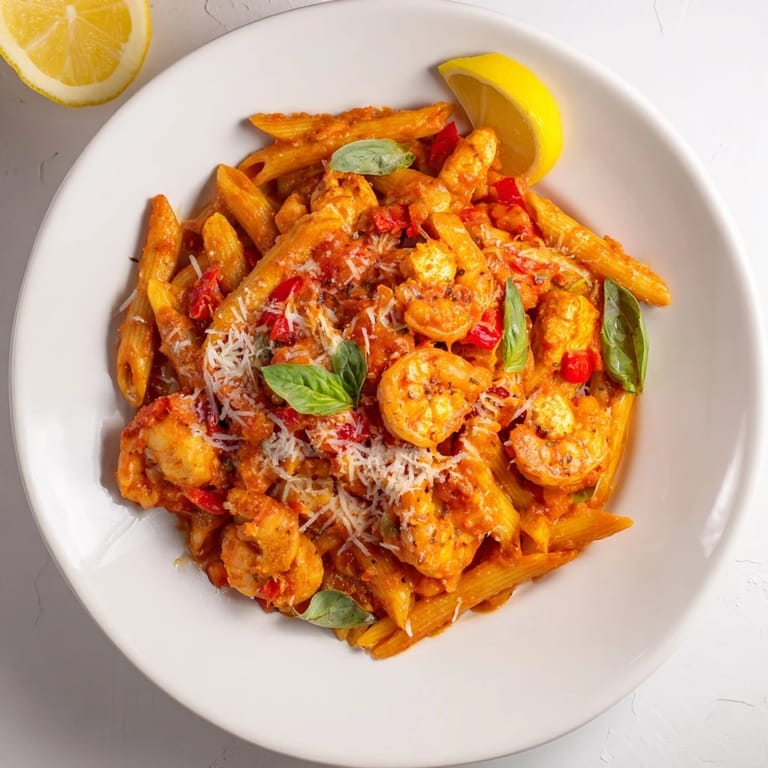
Save One humid evening, I watched my neighbor toss a smoking pan from her kitchen window, cursing delightfully in Italian while her kitchen smelled like fire and the ocean. She caught me staring and shouted down that she was making diavola—the devil's pasta—with whatever proteins she had frozen. Twenty minutes later, I was eating the most electric, one-pot miracle I'd ever tasted: tender chicken, pink shrimp, and pasta all tangled together in a sauce that made my lips tingle and my stomach completely happy.
I made this for a dinner party on a Tuesday when I realized I had nothing prepared and exactly forty minutes before guests arrived. The smell alone had people leaning against my kitchen counter asking questions before they'd even sat down. By the time the first bite hit their forks, the conversation stopped completely—just the sound of satisfied eating and requests for seconds.
Ingredients
- Boneless, skinless chicken breast or thighs (250g): Thighs stay more forgiving in the simmering liquid, but breasts work fine if you don't overcook them past that tender window.
- Frozen raw shrimp, peeled and deveined (200g): Frozen shrimp are secretly superior here because they release moisture slowly into the sauce, and thawing them gently under cold water gives you more control.
- Dried penne or rigatoni (300g): Short, sturdy pasta shapes catch the sauce in their ridges and don't turn to mush when everything cooks together.
- Medium yellow onion, finely chopped: The sweetness balances the heat and provides an invisible flavor base that makes everything taste more intentional.
- Garlic, minced (3 cloves): Mince it fine so it disperses throughout without leaving harsh chunks, softening into the sauce as it cooks.
- Red bell pepper, diced: It adds gentle sweetness and a slight char when it catches the heat, plus visual brightness against the red sauce.
- Fresh red chili, thinly sliced: Optional but worth including if you want that initial bite before the sauce's warmth takes over.
- Crushed tomatoes (400g can): The foundation of everything—buy good ones if you can because they're tasting you this time.
- Tomato paste (2 tbsp): A small amount concentrated into the oil creates depth and richness that a can of tomatoes alone won't give you.
- Chicken broth (700ml): This is your pasta's cooking liquid, so it flavors every strand while it hydrates.
- Dried oregano and basil (1 tsp each): Dried herbs are stronger than fresh here because the long simmer lets them unfold into the sauce.
- Smoked paprika (1/2 tsp): A quiet note of smoke that makes people wonder what your secret ingredient is.
- Red pepper flakes (1/2 to 1 tsp): Start conservative and taste as you go—heat builds in layers as the sauce concentrates.
- Olive oil (2 tbsp): Use something you actually enjoy tasting because it's not being hidden.
- Grated Parmesan cheese (50g): Stir it in off the heat so it doesn't seize or clump, melting into each bite instead.
- Fresh basil leaves and lemon wedges: The basil stays bright and peppery against the cooked warmth, and lemon is your final flavor adjustment.
Tired of Takeout? 🥡
Get 10 meals you can make faster than delivery arrives. Seriously.
One email. No spam. Unsubscribe anytime.
Instructions
- Heat the oil and build your base:
- Warm olive oil in your large pot over medium-high heat until it shimmers slightly, then add the chopped onion. Sauté for two to three minutes until it turns translucent and starts releasing its sweetness, then add the minced garlic, diced pepper, and chili if using.
- Brown the chicken gently:
- Push the vegetables to the sides and let the chicken pieces touch the hot surface for color, stirring occasionally over three to four minutes until it's lightly browned on the outside but not cooked through.
- Deepen the flavor with spices:
- Stir the tomato paste into the oil between all the ingredients, then sprinkle the paprika, oregano, basil, and red pepper flakes over everything. Cook for about one minute while stirring so the spices bloom and release their oils into the base.
- Bring the sauce together:
- Pour in the crushed tomatoes and chicken broth, bring everything to a rolling boil, then add the dry pasta and a generous pinch of salt. Stir well so no pasta sticks to the bottom.
- Cook the pasta low and slow:
- Reduce heat to a gentle simmer and partially cover the pot, stirring every couple of minutes to prevent the pasta from sticking. After ten minutes, the pasta will be almost tender and the broth will have mostly absorbed.
- Add the shrimp and finish:
- Scatter the shrimp over the top and stir gently so they nestle into the sauce. Cook uncovered for five to seven minutes more until the shrimp turn pink and firm and the pasta reaches al dente—tender but still with a slight bite.
- Final seasoning and serving:
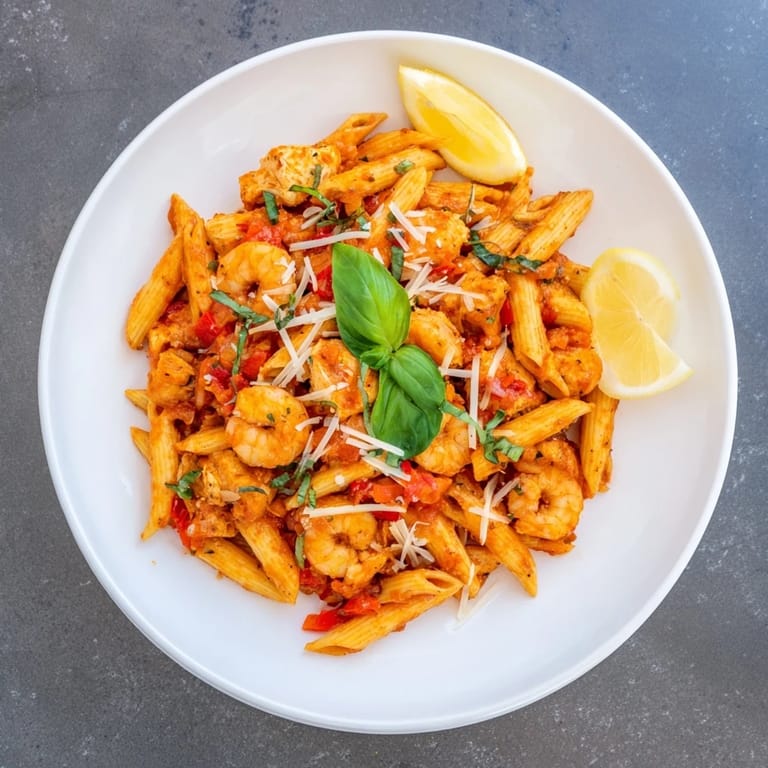
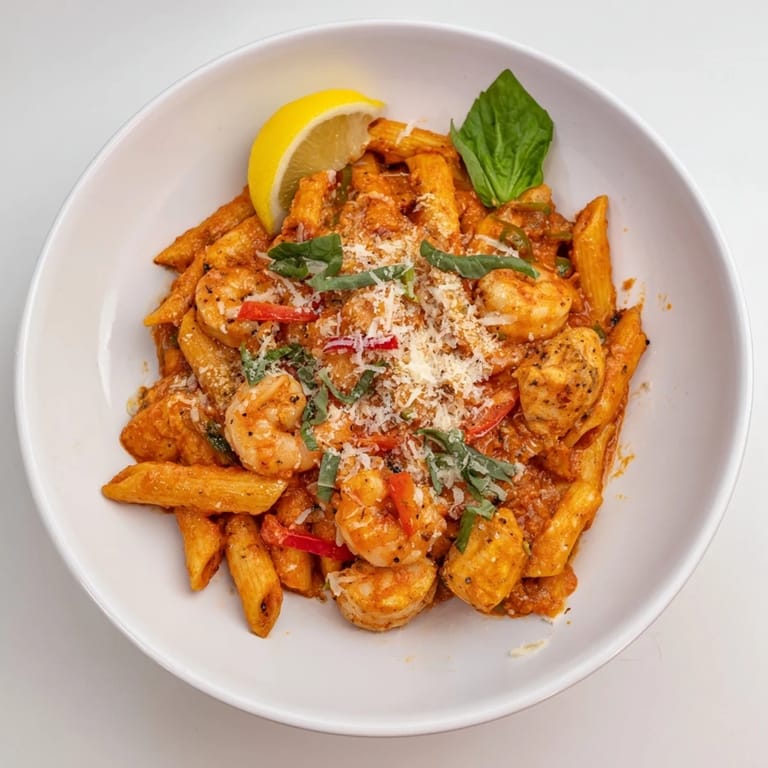
- Taste and adjust salt and pepper to your preference, then remove from heat and stir in the grated Parmesan so it melts evenly through. Serve immediately with fresh basil torn over the top and lemon wedges for squeezing at the table.
 Save
Save I learned why this dish is called diavola—the devil—one night when a friend who hated spicy food took one tentative bite and suddenly understood flavor as something alive and dynamic rather than safe. The heat doesn't hurt; it transforms everything else on the plate into something more vibrant.
The Magic of One Pot
Cooking pasta directly in broth with the other ingredients sounds like it should be a shortcut, but it's actually superior technique. The pasta releases starch into the liquid as it cooks, which thickens the broth and creates a natural sauce that clings to every piece. Each strand tastes seasoned all the way through instead of coated on the outside, and the whole thing feels more intentional than boiling pasta separately and mixing it in.
Timing the Proteins Right
Chicken and shrimp have completely different cooking windows, but starting the chicken first means they meet perfectly tender at the end. The chicken gets a three-minute head start in the sauce to partially cook through, then the shrimp join for the final sprint where they go from frozen to pink and firm in just five minutes. This staggered timing is why the dish doesn't end with overcooked rubber masquerading as seafood.
Heat as a Conversation
The red pepper flakes and fresh chili work together to create different kinds of heat—the fresh chili gives an immediate brightness and bite, while the dried flakes develop a warming depth as they steep in the sauce. You're not trying to make people cry; you're trying to wake up their palate so they taste the tomato, garlic, and basil more vividly. Start with half a teaspoon of flakes and taste as you go, adding more if you want the devil to speak louder.
- Fresh chili can be completely omitted if your guests are heat-averse, and the dish remains wonderful.
- Red pepper flakes are easier to control than fresh chili because you can taste constantly and adjust gradually.
- Squeeze fresh lemon over everything at the table—acid is your friend against richness and heat.
 Save
Save This is the kind of dinner that arrives at the table still steaming and tasting like you care, with zero drama and maximum impact. It's absolutely worth making twice.
Kitchen Questions
- → Can I adjust the spiciness of this dish?
Yes, reduce or omit the fresh chili and red pepper flakes for a milder flavor without compromising the core taste.
- → What pasta types work best in this dish?
Penne or rigatoni are ideal because their shape holds the sauce well during the one-pot cooking process.
- → Is it possible to substitute the chicken?
You can replace chicken with turkey or omit it for a seafood-focused version, maintaining balance with shrimp.
- → How do I ensure the pasta cooks evenly in one pot?
Stir occasionally during simmering and cover partially to let steam cook the pasta through while preventing sticking.
- → What wine pairs well with this dish?
A crisp white wine like Pinot Grigio complements the rich tomato sauce and seafood flavors perfectly.