 Save
Save The first time I truly understood what makes a dish more than the sum of its parts was when my nonna walked me through osso buco in her Milan kitchen. She didn't rush the browning, didn't skim on the butter, and spent what felt like forever just letting the pot simmer while she told stories about Sunday dinners and why you never, ever skip the gremolata. Watching those veal shanks transform from raw to falling-apart tender taught me that some meals demand patience, but they repay it with flavors so deep and comforting they stay with you.
I made this for friends during one of those gray winter evenings when everyone needed something warm and real. The aroma filled my entire apartment by the time they arrived, and I watched their faces when they took the first bite and realized this wasn't fussy cooking, it was honest cooking. We ate slowly that night, and someone asked for seconds before finishing their first plate.
Ingredients
- Veal shanks: Look for cross-cut pieces with plenty of marrow and bone—that's where the magic happens, and it's what gives the braising liquid its silky body.
- All-purpose flour: Just enough to create a light golden crust that helps seal in juices; gluten-free flour works beautifully if you need it.
- Olive oil and unsalted butter: The combination gives you the high heat you need for browning without burning, plus that butter taste matters.
- Onion, carrots, and celery: This aromatic base is called soffritto in Italian cooking, and it's the foundation of almost every braise worth making.
- Garlic: Fresh and minced, it perfumes everything without overpowering.
- Dry white wine: Don't use anything you wouldn't drink; it concentrates as it reduces and becomes part of the soul of the sauce.
- Diced tomatoes and tomato paste: The paste deepens the flavor quickly, while the tomatoes add brightness and acidity that keeps the dish from tasting heavy.
- Beef or veal stock: Homemade is best, but good quality store-bought works when life gets real.
- Bay leaves and thyme: These herbs are subtle but essential; they whisper rather than shout.
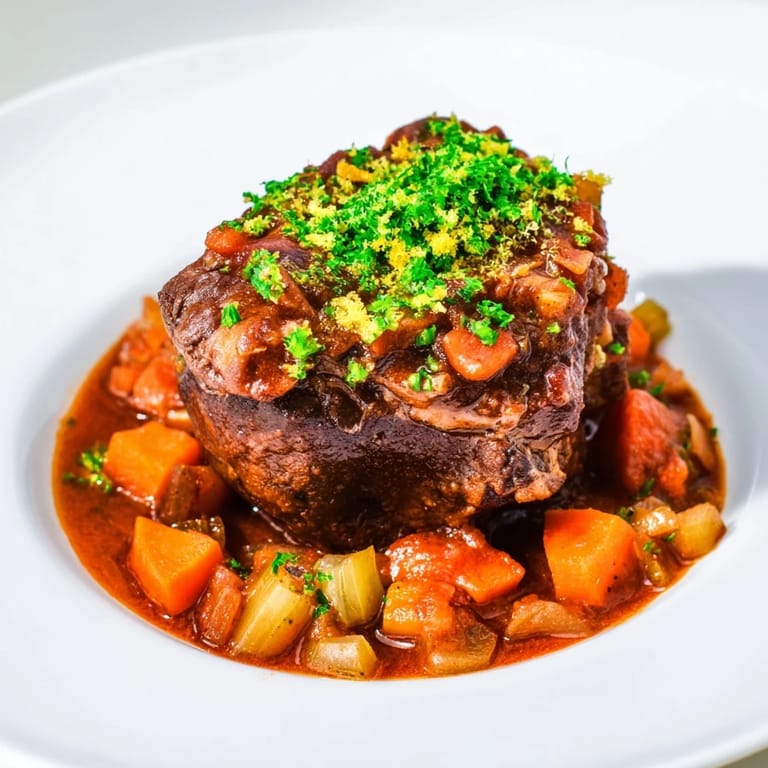
- Lemon zest: Save half for the gremolata; it's the final flourish that wakes everything up.
- Fresh flat-leaf parsley and garlic for gremolata: This combination is bright, herbaceous, and changes everything in the last moment.
Tired of Takeout? 🥡
Get 10 meals you can make faster than delivery arrives. Seriously.
One email. No spam. Unsubscribe anytime.
Instructions
- Dry and season your veal:
- Pat the shanks completely dry with paper towels—moisture is the enemy of a good crust. Season generously with salt and pepper, then dredge lightly in flour, shaking off the excess so you get color without a thick coating.
- Get a beautiful golden crust:
- Heat your oil and butter until they're shimmering and smell nutty, then brown each shank slowly on all sides—about 3 to 4 minutes per side. Don't rush this step; the darker the crust, the deeper the flavor will be.
- Build your aromatic base:
- In the same pot, soften your chopped onion, carrots, celery, and garlic until the kitchen smells like someone's home cooking. This should take about 6 minutes and is where the sweetness of the vegetables starts to develop.
- Add depth with tomato paste:
- Stir in the tomato paste and cook it for a minute to deepen its flavor and remove any raw taste. You'll notice the color of everything in the pot becomes richer.
- Deglaze with white wine:
- Pour in the white wine and scrape the bottom of the pot with your wooden spoon, pulling up all those flavorful browned bits. The wine will hiss and steam, and that's exactly what you want.
- Build the braising liquid:
- Add the diced tomatoes with their juice, stock, bay leaves, thyme, and half of your lemon zest. Stir everything together so the flavors start getting to know each other.
- Return the veal and braise low and slow:
- Nestle the browned shanks back into the pot in a single layer, spooning sauce over them so they're mostly submerged. Cover with a lid and slide into a 160°C oven for 2 hours—the low temperature ensures the meat becomes impossibly tender without drying out.
- Make your gremolata while the oven does the work:
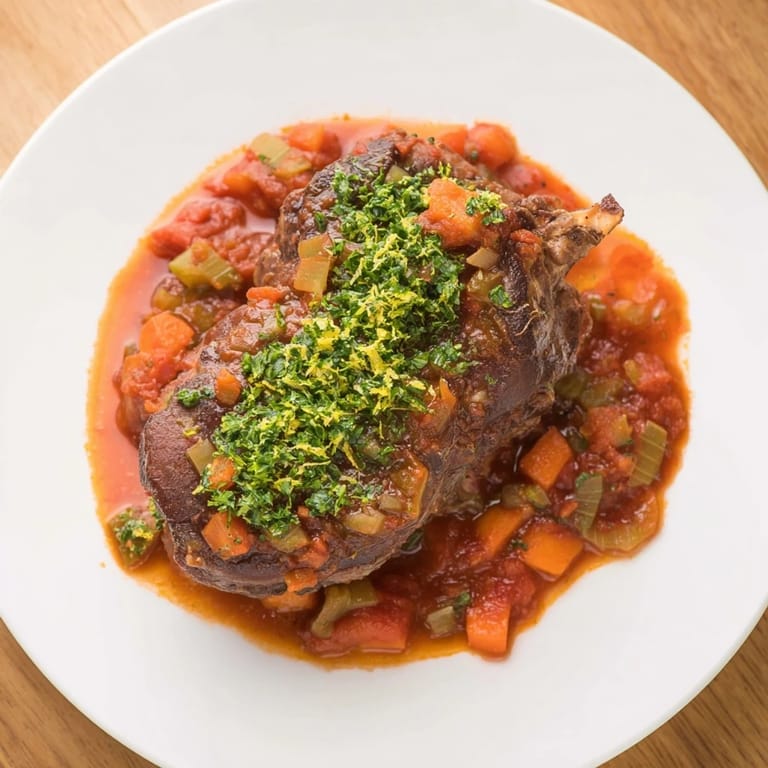
- Finely chop your parsley and mince fresh garlic, then combine with the remaining lemon zest. This bright mixture is what you'll scatter over everything at the end.
- Finish and serve:
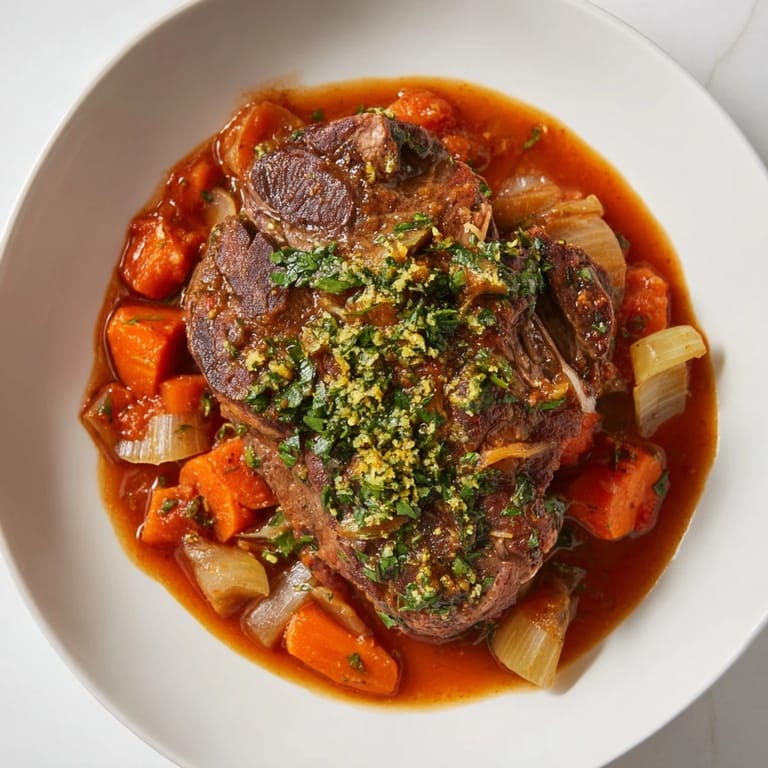
- Once the veal is so tender a fork slides through the bone, remove the shanks to a serving platter. Skim any excess fat from the sauce if you like, then simmer it down a bit more if it seems thin—you want it clinging to the meat. Spoon the sauce over the shanks and crown each one with gremolata just before serving.
 Save
Save There's a moment late in the braising when you lift the pot lid and the steam rises and the smell hits you all at once—that's when you know it's going to be good. That's when you realize why people have been making this dish for centuries, and why it brings everyone to the table.
Why This Dish Matters
Osso buco isn't just braised veal; it's a philosophy about cooking. It says that the best meals come from time, not shortcuts, and that waiting for something to be ready teaches you patience in a world that usually won't. The Milanese have been perfecting this dish for generations, and when you make it, you're joining that conversation.
What to Serve Alongside
The traditional pairing is saffron risotto, which soaks up the sauce like it was made for exactly this purpose. Polenta or creamy mashed potatoes work beautifully too, each one catching that rich, savory liquid in its own way. A simple green salad with lemon vinaigrette cuts through the richness without competing.
Storing and Making It Again
This dish actually tastes better the next day, once all the flavors have had time to settle and deepen. Store it covered in the refrigerator for up to three days, and when you reheat it gently on the stove, add the gremolata fresh again just before serving.
- If you're doubling the recipe, give it an extra 20 to 30 minutes in the oven so the larger batch heats through evenly.
- You can substitute beef shanks if veal isn't available, though you may need an extra 15 to 20 minutes of cooking time.
- For a gluten-free version, use cornstarch or gluten-free flour for dredging without changing the technique or the results.
 Save
Save There's something deeply satisfying about pulling a dish like this out of the oven and knowing you've made something worth sitting down for. This is the kind of cooking that turns an ordinary evening into a memory.
Kitchen Questions
- → What cut of meat is used for Osso Buco?
Veal shanks are the traditional choice, offering tender meat and a flavorful marrow-filled bone.
- → How is the gremolata prepared?
Gremolata is a fresh mix of finely chopped parsley, minced garlic, and lemon zest, added just before serving.
- → Can I substitute veal with beef shanks?
Yes, beef shanks can be used but require a longer braising time to achieve tenderness.
- → What sides complement this dish best?
Traditional pairings include saffron risotto, polenta, or creamy mashed potatoes to soak up the sauce.
- → Is there a gluten-free option available?
Yes, use gluten-free flour for dredging the meat to accommodate gluten sensitivities.