 Save
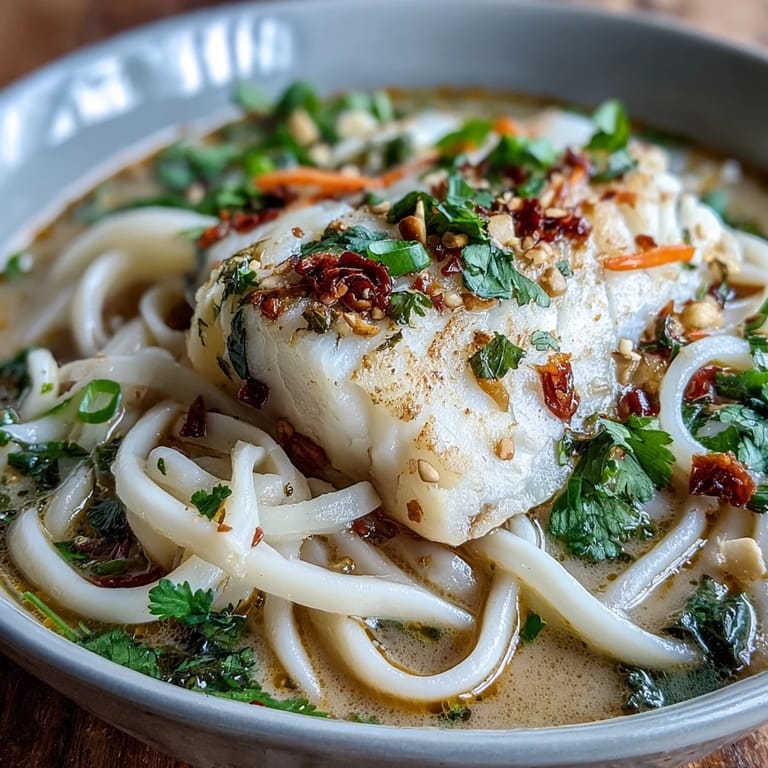
Save A friend once handed me a steaming bowl of this while I was buried in work, and somehow the smell of coconut and ginger cut through the stress like nothing else could. The broth was luminous, the cod impossibly tender, and I realized that day that the best meals don't need to be complicated—they just need to taste like someone cared enough to get the details right. This poached cod with spiced coconut broth became my go-to when I wanted to feel nourished without spending hours in the kitchen.
I made this for my sister after she'd had a rough week, and watching her close her eyes on that first spoonful told me everything. She went back for seconds without asking, and by the third bowl, she was asking if I'd write down the recipe. That's when I knew this wasn't just dinner—it was the kind of dish that reminds people why home cooking matters.
Ingredients
- Cod fillets (4, about 150 g each): Choose fillets that are roughly the same thickness so they poach evenly; thinner pieces can break apart while thicker ones stay raw inside.
- Neutral oil (1 tablespoon): Canola or sunflower work best since they won't compete with the delicate spices and won't smoke at medium heat.
- Onion (1, finely sliced): The thin slice helps it soften quickly and distribute its sweetness throughout the broth without overpowering it.
- Garlic cloves (2, minced): Mince them small so they distribute evenly and don't leave harsh chunks that overpower a single spoonful.
- Ginger (1 tablespoon, grated): Fresh ginger adds a warming bite that feels alive; use a microplane grater to break it down fine.
- Red chili (1, thinly sliced): Leave the seeds in if you like heat, or scrape them out for gentle warmth—either way, this is optional based on your tolerance.
- Red curry paste (1 tablespoon): This carries all the aromatics; choose a quality one without too many preservatives, as it's doing real work here.
- Coconut milk (400 ml): Full-fat is essential—don't reach for the light version or you'll lose the richness that makes this broth feel luxurious.
- Fish or vegetable stock (500 ml): Keep it neutral; fancy stock can steal the show from the spices you're carefully building.
- Fish sauce (1 tablespoon): Yes, it smells pungent on its own, but it dissolves into the broth and adds umami that you can't replicate any other way.
- Soy sauce (1 tablespoon): This adds depth and a gentle saltiness that brings all the flavors into focus.
- Lime juice (1 tablespoon): Fresh lime is non-negotiable; bottled lime juice turns flat by comparison and weakens the final brightness.
- Fresh udon noodles (300 g): These are silkier than dried and cook in minutes, which is why they work so well in this quick dish.
- Baby spinach (150 g): It wilts in seconds in the hot broth, adding nutrition without requiring separate cooking.
- Carrot (1 medium, julienned): The thin matchstick cuts cook in the residual heat and add a hint of sweetness that balances the spices.
- Shiitake mushrooms (100 g, sliced): Their earthiness deepens the broth; regular button mushrooms work in a pinch but lack that umami kick.
- Spring onions (2, thinly sliced): Save these for garnish at the end so they stay fresh and add a sharp contrast to the warm spices.
- Fresh coriander leaves: This final garnish brings brightness and aromatics that tie the whole bowl together.
Tired of Takeout? 🥡
Get 10 meals you can make faster than delivery arrives. Seriously.
One email. No spam. Unsubscribe anytime.
Instructions
- Build the base:
- Heat your oil over medium heat and add the onion, letting it soften for about 3 minutes until it's turning translucent at the edges. You'll know it's ready when it smells sweet and yielding rather than sharp and raw.
- Wake up the spices:
- Stir in the garlic, ginger, and chili, then cook for exactly 1 minute—this is where all that warmth and fragrance come alive, and the kitchen will smell incredible. Don't walk away; you want to catch that moment when everything is aromatic but nothing has burned.
- Deepen with curry paste:
- Add the red curry paste and stir constantly for 1 minute to toast it slightly and release all its layered flavors into the oil. You're looking for a slightly darker, deeper color and that aromatic depth that signals the paste has done its job.
- Create the broth:
- Pour in the coconut milk and stock, then bring everything to a gentle simmer—not a rolling boil, which can make the cod tough. Stir in the fish sauce, soy sauce, and lime juice, then taste and adjust if something feels missing.
- Poach the cod gently:
- Slide each fillet into the simmering broth and cover the pan, then let it cook for 6–8 minutes until the fish is just opaque and flakes easily when prodded with a fork. The gentle heat keeps the fish tender and silky rather than rubbery.
- Cook the noodles:
- While the cod poaches, boil your udon according to package instructions, drain them well, and divide them among 4 bowls. The hot noodles are ready to welcome the broth.
- Finish with vegetables:
- Add the spinach, carrots, and mushrooms to the broth and simmer for 2–3 minutes until just tender but still with a bit of texture. Everything should be warm through but not overcooked into submission.
- Assemble the bowls:
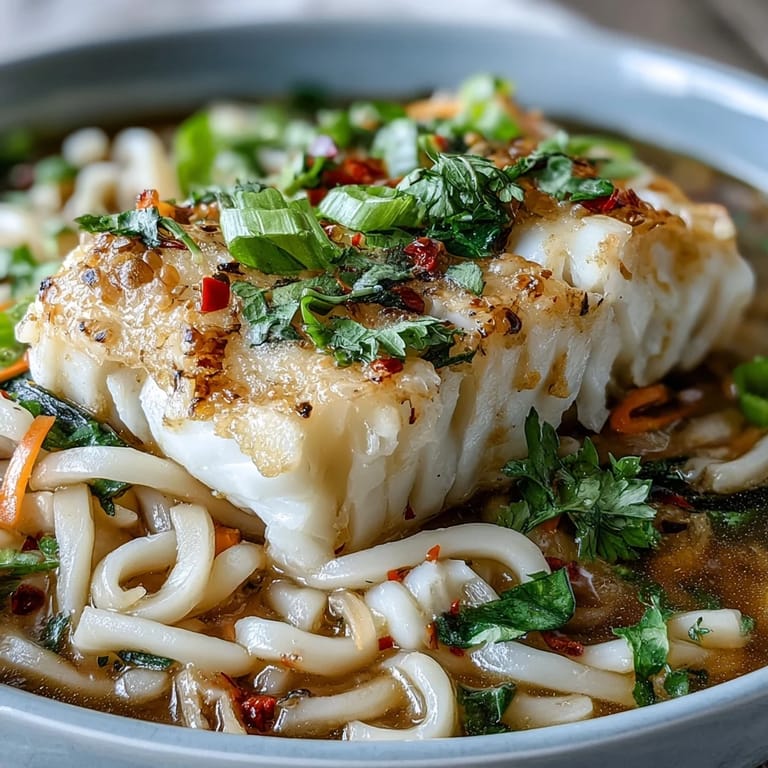
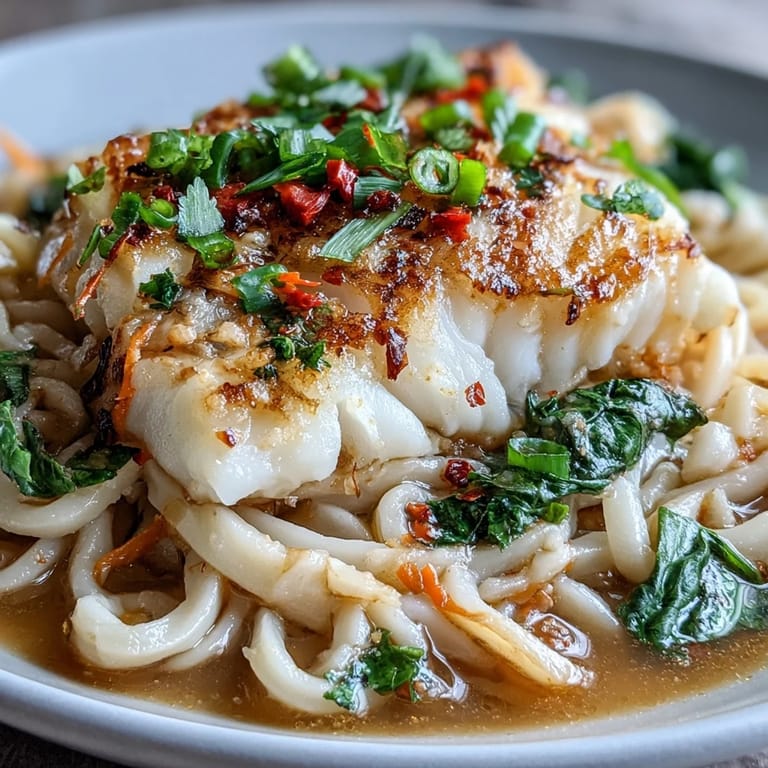
- Carefully lift each cod fillet out and set aside, then ladle the hot broth and vegetables over the noodles in each bowl. Top each with a piece of cod and finish with spring onions and fresh coriander leaves.
- Serve immediately:
- This dish is best eaten right away while everything is hot and the noodles haven't started absorbing too much liquid. Grab a spoon and settle in.
 Save
Save One night I made this for someone who said they didn't usually like fish, and halfway through the bowl they looked at me confused and said, "Wait, you're telling me I've been avoiding cod this whole time?" That's the moment I understood this recipe wasn't really about technique or ingredients—it was about showing that gentle cooking and good flavor combinations can turn skeptics into believers.
Why This Broth Works
The beauty of this coconut broth is that it does multiple jobs at once: it poaches the cod gently so the fish stays tender, it carries all the spice and umami flavors, and it becomes a silky sauce that coats the noodles. The fish sauce might seem intimidating, but it dissolves completely and adds a savory depth that coconut milk alone can't provide—it's the secret handshake between East and Southeast Asian cooking. Every element is there for a reason, and nothing feels like filler.
Building Layers of Heat
This dish lets you control the heat level depending on your mood and who you're cooking for, which I appreciate because not every day calls for the same level of spice. The fresh chili is optional, and you can adjust how much of it you use or how many seeds you leave in—start conservative and taste as you go. I learned this the hard way by making someone's bowl way too fiery without asking first, but now I always offer a small bowl of chili oil on the side so people can dial in their own heat at the table.
Flexibility and Variations
This recipe is forgiving in ways that make it feel modern and adaptable without losing what makes it work. You can swap cod for halibut or haddock if that's what looks fresh at the market, or use rice noodles instead of udon if you're avoiding gluten. I've even made it with tamari instead of regular soy sauce and it tastes just as complete, and I once threw in bok choy instead of spinach when that's what I had on hand.
- If you find the broth too rich, thin it with a splash more stock and let it simmer gently to marry the flavors.
- Fresh herbs matter; don't skip the coriander at the end because it's what makes the final bite feel bright rather than heavy.
- This dish reheats okay but tastes best eaten fresh, so it's perfect for nights when you want something nourishing but aren't planning to do much else afterward.
 Save
Save This has become the recipe I reach for when I want to cook something that feels more elegant than the effort it requires. It's one of those dishes that reminds me why I fell in love with cooking in the first place.
Kitchen Questions
- → Can I use a different type of fish instead of cod?
Yes, you can substitute cod with any firm white fish such as haddock, halibut, or sea bass. Ensure the fillets are skinless and boneless for best results.
- → How do I know when the cod is properly cooked?
The cod is ready when it becomes opaque throughout and flakes easily with a fork. This typically takes 6-8 minutes of gentle poaching in the simmering broth.
- → Can I make this dish gluten-free?
Yes, use rice noodles instead of udon and substitute tamari for soy sauce. Ensure all other ingredients, particularly the curry paste and fish sauce, are certified gluten-free.
- → How can I adjust the spice level?
Control the heat by adding or omitting the red chili. For extra spice, drizzle with chili oil before serving or add more red curry paste to the broth.
- → Can I prepare any components in advance?
Yes, you can prepare the broth base up to step 4 and refrigerate for up to 2 days. When ready to serve, reheat the broth, then poach the fish and cook fresh noodles.
- → What vegetables work well in this dish?
Besides the spinach, carrots, and shiitake mushrooms, you can add bok choy, snap peas, bell peppers, or bean sprouts for additional texture and nutrition.