 Save
Save I'll never forget the year my friend asked me to bring something special for Pride month celebration, and I remember standing in my kitchen thinking about how food could be a statement. That's when the idea hit me—what if we could literally serve the rainbow? I started gathering produce, arranging colors like an artist mixing paints, and suddenly our table wasn't just feeding people, it was telling a story of joy and inclusion with every bite.
I made this board for our neighborhood Pride picnic last summer, and watching a table of sixty people light up when they saw those perfect rainbow lines will stay with me forever. An older woman who'd kept her story quiet for decades told me it was the most beautiful thing anyone had ever made for her. That's when I knew this wasn't just food—it was love arranged on a board.
Ingredients
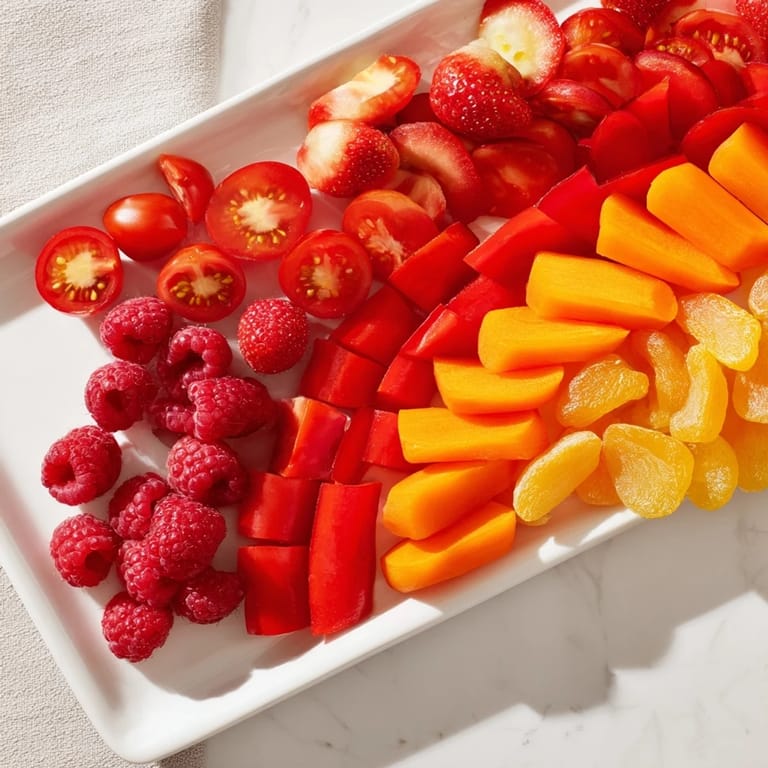
- Red section (cherry tomatoes, halved): These are your jewels—pick ones that feel heavy for their size because that means they're juicy and full of sweetness
- Red section (strawberries, halved): Buy them as close to serving time as possible; they're delicate and deserve that respect
- Red section (red bell pepper strips): Slice them thin so they're crisp and fresh, not limp
- Red section (raspberries): The most precious of your reds—handle them like you're moving tiny treasure
- Orange section (orange bell pepper strips): These taste almost sweet when they're fresh; that natural sweetness makes them shine
- Orange section (mandarin segments): Use fresh if you can find them, but canned works beautifully and honestly tastes just as good
- Orange section (dried apricots): They add a chewy texture that people reach for again and again
- Orange section (baby carrots): Don't skip the baby carrots—their sweetness anchors the entire orange line
- Yellow section (pineapple chunks): Fresh pineapple is worth the effort to cut up; it brings brightness that matters
- Yellow section (yellow bell pepper strips): These are milder and sweeter than their red cousins, almost honeyed
- Yellow section (yellow cherry tomatoes): They're a secret weapon for color and taste
- Yellow section (cheddar cheese cubes): Use really good sharp cheddar; it should have personality
- Green section (green grapes): Look for ones that snap when you bite them—that's freshness
- Green section (cucumber slices): Cut them thick enough that they don't turn soggy, thin enough that they're elegant
- Green section (sugar snap peas): The hidden star of the board; they're sweet and satisfying and disappear first
- Green section (guacamole): Make it fresh if you have time, or let a small bowl of store-bought sit pretty in its own section
- Blue section (blueberries): These little spheres of perfection do their own thing visually
- Blue section (blue corn tortilla chips): They add a salty, crunchy element that people weren't expecting
- Blue section (blackberries): They're actually more purple than blue, but they deepen the color in a way that looks intentional
- Blue section (blue cheese crumbles): A bold choice, but the tanginess is unforgettable
- Purple section (purple grapes): They're darker, more wine-like, more mysterious than green ones
- Purple section (blackberries): Load up on these; they're the easiest purple to find and they're absolutely gorgeous
- Purple section (purple cauliflower florets): Raw cauliflower is underrated; it's sweet and crunchy
- Purple section (dried figs): They taste like you're eating something fancy and special, but they're just sitting there
- Serving accompaniments (gluten-free crackers): Pick a variety so everyone can choose their favorite
- Serving accompaniments (hummus): This is the safety net, the option that makes sure everyone's taken care of
Tired of Takeout? 🥡
Get 10 meals you can make faster than delivery arrives. Seriously.
One email. No spam. Unsubscribe anytime.
Instructions
- Gather your ingredients and wash everything with love:
- Rinse all your fruits and vegetables gently, then pat them dry with paper towels. Wet produce slides around and doesn't stay where you want it, so this step matters more than you'd think.
- Slice and prep with intention:
- Cut everything into pieces that feel right—halves for berries, chunks for pineapple, thin strips for peppers. Work slowly and think about how each piece will look on the board. This is where your art begins.
- Choose your canvas:
- Find your largest rectangular or oval board—this is your stage. If you don't have one, a cutting board or even a clean wooden plank works beautifully. Size matters because you want breathing room for those color lines.
- Plot your rainbow with confidence:
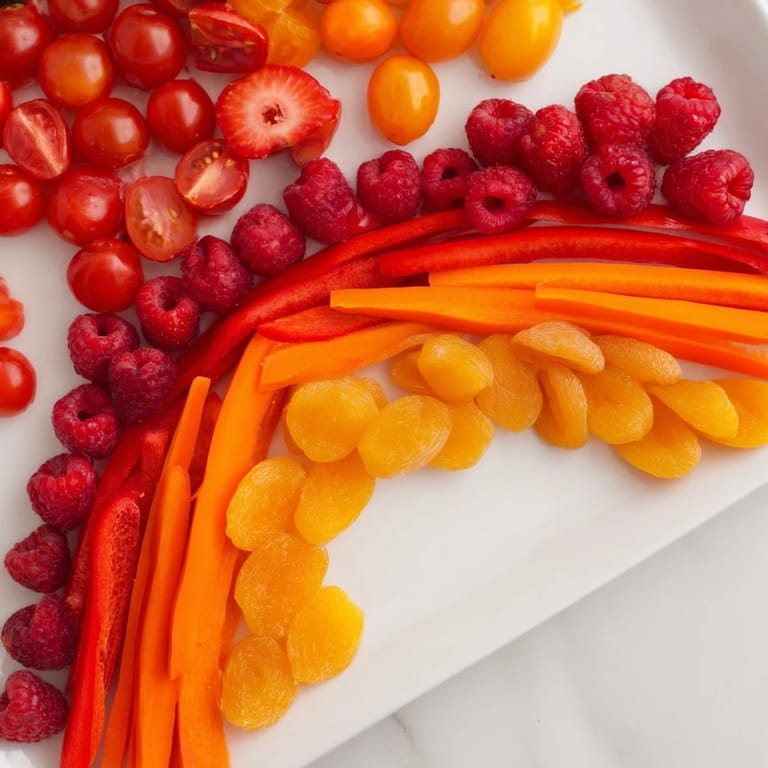
- Start at one end with your reds and imagine gentle curves flowing across the board like actual rainbow stripes. Don't overthink this—trust your eye and your instincts about what looks right.
- Lay down your first color:
- Begin placing all your red ingredients in their line, moving from one end of the board to the other. Let them touch if they want to. Let them be a bit messy—that's where the life comes in.
- Progress through the spectrum:
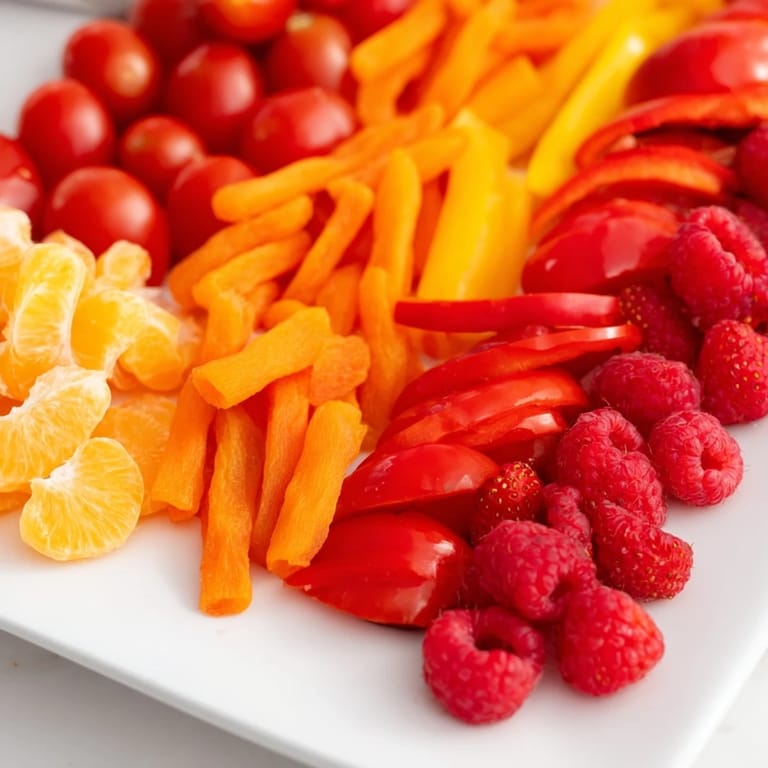
- Move to orange, then yellow, then green, then blue, then purple. Each color builds on the last one. Stand back and look at your work as you go. Adjust anything that doesn't feel quite right.
- Place your dips and special items:
- Put your guacamole in a small bowl within the green section, your hummus wherever it feels right, and nestle the cheese where it belongs. These bowls of extras are like the punctuation marks in your sentence.
- Fill the empty spaces with abundance:
- Look at your board now—are there gaps? Fill them with extra pieces, crackers, more of what feels right. A grazing board should look generous and overflowing, like you couldn't possibly hold back abundance even if you tried.
- Step back and feel the joy:
- Take a moment. This thing you've just made is beautiful and it's full of intention. That matters. Then bring it to your table and serve it immediately while everything is still fresh and vibrant.
 Save
Save What I've learned making these boards is that food can be activism. It can be art. It can be the thing that lets someone know they belong at your table exactly as they are. Every time I arrange those colors, I think about the people eating them and what a small act of visibility means to them.
Creating Your Color Palette
The secret to a stunning rainbow board is thinking like a painter. Your board is a canvas and you're mixing colors intentionally. The reds should feel like rubies, the yellows like sunshine, the greens like fresh spring. When you're shopping, spend a little extra time in the produce section really looking at what's available. Some seasons have better reds than others; some have more vibrant oranges. Work with what your local farms and markets are offering you, because seasonal produce is always more beautiful anyway. The magic happens when you realize you're not just following a recipe—you're creating something that represents joy in its most visible form.
The Texture Game That Changes Everything
What makes this board interesting isn't just color—it's the play between soft and crunchy, sweet and tangy, creamy and crisp. The cheese adds creaminess, the crackers add crunch, the berries add sweetness, and the vegetables add freshness. As you're building your board, think about these contrasts. Put something soft next to something crunchy. Put something sweet near something salty. This is what makes people keep reaching back for more, and it's what makes the eating experience interesting. I learned this the hard way after making a board that was too uniform in texture, and I watched people eat politely but without real joy. Now I chase that textural variety like my life depends on it.
Why This Board Is Actually a Love Letter
Making a pride board is a radical act of visibility. It's saying loud and clear with your food that you believe in love in all its forms, that joy is worth celebrating, that beauty matters. Whether you're making this for Pride month specifically or for any gathering where you want people to feel seen and celebrated, this board does that work. It's a conversation starter, a moment of beauty in the middle of a regular day, and honestly, a delicious way to feed people.
- Remember that imperfection is part of the charm—rustic and real beats perfectly uniform every time
- Mix seasonal additions into your color groups; apples for red, persimmons for orange, whatever feels current and fresh
- Let your guests see the care you put into this; share the story about why you arranged things this way
 Save
Save Make this board and watch what happens. Watch people light up. Watch them reach for the colors. Watch them maybe feel a little more free and seen. That's the whole point.
Kitchen Questions
- → How should I arrange the ingredients for best effect?
Arrange each ingredient by its color in gentle, curving lines on a large board, starting from red and progressing through orange, yellow, green, blue, and purple to create a visually striking rainbow.
- → Can this board accommodate dietary restrictions?
Yes, it suits vegetarian and gluten-free preferences. For vegan options, simply omit or replace cheeses with plant-based alternatives.
- → What dips or accompaniments pair well with this arrangement?
Hummus and guacamole complement the fresh vegetables and fruits, while assorted gluten-free crackers provide added texture.
- → Is this board suitable for quick preparation?
Absolutely. Most ingredients require only washing and slicing, with no cooking involved, making it easy and quick to prepare.
- → How can I enhance the visual appeal of the board?
Maintain strict separation of color groups and fill gaps with extra fruits, veggies, or crackers for a lush, overflowing look that enhances the rainbow effect.