 Save
Save There's a particular magic that happens when you're standing in a Swiss mountain kitchen on a cold evening, watching cheese slowly transform into liquid gold in a ceramic pot. My first fondue wasn't planned—it emerged from a conversation with a neighbor who mentioned her grandmother's weekly ritual, which felt like an invitation I couldn't refuse. She loaned me an old caquelon and walked me through the motion: that figure-eight stir that keeps everything moving and alive. It's become my favorite way to gather people around a table, everyone relaxed and laughing with their forks.
I made this for friends who had just moved into a new house, and the fondue pot became the centerpiece of their bare living room—we sat on moving boxes, forks clinking against the rim, and somehow it felt more intimate than any formal dinner. By the end of the evening, the pot was empty except for a thin browned layer that everyone scraped at with their bread. That's when I understood that fondue isn't really about the cheese; it's about creating a reason to stay at the table together.
Ingredients
- Gruyère cheese, grated (200 g): The backbone—nutty and complex, it gives fondue its soul and melts like silk when you get the temperature right.
- Emmental cheese, grated (200 g): The gentler counterpart that adds creaminess and keeps the whole mixture from being too dense or assertive.
- Dry white wine (1 cup/240 ml): Not just flavor, but the acid that prevents the cheese from becoming grainy; never skip this or use something sweet.
- Kirsch (1 tbsp/15 ml), optional: Cherry brandy that adds a whisper of depth—your grandmother might not use it, but it does make people pause and ask what that subtle something is.
- Cornstarch (1 tbsp/8 g): The invisible hero that stabilizes the mixture and keeps the texture smooth rather than separating into slick pools.
- Garlic clove, halved: A quick rub that leaves only a suggestion of garlic in the background, not an aggressive presence.
- Nutmeg, freshly grated (1/4 tsp) and white pepper (1/4 tsp): These tiny amounts create warmth without announcing themselves.
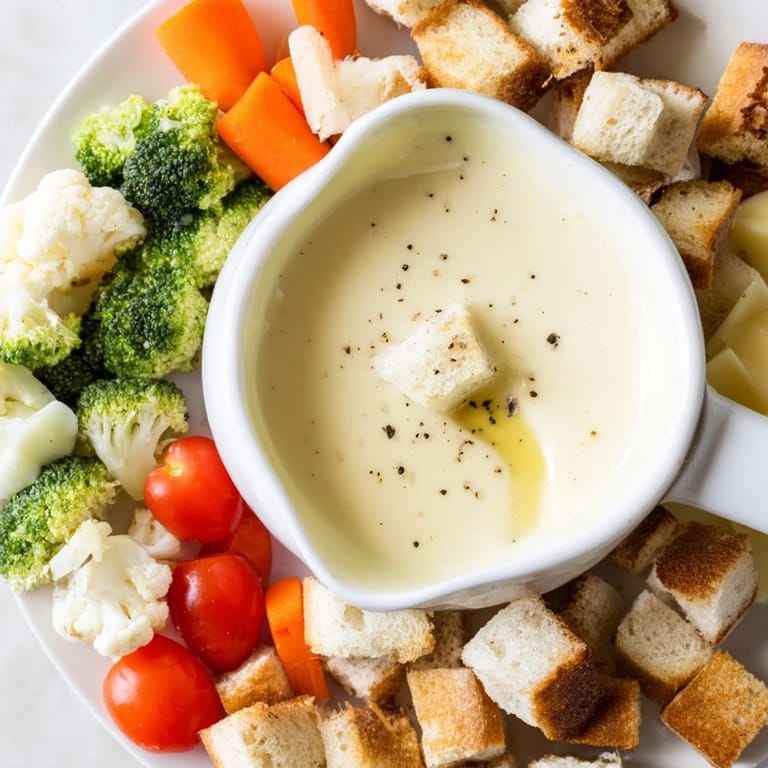
- Baguette or country bread, cut into cubes: Use bread that's a day old so it holds onto the fork; fresh bread becomes too soft and slides off in embarrassing ways.
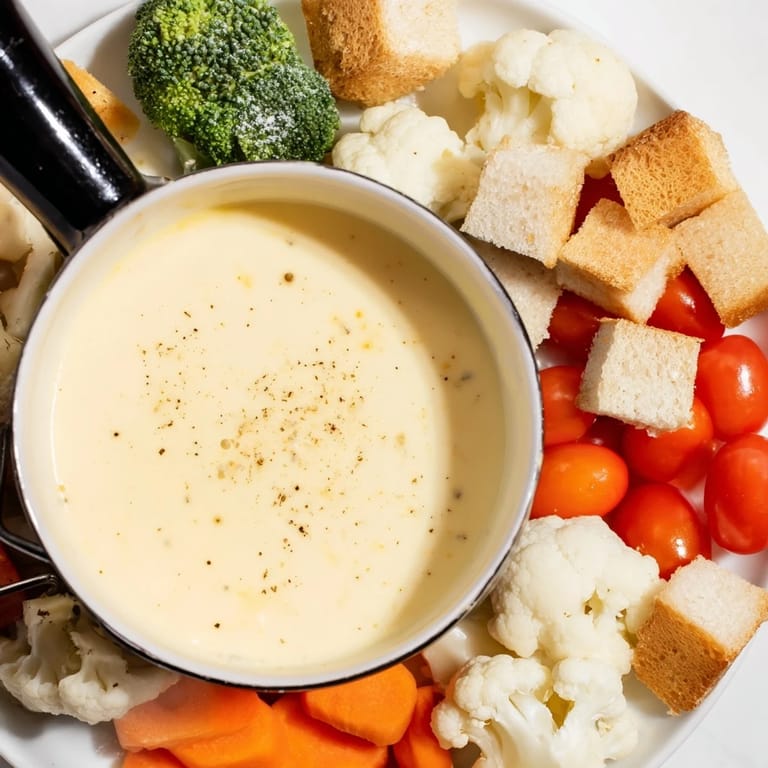
- Blanched broccoli florets (1 cup/100 g), blanched cauliflower florets (1 cup/100 g), cherry tomatoes (1 cup/100 g), and baby carrots (1 cup/100 g): The crunch and brightness that balance the richness—blanch them briefly so they're tender enough to dip without being mushy.
Tired of Takeout? 🥡
Get 10 meals you can make faster than delivery arrives. Seriously.
One email. No spam. Unsubscribe anytime.
Instructions
- Prepare your pot with intention:
- Rub the inside of your fondue pot with the cut garlic clove, then discard it—this gives the fondue a whisper of garlic without overwhelming it. There's something almost ceremonial about this step, like you're blessing the pot for what's about to happen.
- Heat the wine gently:
- Pour in the white wine and warm it over medium-low heat until it just begins to simmer. You'll notice a faint steam and the surface will shimmer slightly; this is the moment when you know the foundation is ready.
- Coat the cheese with cornstarch:
- In a small bowl, toss your grated cheeses with the cornstarch until every piece is lightly coated. This prevents clumping and creates that silky texture everyone remembers.
- Add cheese in slow stages:
- Gradually scatter the cheese into the hot wine while stirring constantly in a figure-eight motion—this keeps everything moving and prevents any part from sitting still long enough to separate. It takes patience, but rushing this is where things go wrong.
- Season and finish:
- Stir in the kirsch (if using), nutmeg, and white pepper until everything is smooth and unified. Taste it quietly to yourself and adjust seasoning if needed—this is your moment of control before guests arrive.
- Keep it warm and ready:
- Move the pot to low heat and set it over your tabletop burner when ready to serve. The fondue should stay at a gentle bubble, never a rolling boil, which would make it grainy and separate.
 Save
Save There's a moment midway through serving fondue when you realize no one's looking at their phones, and the conversation has somehow drifted from everyday complaints to actual stories people care about. Fondue creates that permission slip to linger, to keep reaching into the pot, to ask for another round of bread. It becomes the thing that made the evening, not just the food at the center of it.
Why Cheese Matters Here
Using good cheese makes a tangible difference—not fancy, just genuinely made cheeses with character. Gruyère and Emmental exist in a perfect balance where one doesn't overpower the other; they're teammates rather than rivals. If you use pre-sliced or heavily processed cheese, the fondue will be watery and frustrating. Grate your own cheese fresh, or ask the cheese counter to do it for you just before you leave.
Bread, Vegetables, and the Art of Dipping
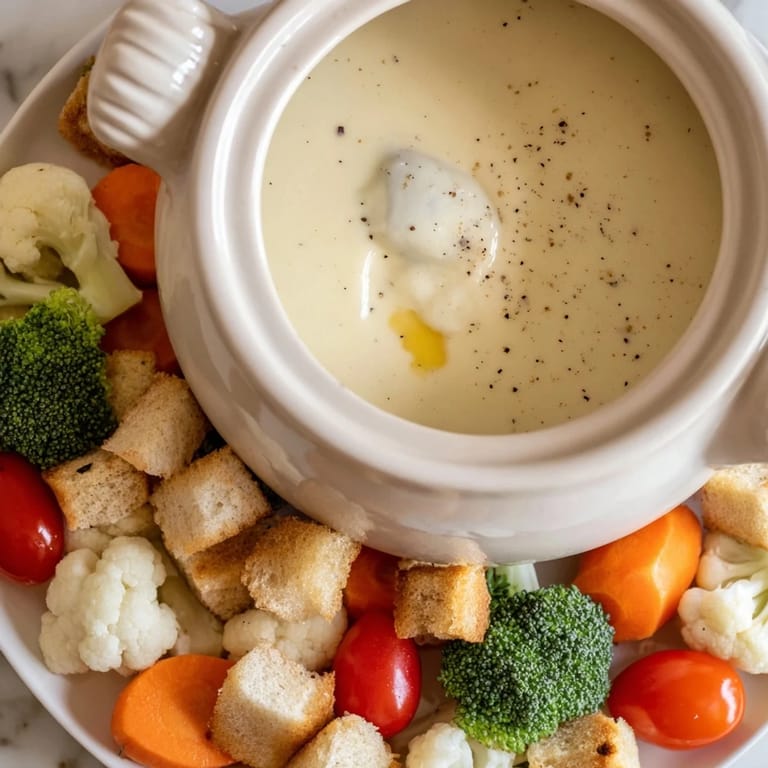
The dipping game is where fondue truly reveals itself—bread should be sturdy enough to hold molten cheese without dissolving, which is why slightly stale baguette is your secret weapon. Vegetables matter too; they provide crunch and brightness that cuts through the richness, and blanching them briefly softens them just enough that they're pleasant to eat. I always arrange them artfully on a board before anyone arrives, because the presentation gives everyone permission to eat with their hands and relax.
Keeping It Together (Literally)
One of the hardest lessons in fondue is accepting that it's a living thing—it needs gentle attention and won't stay perfect forever. If it starts to break or separate, whisk in a splash of cold wine to reset the emulsion. If it becomes too thick, thin it with warm wine or a touch of kirsch. The pot over low heat needs to stay warm but never hot enough to bubble, or the cheese will toughen and separate.
- Keep extra warm wine nearby to adjust consistency as you serve, because evaporation happens.
- If someone drops bread in and it lands on the bottom, treat it as part of the tradition—nothing is wasted in fondue.
- Have extra bread and vegetables prepped nearby so you never run out before people stop reaching.
 Save
Save Fondue is proof that the best meals aren't always about complexity or technique—sometimes they're about creating a space where people stay, linger, and remember the evening because of who was there. Make this when you want to gather, not when you want to impress.
Kitchen Questions
- → What cheeses are best for this dish?
Gruyère and Emmental provide the ideal balance of flavor and meltability, creating a rich and smooth texture.
- → Why is cornstarch used in the cheese mixture?
Cornstarch helps stabilize the melted cheese, preventing it from separating and creating a creamy consistency.
- → Can kirsch be omitted?
Yes, kirsch is optional; it adds depth but the blend remains flavorful without it.
- → What is the best way to prepare bread and vegetables for dipping?
Cut rustic bread into bite-sized cubes and blanch vegetables like broccoli, cauliflower, and carrots for ideal dipping texture.
- → How should the melted cheese mixture be kept warm?
Keep it gently warm over low heat or a tabletop burner to maintain smoothness without boiling.