 Save
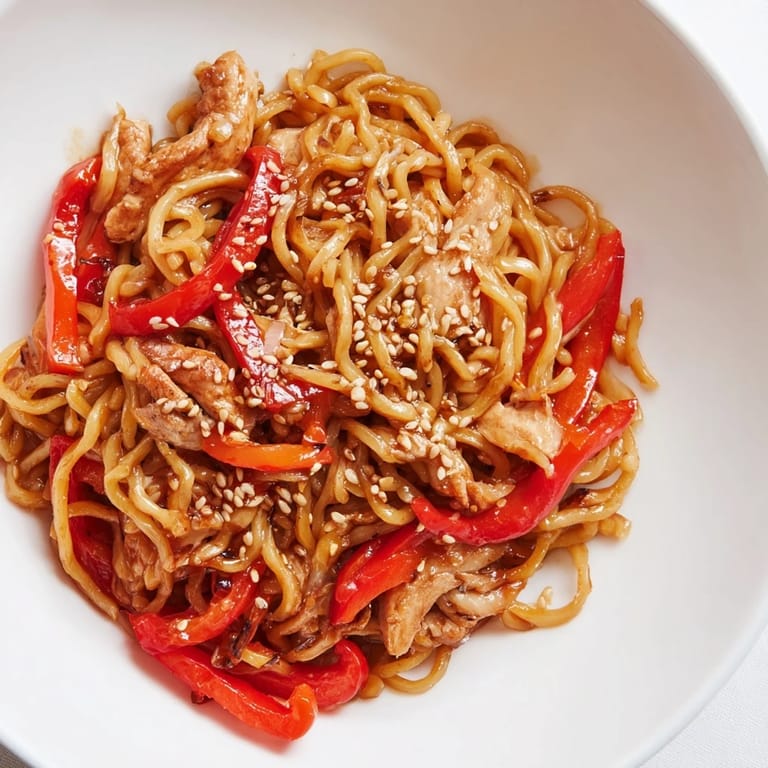
Save The smell of garlic hitting hot oil still brings me right back to that cramped apartment kitchen where counter space was a luxury. I'd just gotten home from a twelve-hour shift, starving and too tired to think, when I spotted those leftover ramen packs and a bag of wilting vegetables. What started as desperation turned into something I'd crave on purpose. That first bite—spicy, savory, with just enough crunch—made me forget I was eating what some might call "cheap college food."
I made this for my brother once after he'd been complaining about bland meal prep all week. He stood at the stove, watching me toss everything in the wok, convinced it was going to be "just ramen." When he finally tasted it, he went quiet for a second, then asked if I could teach him. We ended up cooking it three times that month, tweaking the spice level each time until he found his perfect burn.
Ingredients
- Boneless, skinless chicken breasts, thinly sliced: Thin slices cook fast and soak up the sauce better than thick chunks, so don't skip the slicing step.
- Instant ramen noodles: Toss those seasoning packets—they're too salty and one-note for this dish, but the noodles themselves are perfect for stir-frying.
- Red bell pepper, thinly sliced: Sweet and vibrant, it balances the heat and adds a pop of color that makes the whole dish look alive.
- Broccoli florets: They hold up to high heat without turning mushy, and their little tree-like shapes catch pockets of sauce.
- Carrot, julienned: Thin strips cook quickly and add a slight sweetness that plays well with the spice.
- Green onions, sliced: Half go in during cooking for mild onion flavor, the rest on top for a fresh, sharp finish.
- Garlic, minced: The foundation of the flavor—let it sizzle just until fragrant, not a second longer or it turns bitter.
- Fresh ginger, grated: A little zing that wakes up the whole dish and makes the sauce taste complex.
- Soy sauce: The salty backbone that ties everything together, so use a good one if you have it.
- Sriracha or chili garlic sauce: This is where the heat lives—start with less if you're unsure, you can always add more.
- Oyster sauce: Adds a deep, almost meaty richness that makes the sauce cling to the noodles.
- Sesame oil: Just a tablespoon, but it brings a nutty warmth that smells like home cooking.
- Brown sugar: A touch of sweetness to round out the heat and saltiness without making it taste sugary.
- Water: Loosens the sauce just enough so it coats everything evenly instead of clumping.
- Toasted sesame seeds: Optional, but they add a subtle crunch and make the dish look like you tried.
- Fresh cilantro or green onion slices: A bright, herby finish that cuts through the richness.
Tired of Takeout? 🥡
Get 10 meals you can make faster than delivery arrives. Seriously.
One email. No spam. Unsubscribe anytime.
Instructions
- Boil the Noodles:
- Cook the ramen noodles according to the package directions, then drain and set them aside. They'll finish cooking in the wok, so don't worry if they seem a little firm.
- Mix the Sauce:
- In a small bowl, whisk together soy sauce, sriracha, oyster sauce, sesame oil, brown sugar, and water until the sugar dissolves. This takes thirty seconds and makes tossing everything together so much easier.
- Cook the Chicken:
- Heat a tablespoon of vegetable oil in a large wok or skillet over medium-high heat, then add the sliced chicken and stir-fry until just cooked through, about four to five minutes. Remove the chicken and set it aside so it doesn't overcook.
- Bloom the Aromatics:
- In the same pan, add the garlic and ginger, stirring for thirty seconds until the smell fills your kitchen. Don't let them brown or they'll taste harsh.
- Stir-Fry the Vegetables:
- Toss in the bell pepper, broccoli, and carrot, stir-frying for three to four minutes until they're tender but still have a bite. The pan should be hot enough that everything sizzles loudly.
- Combine and Toss:
- Return the chicken to the pan, add the cooked noodles, and pour the sauce over everything. Toss well to coat, letting it all heat through for two to three minutes until the noodles are glossy.
- Finish and Adjust:
- Stir in the green onions, then taste and adjust the seasoning or spice level. If it needs more kick, add a drizzle of sriracha right in the pan.
- Serve Hot:
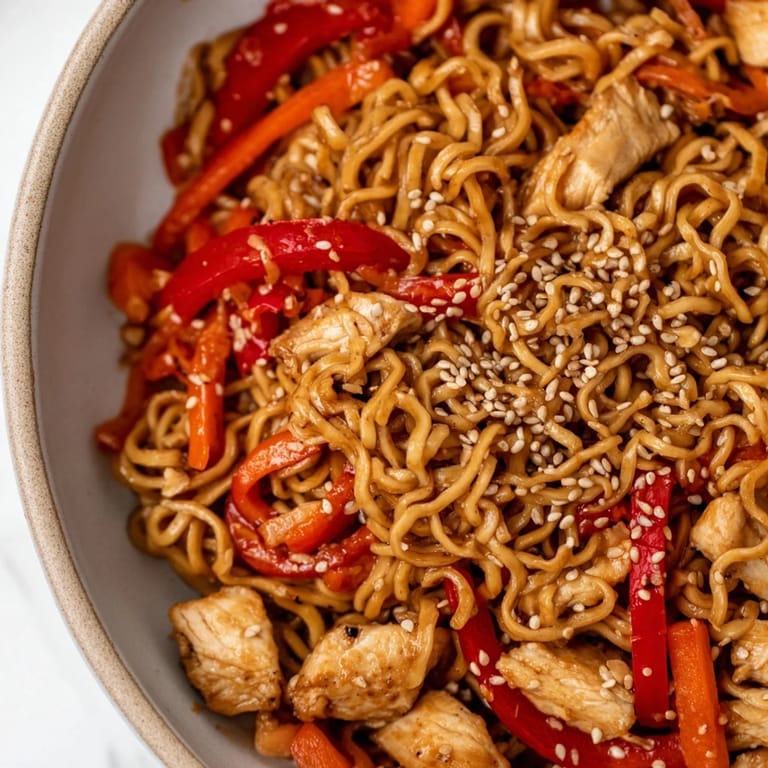
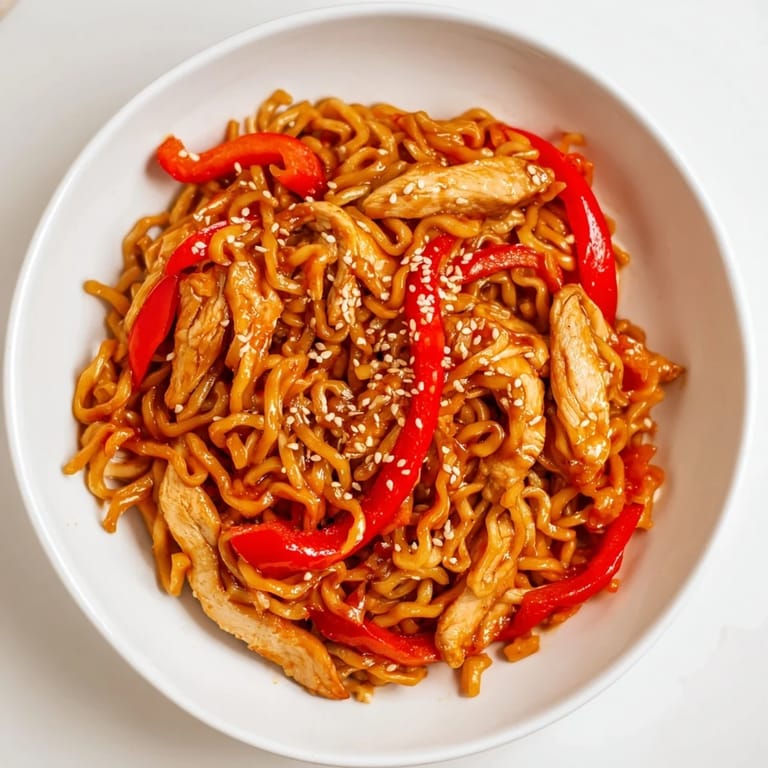
- Plate it up and garnish with toasted sesame seeds and fresh herbs if you have them. The contrast of textures and colors makes it feel like a real meal.
 Save
Save There was a night last spring when I made this for a friend going through a rough breakup. We sat on the floor with bowls in our laps, slurping noodles and talking about nothing important. She didn't say much about the food, but she finished the whole bowl and asked for seconds. Sometimes a meal doesn't need to be fancy to do its job.
Making It Your Own
This recipe is a template, not a rule. I've swapped chicken for shrimp, tofu, or even leftover pork without losing any of the magic. If you don't have broccoli, snap peas or mushrooms work just as well. The key is keeping the vegetables crisp and the sauce balanced—everything else is just details.
What to Serve Alongside
A cold lager or a pot of jasmine tea cuts through the richness beautifully. If you want to stretch the meal, a simple cucumber salad with rice vinegar adds a cool, refreshing contrast. I've also served this with steamed edamame on the side, which gives people something to snack on while the wok heats up.
Storage and Reheating
Leftovers keep in the fridge for up to three days, though the noodles will soak up some of the sauce as they sit. When you reheat, add a splash of water or soy sauce to loosen everything up, and toss it in a hot pan rather than the microwave if you can. The vegetables won't be quite as crisp, but the flavor deepens overnight in a way that's honestly just as good.
- Store in an airtight container to keep the noodles from drying out.
- If you're meal prepping, keep the garnishes separate and add them fresh when you reheat.
- Freeze individual portions if you want, but know the texture of the vegetables will soften after thawing.
 Save
Save This dish has become my go-to when I need something fast, comforting, and a little bit exciting. It's proof that you don't need a fancy pantry or hours of time to make something that feels special.
Kitchen Questions
- → Can I use fresh ramen noodles instead of instant?
Yes, fresh ramen noodles work beautifully and may even provide better texture. Reduce cooking time slightly as fresh noodles cook faster than instant varieties. Drain well before adding to the stir-fry to prevent excess moisture.
- → How can I adjust the spice level?
Start with 1 tablespoon of sriracha and adjust upward to your preference. You can also add red pepper flakes, fresh jalapeños, or increase the ginger for additional heat. Always taste as you go to find your ideal spice balance.
- → What vegetables work best as substitutes?
Snap peas, mushrooms, baby corn, zucchini, and bok choy all stir-fry beautifully in this dish. Keep vegetables roughly the same size for even cooking. Add harder vegetables first, then softer ones toward the end to maintain their crisp texture.
- → Is this suitable for a vegetarian diet?
Absolutely. Simply replace the chicken with extra-firm tofu, thinly pressed and cubed. Add it during the vegetable stir-fry step. You can also use tempeh or chickpeas as protein alternatives that absorb the spicy sauce wonderfully.
- → Can I prepare components ahead of time?
Yes, this is very make-ahead friendly. Slice your vegetables and chicken the night before, store in separate containers, and whisk together your sauce. Cook everything fresh when ready to serve for the best texture and flavor.
- → What beverages pair well with this dish?
Crisp, cold lager beers complement the spicy heat beautifully. For non-alcoholic options, jasmine tea provides floral notes that balance the bold sauce, while iced green tea or even cold milk can soothe the sriracha's heat.