 Save
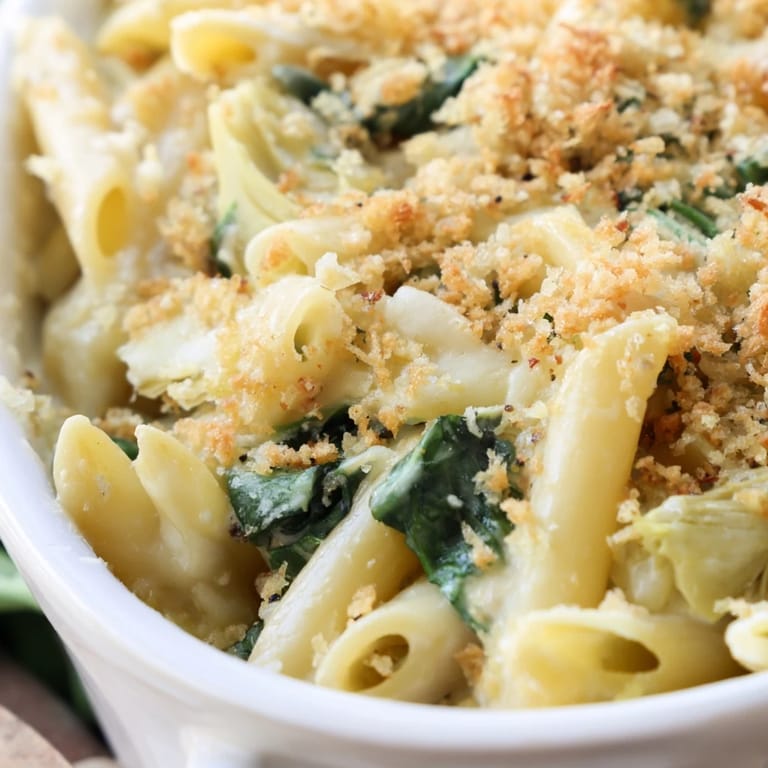
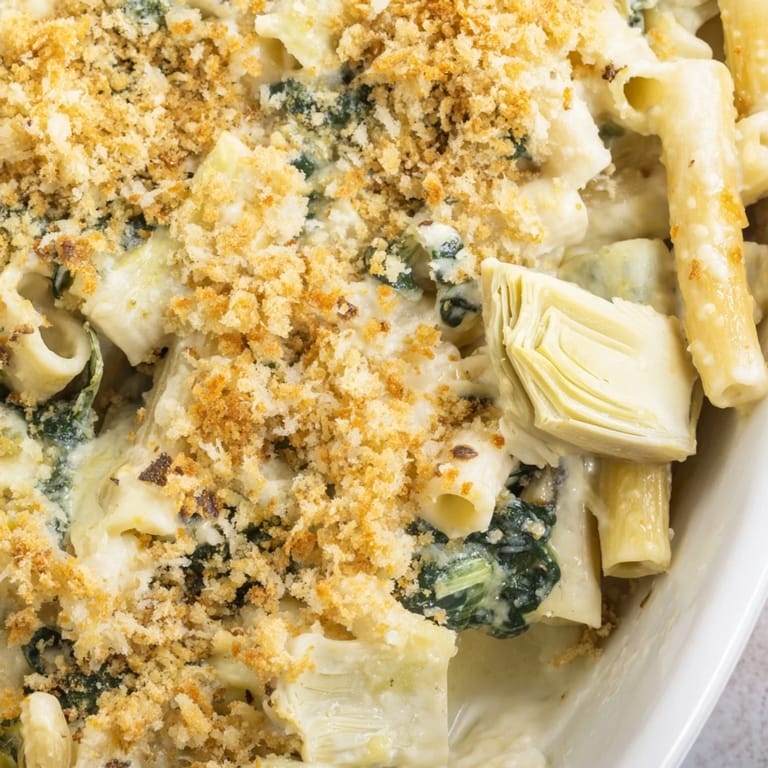
Save My neighbor knocked on the door one Sunday holding a casserole dish still warm from her oven, insisting I try what she called her Sunday reset meal. Inside was this golden-topped pasta bake, bubbling at the edges, smelling like garlic and cream and something herbaceous I couldn't place. I stood there with a fork, eating straight from the dish, and she laughed because I didn't even pretend to grab a plate. That week, I made my own version three times, tweaking the artichokes and spinach until it felt like mine.
I brought this to a potluck once, worried it might seem too plain next to all the elaborate dishes. By the time I looked up from talking, the entire baking dish was empty except for a few breadcrumbs clinging to the corners. Someone had even scraped the edges clean. My friend texted me later that night asking for the recipe, saying her kids who normally hate vegetables had fought over the last serving.
Ingredients
- Short pasta (penne, rigatoni, or fusilli): The ridges and tubes catch the cream sauce perfectly, and cooking it just to al dente means it won't turn mushy when baked.
- Artichoke hearts: Use the canned or jarred kind in water or brine, not the marinated oil-packed ones which can make the sauce too heavy and greasy.
- Fresh baby spinach: It wilts down dramatically so don't worry about the big pile in the pan, and it adds color and a slight earthiness that balances the richness.
- Yellow onion and garlic: These two create the aromatic base that makes your kitchen smell like an Italian grandmother is cooking, and finely chopping them ensures they melt into the sauce.
- Heavy cream and whole milk: The combination gives you a sauce that's luxurious but not so thick it coats your mouth, and using both keeps it from being overwhelmingly rich.
- Freshly grated Parmesan: Pre-grated doesn't melt the same way and has additives that make the sauce grainy, so spend the extra two minutes grating a block yourself.
- Italian herbs, pepper, and nutmeg: The nutmeg is the secret, just a tiny pinch that adds warmth and makes people ask what that mysterious flavor is.
- Breadcrumbs and melted butter: This creates the golden, crunchy top layer that contrasts beautifully with the creamy pasta underneath.
Tired of Takeout? 🥡
Get 10 meals you can make faster than delivery arrives. Seriously.
One email. No spam. Unsubscribe anytime.
Instructions
- Prep the oven and dish:
- Get your oven heating to 190°C (375°F) and grease your baking dish generously so nothing sticks to the edges later. I use butter for greasing because it adds a little extra richness to the crust that forms on the sides.
- Cook the pasta:
- Boil the pasta in well-salted water (it should taste like the sea) until it's just al dente with a slight bite in the center. Drain it quickly and don't rinse it because you want that starchy coating to help the sauce cling.
- Sauté the aromatics:
- Heat olive oil in your largest skillet and cook the chopped onion until it turns translucent and soft, about three minutes. Add the minced garlic and stir constantly for just one minute so it gets fragrant but doesn't burn and turn bitter.
- Wilt the spinach and warm the artichokes:
- Toss in the spinach and watch it collapse down into almost nothing as it wilts, about two minutes. Stir in the quartered artichoke hearts and let everything warm through and get friendly with each other for another two minutes, then take the pan off the heat.
- Make the cream sauce:
- In a saucepan, gently heat the cream and milk together over medium-low heat, then stir in the Parmesan, herbs, salt, pepper, and that crucial pinch of nutmeg. Keep stirring until the cheese melts completely and the sauce looks smooth and glossy, about three minutes, and don't let it boil or it might break.
- Combine everything:
- In your biggest bowl, mix the cooked pasta, the vegetable mixture, and the cream sauce together until every piece of pasta is coated. Pour it all into your prepared baking dish and spread it out evenly so it bakes uniformly.
- Add the crunchy topping:
- Stir the breadcrumbs with melted butter until they're evenly coated, then sprinkle them over the top of the casserole. If you want extra cheesiness, add a handful more Parmesan on top before it goes in the oven.
- Bake until golden:
- Slide the dish into the oven and bake for 20 to 25 minutes until the top is golden brown and you can see the sauce bubbling up around the edges. Let it rest for five minutes before serving so the sauce can thicken slightly and you don't burn your tongue.
 Save
Save The first time I made this for my parents, my dad, who usually just nods politely at my cooking experiments, went back for seconds without saying a word. Then he looked up and asked if I'd written the recipe down because he wanted my mom to make it next week. That's when I knew I'd made something that had crossed over from nice dinner to family rotation, the kind of recipe that gets requested by name.
Choosing Your Pasta Shape
I've tried this with at least six different pasta shapes and the ones with ridges or holes work best because they grab onto the sauce and vegetables. Penne and rigatoni are my top choices, but rotini and shells work beautifully too. Avoid long pasta like spaghetti or fettuccine because they don't distribute the chunky vegetables evenly and the whole thing becomes awkward to serve.
Making It Ahead
You can assemble this entire casserole up to a day in advance, just stop before adding the breadcrumb topping and cover it tightly with plastic wrap in the fridge. When you're ready to bake, let it sit at room temperature for twenty minutes, add the buttered breadcrumbs, and bake as directed, adding maybe five extra minutes since it's starting cold. I do this all the time when I'm having people over and don't want to be stuck in the kitchen while everyone else is talking.
Variations and Additions
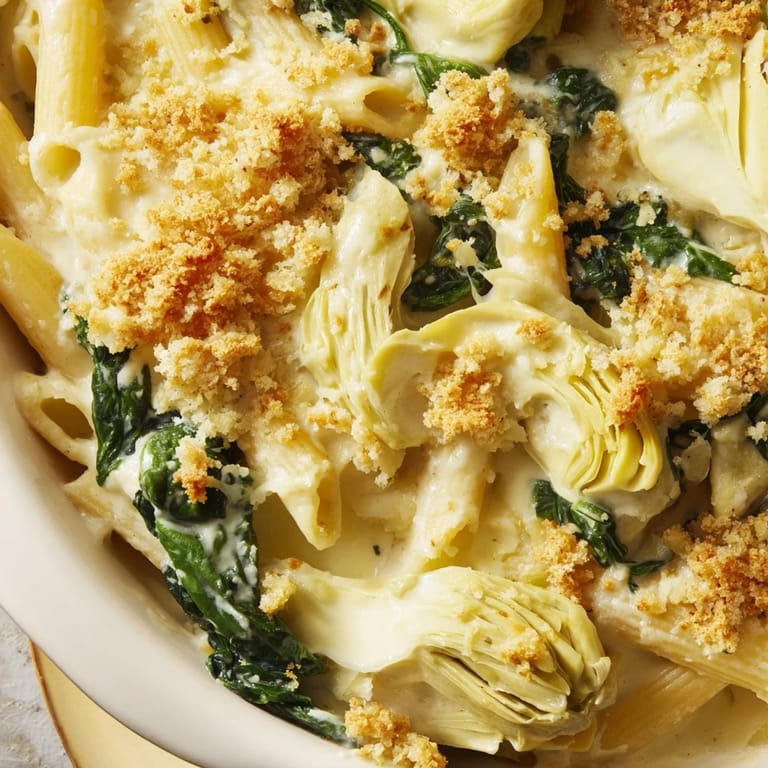
This recipe is incredibly forgiving and welcomes all kinds of additions depending on what's in your fridge. Sun-dried tomatoes add a sweet-tart punch, roasted red peppers bring smokiness, and mushrooms give it an earthy depth. I've also stirred in cooked chicken or crispy pancetta when I wanted to make it heartier for guests who eat meat.
- Swap the spinach for kale or Swiss chard, just remember they take a bit longer to wilt down.
- Add a handful of fresh basil or parsley right before baking for a bright herbal note.
- For extra indulgence, stir in a few spoonfuls of ricotta or cream cheese with the sauce.
 Save
Save This is the kind of dish that makes your kitchen feel warm and lived-in, the kind that fills the house with smells that make people wander in asking when dinner will be ready. Keep it in your back pocket for those nights when you need something that feels like a hug on a plate.
Kitchen Questions
- → Can I prepare this dish in advance?
Yes, assemble the casserole completely, cover with plastic wrap, and refrigerate for up to 24 hours. Add 5-10 minutes to baking time if baking directly from cold.
- → What pasta shapes work best?
Short, tubular shapes like penne, rigatoni, or fusilli work best as they capture the creamy sauce. Avoid long pasta like spaghetti as it doesn't hold the sauce evenly in a baked dish.
- → How do I prevent the sauce from breaking?
Keep heat at medium-low when adding cream and milk. Stir continuously and add cheese off the heat to prevent curdling. Let the mixture cool slightly before combining with pasta.
- → Can I use frozen spinach instead of fresh?
Yes, use 150g frozen spinach. Thaw, drain thoroughly, and squeeze out excess moisture before adding to prevent watering down the sauce.
- → What can I substitute for heavy cream?
Use Greek yogurt mixed with milk, or increase milk to 1 cup and add a cornstarch slurry for creaminess. The texture will be slightly lighter but still delicious.
- → Why is nutmeg added to the sauce?
Nutmeg is a classic addition to cream sauces, enhancing richness and adding subtle warmth. Use sparingly as it overpowers easily. Ground nutmeg is traditional in Italian béchamel variations.