 Save
Save I discovered halloumi by accident at a Mediterranean market on a Tuesday afternoon, drawn by the vendor's insistence that this cheese was meant to be grilled. Skeptical but curious, I bought a block and threw it on my home grill that weekend, and the moment it hit the heat—that unmistakable squeak under the tongs, the golden crust forming—I understood the fuss. Now it's become my go-to when I want something that feels restaurant-quality but takes barely half an hour from fridge to plate.
I made this for friends who'd just moved into a new house with their first real deck, and watching everyone's faces light up when they bit into the warm, squeaky cheese was worth every minute. Someone asked if I'd ordered it from somewhere, and I just smiled knowing I'd pulled it together in my kitchen at home.
Ingredients
- Halloumi cheese (400 g, sliced 1.5 cm thick): Look for slices that are substantial enough to stay intact on the grill—thinner cuts can collapse into the flames and ruin the whole experience.
- Red and yellow bell peppers: Choose firm ones without soft spots, as they'll hold their shape better and develop sweet, smoky notes when grilled.
- Small zucchini: Thinner rounds cook faster and pick up grill marks more evenly than thick slices.
- Red onion: The natural sweetness deepens with heat, creating a subtle caramelization that balances the cheese perfectly.
- Cherry tomatoes (1 cup, halved): I've learned to add these raw after cooking because they burst and become mushy if grilled.
- Olive oil (2 tbsp): Quality matters here since it coats everything—don't skip using something you actually enjoy tasting.
- Balsamic vinegar (1 tbsp): This adds a tangy sweetness that cuts through the richness of the grilled cheese.
- Garlic (1 clove, minced): One clove is enough; too much overwhelms the delicate balance of flavors.
- Dried oregano (1 tsp): This Mediterranean staple ties all the components together without needing fresh herbs during cooking.
- Salt and black pepper: Season generously—grilled vegetables need more seasoning than you'd initially think.
- Fresh parsley (2 tbsp, chopped): This brightens everything at the end and adds a fresh note that feels intentional.
- Lemon wedges: Serve these on the side so people can squeeze as much citrus as they want over their plate.
Tired of Takeout? 🥡
Get 10 meals you can make faster than delivery arrives. Seriously.
One email. No spam. Unsubscribe anytime.
Instructions
- Get the grill ready:
- Heat your grill or grill pan over medium-high heat for about 5 minutes until it's genuinely hot—you should feel the warmth from several inches away. If you're using a pan, a drop of water should sizzle and vanish immediately.
- Dress the vegetables:
- Toss the peppers, zucchini, and red onion in a bowl with the olive oil, balsamic vinegar, minced garlic, oregano, salt, and pepper. Make sure every piece gets coated so they'll develop that perfect char.
- Grill the vegetables first:
- Lay them directly on the grates and let them sit for 3–5 minutes without moving them—this is how you get those beautiful dark grill marks. Flip and repeat on the other side, then transfer to a plate.
- Grill the halloumi:
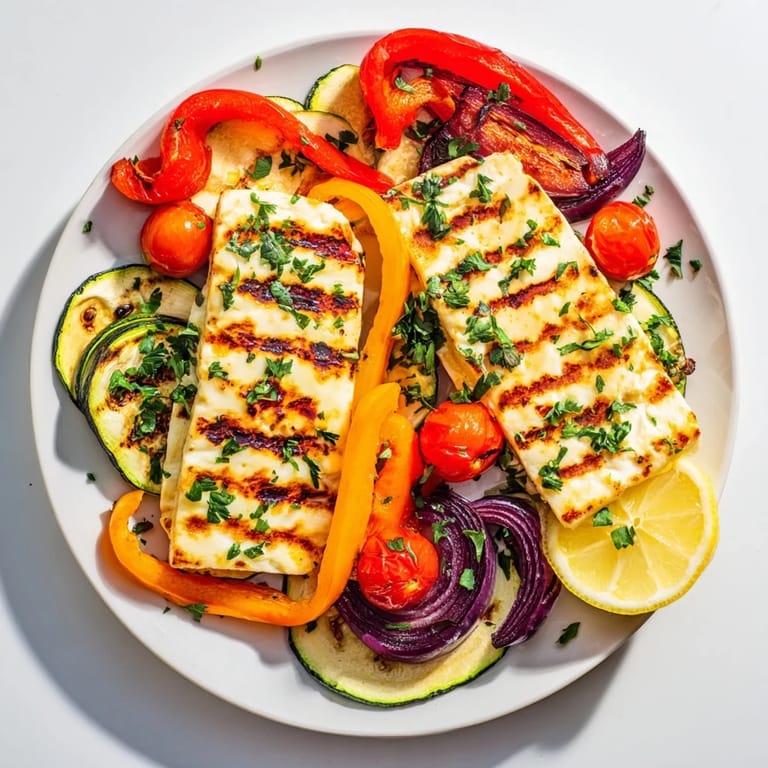
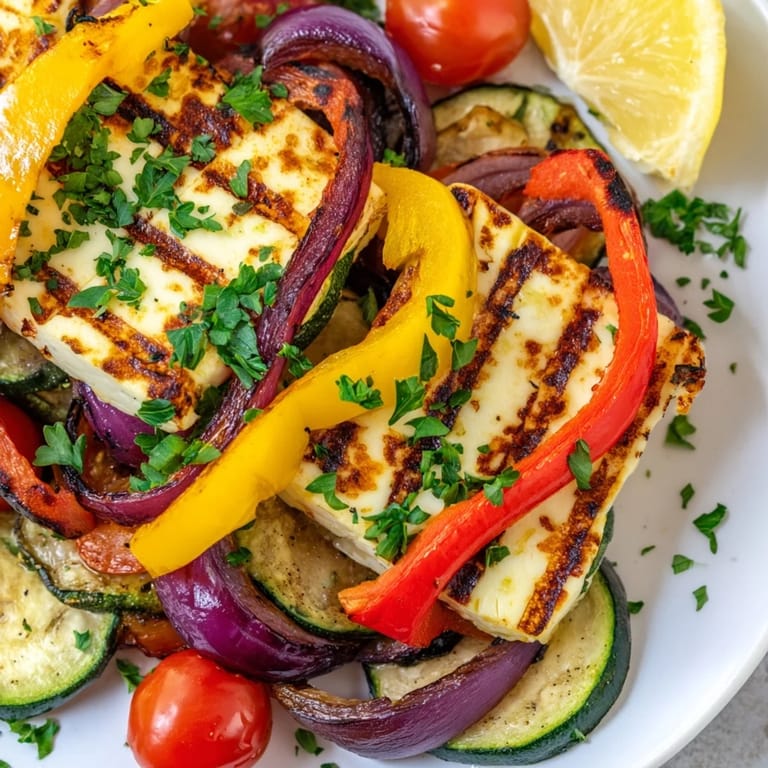
- Lay the cheese slices directly on the grill with confidence. You'll hear them squeak slightly as they touch the hot surface, which is exactly what you want. After 2–3 minutes, you'll see golden-brown grill marks appearing; flip gently and repeat.
- Build your plate:
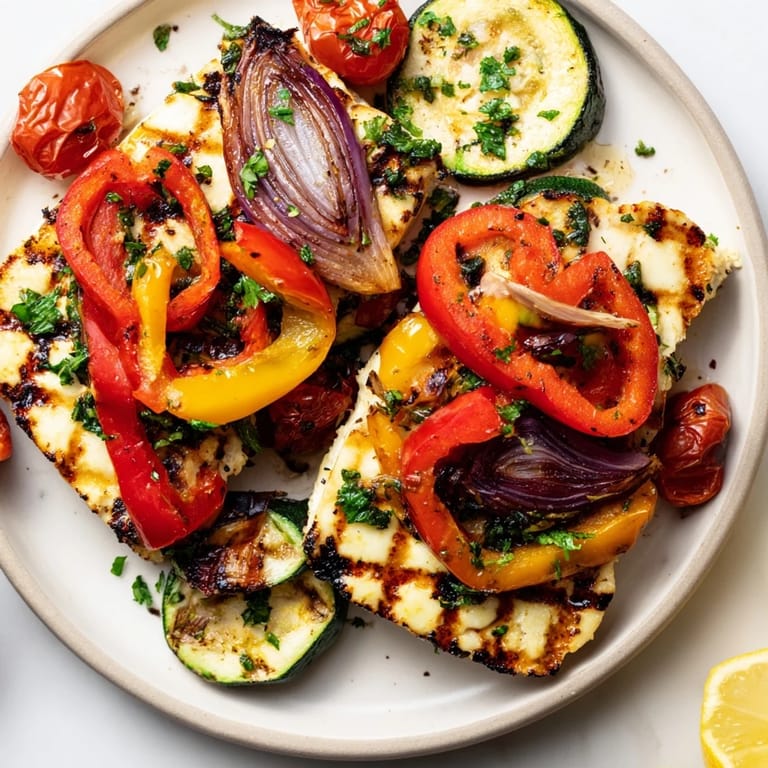
- Arrange the warm halloumi steaks on a serving platter, then scatter the grilled vegetables on top. Toss the raw cherry tomato halves over everything so they stay bright and fresh.
- Finish and serve:
- Scatter the fresh parsley across the top and place lemon wedges alongside. Serve immediately while the cheese is still warm enough to be creamy inside.
 Save
Save The moment that sold me on this recipe was when my nephew, who usually picks at vegetables, asked for seconds without any prompting. He said the charred edges tasted different than raw—sweeter somehow—and I realized that grilling transforms vegetables in ways that make them genuinely exciting to eat.
The Magic of High Heat
There's something that happens when you expose ingredients to serious heat: the natural sugars concentrate and caramelize, creating depth that can't be achieved any other way. Halloumi benefits from this more than almost any cheese I've cooked, developing a crust that's almost crispy while the interior stays tender. The vegetables aren't just softened—they're transformed into something richer, with the slight char adding a smokiness that brings everything together.
Why This Works as a Main Course
Most people think of cheese as a supporting player, but grilled halloumi has enough protein and substance to stand as the star. Pairing it with this quantity of grilled vegetables creates a meal that feels complete and satisfying, not like an appetizer masquerading as dinner. The mix of textures—creamy cheese, tender-charred vegetables—keeps every bite interesting, and the citrus at the end prevents it from feeling too heavy despite its richness.
Timing and Temperature Tricks
The biggest difference between decent grilled halloumi and exceptional grilled halloumi comes down to one thing: not overthinking it. Once you understand that the cheese needs just 2–3 minutes per side and the vegetables need direct, undisturbed heat to develop their grill marks, everything else is intuitive. The raw cherry tomatoes scattered at the end provide acidity and freshness that prevent the dish from becoming cloying, while the lemon wedges let each person control how much brightness they want.
- If your grill isn't hot enough, the cheese will release too much moisture and become tough rather than creamy.
- You can prepare everything in advance—slice cheese, cut vegetables, mix the marinade—but only grill about 10 minutes before serving to keep the halloumi's texture at its peak.
- Leftover grilled vegetables are wonderful cold the next day tossed into salads, but the halloumi is best fresh and warm from the heat.
 Save
Save This dish has become my answer to the question of what to make when you want something that feels special without requiring complicated technique or hours in the kitchen. It's the kind of recipe that reminds you why cooking is worth doing in the first place.