 Save
Save The first time I combined lemon and sugar on chicken, I was honestly trying to recreate a lemon posset I'd had for dessert the night before—except I was starving and wanted something savory. The brûléed crust crackled under my fork, and suddenly it hit me: why save this bright, caramelized magic for the end of a meal? Now this pasta is my answer to that happy accident, bringing dessert-inspired flair straight to the main course.
I made this for my partner on a quiet Tuesday night when neither of us wanted to overthink dinner, and watching them take that first bite—the way their eyes lit up at the burnt sugar crackle—reminded me that the best meals are the ones that surprise you with their own ambition. We barely spoke, just kept twirling pasta and going back for more.
Ingredients
- Boneless, skinless chicken breasts (2 large): Pat them completely dry before seasoning—this is the secret to a golden sear and sets you up for the brûléeing to come.
- Granulated sugar (2 tablespoons): Use fine granulated sugar, not muscovado or coconut—you need it to melt evenly and caramelize into that glassy, crackling crust.
- Lemon zest and juice (3 lemons total): Zest before you juice; one microplane stroke releases so much more fragrance than you'd expect, and it's worth doing twice.
- Sea salt and freshly ground black pepper: Season generously on the chicken itself—the sugar topping isn't salty, so the base needs to carry the flavor.
- Olive oil (1 tablespoon for searing): Use a high-heat olive oil or refined version; extra virgin will smoke and taste acrid.
- Dried linguine or spaghetti (320 g): Linguine catches sauce beautifully in its ribbons, but spaghetti is equally forgiving.
- Unsalted butter and olive oil (2 tablespoons each): Together they create a silkier emulsion than either one alone—this is where the sauce gets its personality.
- Garlic (3 cloves, minced): Mince it fine and add it to cool or warm oil, never smoking hot, or it turns bitter and the whole sauce suffers for it.
- Heavy cream (200 ml): Cold cream straight from the fridge; if you warm it first, it's harder to control the simmer.
- Parmigiano-Reggiano (60 g, grated): Grate it fresh just before using—pre-grated cheese has anti-caking agents that make the sauce grainy.
- Fresh parsley (2 tablespoons, chopped): Add it at the very end so the color stays bright and the flavor doesn't cook away into the background.
Tired of Takeout? 🥡
Get 10 meals you can make faster than delivery arrives. Seriously.
One email. No spam. Unsubscribe anytime.
Instructions
- Dry and season the chicken:
- Pat the breasts with paper towels until they're completely dry—moisture is the enemy of a good sear. Sprinkle both sides with salt, pepper, and lemon zest, letting it sit for a minute so everything adheres.
- Sear it until golden:
- Heat a skillet over medium-high until it's hot enough that a drop of water sizzles immediately. Lay the chicken in with a gentle confidence—don't poke it—and let it sit undisturbed for 4-5 minutes until the bottom is a deep golden color. Flip once and repeat.
- Brûlée the crust:
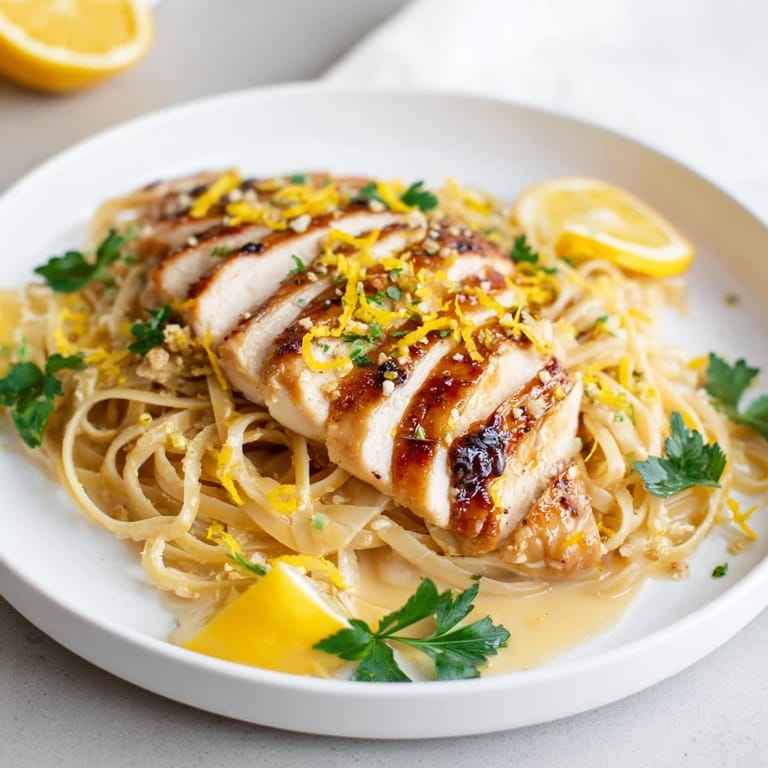
- Sprinkle a tablespoon of sugar over the top of each breast. If you have a kitchen torch, hold it a few inches away and move it slowly in circles until the sugar melts into a golden, crackling crust—this takes about 30-45 seconds. If you're using a broiler instead, slide the skillet under for just 1-2 minutes, watching like a hawk so it caramelizes without burning.
- Rest and slice:
- Let the chicken sit off the heat for 3-4 minutes—this keeps the inside juicy instead of dry. Slice it thinly against the grain, and you'll see why the contrast between that crispy crust and tender meat is worth the few extra steps.
- Boil the pasta:
- Bring a large pot of generously salted water to a rolling boil. Add pasta and cook until al dente—a minute or two before the package says it's done. Scoop out and reserve at least half a cup of that starchy cooking water before you drain, because it's liquid gold for adjusting the sauce.
- Build the sauce gently:
- Melt butter and olive oil together over medium heat, just until the foam subsides. Add minced garlic and listen for a soft sizzle—if it smells sharp or burned, lower the heat. After about a minute, add lemon zest and juice, stirring so the bright acid mingles with the fat.
- Bring in the cream:
- Pour in the heavy cream slowly, stirring as you go, and bring it to a gentle simmer—big bubbles will cause it to break. Once it's barely bubbling, sprinkle in the cheese a handful at a time, stirring until it's completely melted and smooth.
- Marry it all together:
- Toss the drained pasta into the sauce and keep turning it gently for a minute or two, coating every strand. If it looks too thick, splash in a little pasta water—the sauce should coat the pasta and flow slightly when you plate it, not cling like glue.
- Finish with care:
- Stir in the fresh parsley right at the end, taste, and adjust salt and pepper. Some pasta water will have absorbed into the noodles, so go easy on extra seasoning at first.
- Plate and crown:
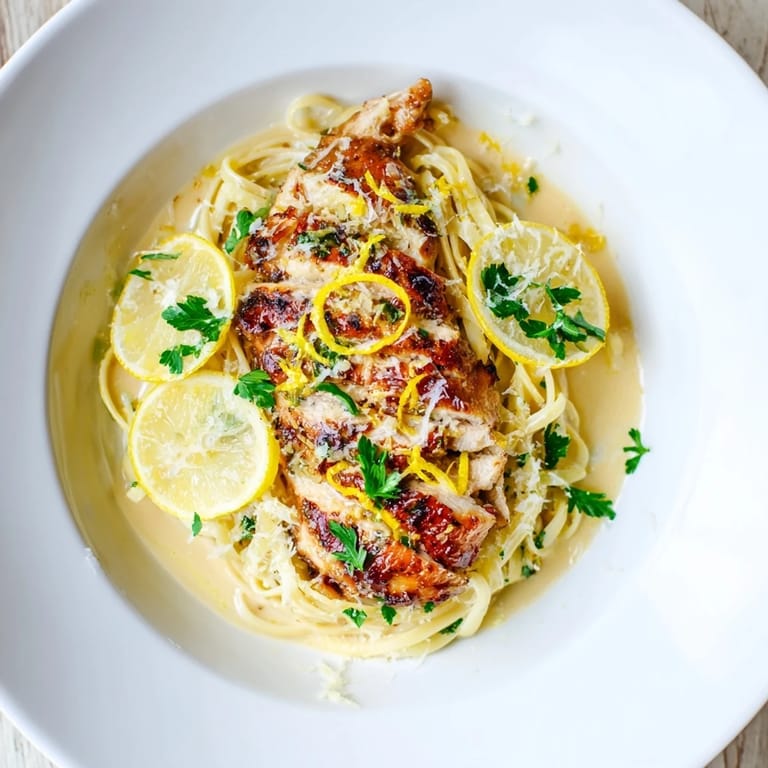
- Divide pasta among shallow bowls, top with sliced brûléed chicken, and finish with a scatter of lemon zest, a tangle of fresh parsley, and a small handful of freshly grated Parmigiano-Reggiano. The garnish isn't decoration—it's the last flavor and texture note.
 Save
Save What makes this dish stick with me is that moment when all the parts come together on the plate—the way the warm, lemony pasta softens the crispy crust of the chicken just slightly, so you get both textures in one forkful. It tastes like something you'd order at a restaurant, but you made it in your own kitchen in less than an hour.
Why Lemon and Sugar on Chicken Works
Caramelized sugar creates this deep, complex sweetness that plays beautifully against the tartness of lemon, and together they brighten the richness of the cream sauce without making anything taste like dessert. The burnt edges give the chicken a savory depth, while the juices underneath stay tender and carry all that brightness. It's the kind of contrast that makes you want another bite before you've swallowed the first one.
Variations and Swaps That Work
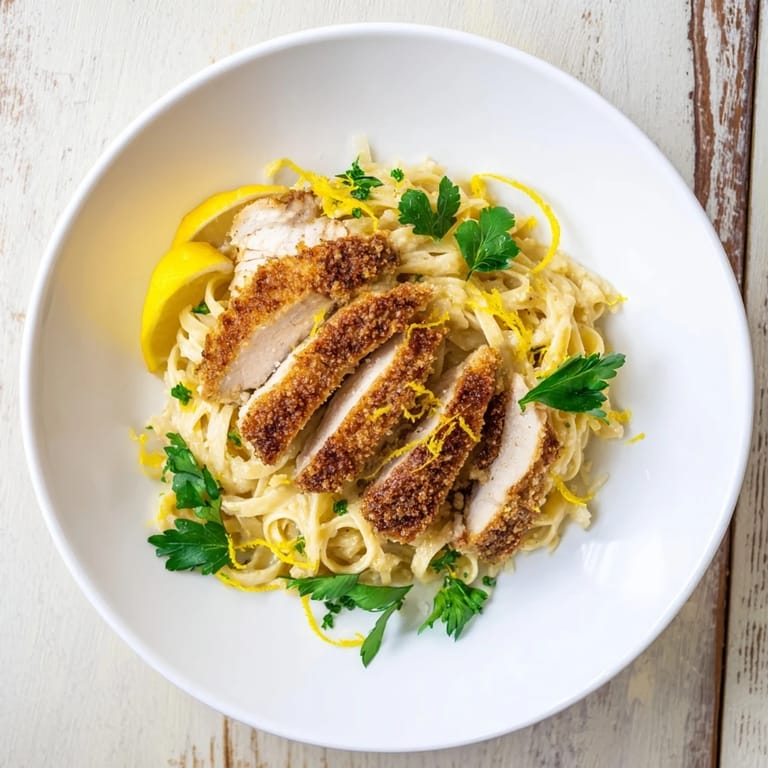
Crème fraîche instead of heavy cream brings a subtle tanginess that plays against the brûléed crust in a different way—slightly less rich, more sophisticated. Toasted pine nuts or panko breadcrumbs scattered on top add a second layer of crunch that extends the textural story. Some nights I add a handful of fresh herbs like tarragon or chervil to the sauce instead of just parsley, and it shifts the whole mood from Italian-bright to French-elegant.
Pairing and Serving
A crisp Sauvignon Blanc or Pinot Grigio cuts through the richness and echoes the lemon in a way that feels inevitable once you taste them together. The acidity in the wine cleanses your palate between bites and makes you want to keep eating. Serve this family-style if you're feeding more than two people, so everyone can admire that brûléed crust before it hits the plate.
- Avoid heavy reds—they'll clash with the brightness you've worked hard to build.
- A squeeze of extra lemon juice at the table is always welcome for those who like it even more tart.
- Serve immediately while the crust is still crackling and the pasta is still steaming.
 Save
Save This recipe proved to me that taking one small risk in the kitchen—pairing flavors in an unusual way, borrowing from dessert, trying something just because it sounds interesting—often leads somewhere delicious. Make it your own.
Kitchen Questions
- → How do I create the lemon brûlée crust on the chicken?
After searing the chicken, sprinkle sugar evenly and use a kitchen torch or broiler to caramelize the sugar until golden and crisp.
- → What pasta works best for this dish?
Linguine or spaghetti are preferred, cooked al dente to hold the rich lemon cream sauce well.
- → Can I substitute heavy cream in the sauce?
Yes, crème fraîche can be used for a tangier variation while maintaining creaminess.
- → How should I season the pasta sauce?
Sautéed garlic, lemon zest and juice, butter and olive oil, finished with Parmigiano-Reggiano and seasoned with salt and pepper provide a balanced flavor.
- → What garnishes enhance the final presentation?
Extra lemon zest, additional grated Parmigiano, and fresh parsley leaves add brightness and visual appeal.