 Save
Save There's something about assembling a bowl that feels less like cooking and more like creating—like you're building edible art on a blank canvas. This Mediterranean pearl couscous chicken recipe came to life during a particularly chaotic Tuesday when I had exactly forty-five minutes and a determination to prove that healthy food doesn't require hours in the kitchen. The combination of tangy lemon-marinated chicken, herbaceous couscous studded with crisp vegetables, and the salty surprise of crumbled feta transformed my skepticism into genuine excitement. My partner walked in halfway through, drawn by the aroma of oregano and garlic, and by the time those chicken strips hit the pan with a satisfying sizzle, they were already pulling out plates.
I made this for a small dinner party last summer when a friend mentioned being tired of salads but still wanting something light. Watching four adults demolish their bowls in mostly silence—that particular quiet of genuine satisfaction—reminded me why I love cooking Mediterranean food. There's no pretension to it, just clean flavors and genuine nourishment.
Ingredients
- Boneless, skinless chicken breasts, cut into strips (500 g): Strips cook faster and absorb the marinade more evenly than whole breasts, and they're easier to eat directly from the bowl without awkward cutting.
- Olive oil and lemon (juice and zest): The zest is where the citrus magic lives—don't skip it, as it delivers bright flavor that juice alone can't quite capture.
- Garlic, oregano, and thyme: This combination is the backbone of Mediterranean flavor, and the minced garlic becomes almost creamy when it cooks into the chicken.
- Feta cheese, crumbled: Buy it in blocks and crumble it yourself if you can—pre-crumbled versions are often dusty and won't give you those lovely irregular chunks that catch the dressing.
- Pearl couscous: It's plumper and more toothsome than regular couscous, holding up better to the dressing without turning mushy.
- Cherry tomatoes, cucumber, bell pepper, red onion: The freshness of these vegetables is non-negotiable—they should smell bright and feel firm, not soft.
- Kalamata olives, pitted: Buy them already pitted to save time and frustration, though the flavor is identical either way.
- Fresh parsley and mint: Fresh herbs are where bowls go from good to memorable—the chlorophyll and aromatics completely change the eating experience.
- Extra-virgin olive oil for dressing: This is where you splurge slightly; it makes an actual difference in the final taste.
- Dijon mustard and honey: The mustard acts as an emulsifier keeping the dressing cohesive, while honey adds a subtle sweetness that prevents sharpness.
Tired of Takeout? 🥡
Get 10 meals you can make faster than delivery arrives. Seriously.
One email. No spam. Unsubscribe anytime.
Instructions
- Prepare the marinade and chicken:
- Whisk together the olive oil, lemon juice and zest, minced garlic, oregano, thyme, salt, and pepper in a bowl, then add your chicken strips and toss until every piece is coated in that aromatic mixture. Let it sit for at least fifteen minutes while you prep everything else—the longer it marinates (up to two hours refrigerated), the more the flavors will penetrate the meat.
- Cook the pearl couscous:
- Bring your water or broth to a rolling boil, add the couscous, then immediately reduce heat to a gentle simmer and cover tightly. After eight to ten minutes, the couscous will be tender with a slight pearlescent sheen; drain it and rinse quickly with cold water so it stops cooking and stays separate.
- Whisk your dressing:
- Combine the extra-virgin olive oil, lemon juice, Dijon mustard, and honey in a small bowl, whisking until the honey dissolves and everything emulsifies into something smooth and glossy. Taste it and adjust salt and pepper—this is your seasoning moment.
- Build the couscous salad:
- Toss the cooled couscous with all the raw vegetables, olives, and fresh herbs, then pour the dressing over and mix thoroughly so every grain gets coated. This salad can sit for a few minutes while you cook the chicken without losing its charm.
- Sear the chicken:
- Heat a non-stick skillet or grill pan over medium-high heat until it's actually hot—you want to hear a quick sizzle when the chicken hits the surface. Cook each strip for three to four minutes per side until the exterior turns golden and the meat is cooked through; resist the urge to move them around constantly.
- Assemble and serve:
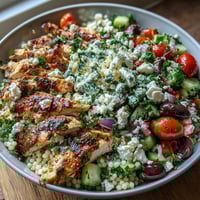
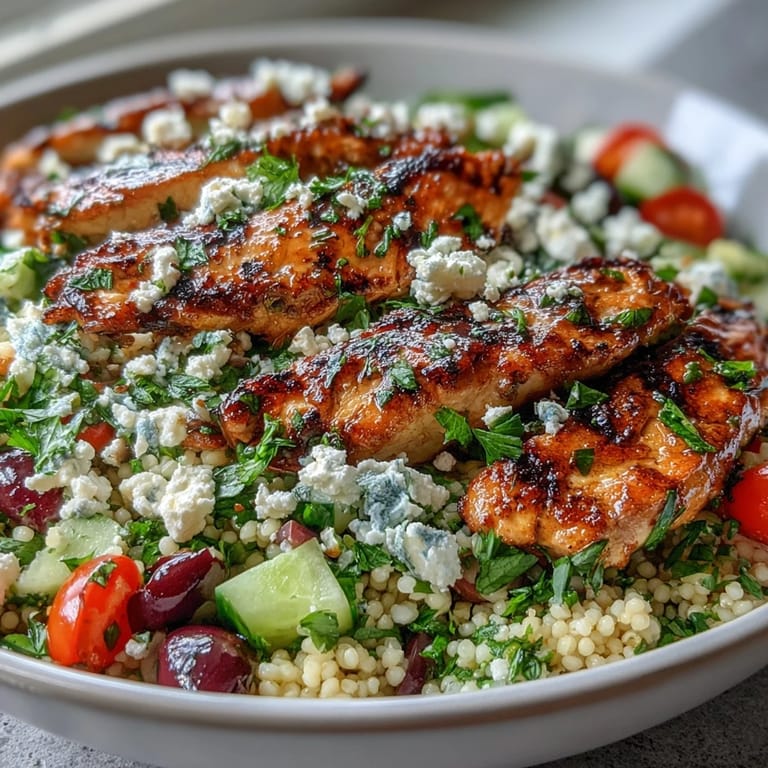
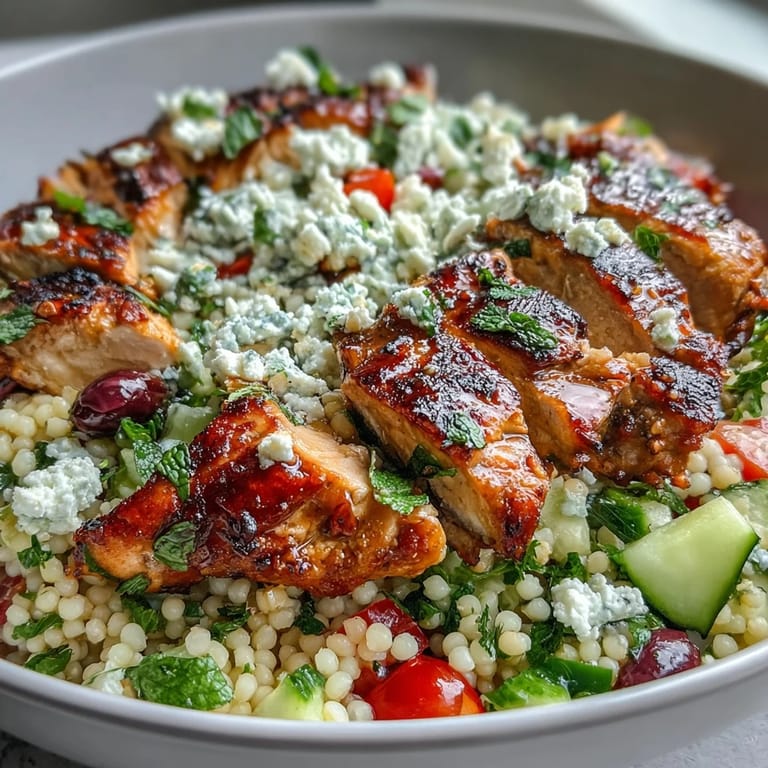
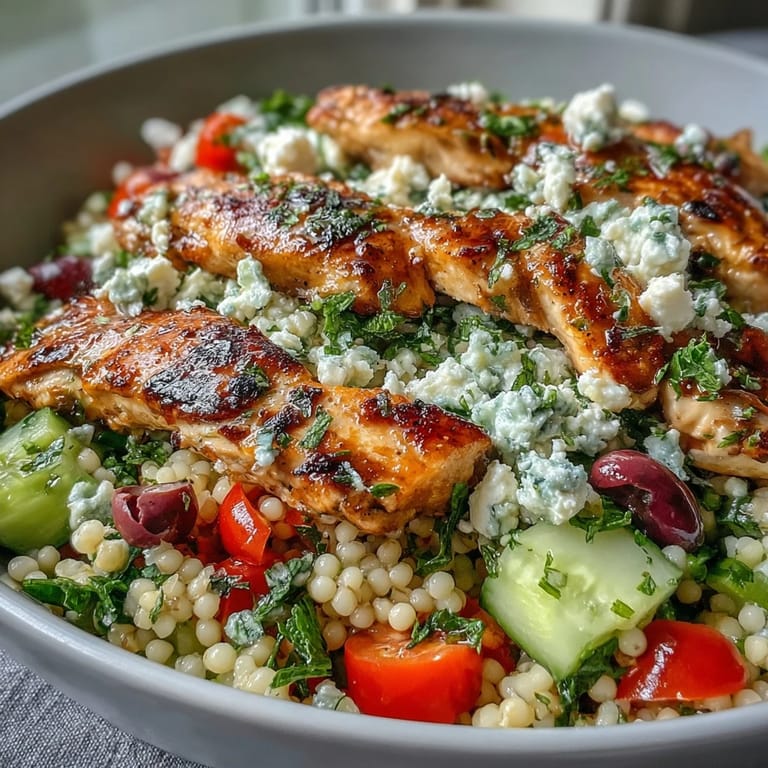
- Divide the couscous salad among four bowls, arrange the chicken strips on top, scatter crumbled feta over everything, and serve immediately while the chicken is still warm. The contrast of warm chicken against the cool, herbaceous couscous is exactly where this dish finds its balance.
 Save
Save The real magic of this bowl happened at a family gathering when my grandmother—who usually eats very traditionally—took a second helping and asked for the recipe. Watching someone you love discover that healthy food can be genuinely delicious, not a compromise, is the whole reason I cook.
The Marinating Moment
I learned the hard way that marinating time isn't just a suggestion—it's when the acidic lemon and the aromatics actually begin breaking down the protein and seasoning it from within. The first time I rushed through this step, the chicken tasted pleasant but flat, like it was coated in flavor rather than infused with it. Now I marinate while I'm doing my mise en place, so the chicken gets attention without extending my total time in the kitchen.
Building Layers of Freshness
Mediterranean food is fundamentally about freshness, and this bowl is no exception—the vegetables aren't cooked, the herbs are vibrant and raw, and the dressing is bright with lemon. There's a moment when you've diced all your vegetables and they're sitting together in the couscous, before the dressing goes in, where you can actually smell how alive the bowl is. That moment is your cue that you've done it right.
Variations and Flexibility
This recipe is wonderfully forgiving, and once you understand its structure you can riff on it endlessly. I've made it with grilled halloumi for vegetarian nights, added roasted eggplant when I had it on hand, and even swapped the fresh mint for basil when that's what was growing in my garden. The framework stays solid because the marinade, the couscous, and the dressing are the real anchors.
- For a vegetarian version, grill thick slices of halloumi or toss chickpeas in the same marinade and roast them until crispy.
- Roasted eggplant, artichoke hearts, or sun-dried tomatoes add depth and complexity if you want to take it further.
- This bowl tastes even better the next day when the flavors have had time to meld, making it ideal for meal prep.
 Save
Save This bowl has become my go-to when I want to feel nourished without feeling like I've spent my entire evening in the kitchen. It's the kind of meal that reminds you why Mediterranean cooking has endured for centuries—because it's simply, undeniably delicious.
Kitchen Questions
- → What is pearl couscous?
Pearl couscous, also known as Israeli couscous or ptitim, consists of small, spherical pasta balls made from semolina wheat. Unlike traditional couscous, pearl couscous has a larger, chewier texture and a nutty flavor when toasted. It holds its shape well in salads and absorbs dressings beautifully.
- → Can I make this dish vegetarian?
Yes, you can easily adapt these bowls for a vegetarian diet. Replace the chicken with grilled halloumi cheese for a Mediterranean twist, or use chickpeas for a plant-based protein option. Both alternatives pair wonderfully with the lemon-herb marinade and couscous salad base.
- → How long should I marinate the chicken?
For best results, marinate the chicken for at least 15 minutes to allow the lemon, garlic, and herbs to penetrate the meat. You can marinate up to 2 hours in the refrigerator for deeper flavor. Avoid marinating longer than 2 hours, as the lemon juice may begin to break down the chicken's texture.
- → Can I prepare these bowls in advance?
These Mediterranean bowls are excellent for meal prep. Cook the chicken and couscous salad separately, then store in airtight containers in the refrigerator for up to 4 days. Keep the dressing separate until serving to maintain the salad's freshness. Add fresh herbs just before eating for best flavor.
- → What wine pairs well with these bowls?
A crisp Sauvignon Blanc or Greek white wine like Assyrtiko complements the bright lemon and fresh herb notes in this dish. The acidity and citrus undertones in these wines enhance the Mediterranean flavors while balancing the richness of the feta and olive oil.
- → Can I use regular couscous instead of pearl couscous?
While you can substitute traditional couscous, the texture will be quite different. Pearl couscous provides a satisfying chew and substantial bite that holds up well in salad form. Regular couscous is finer and may become mushy when dressed. If substituting, reduce the cooking time and handle gently to maintain texture.