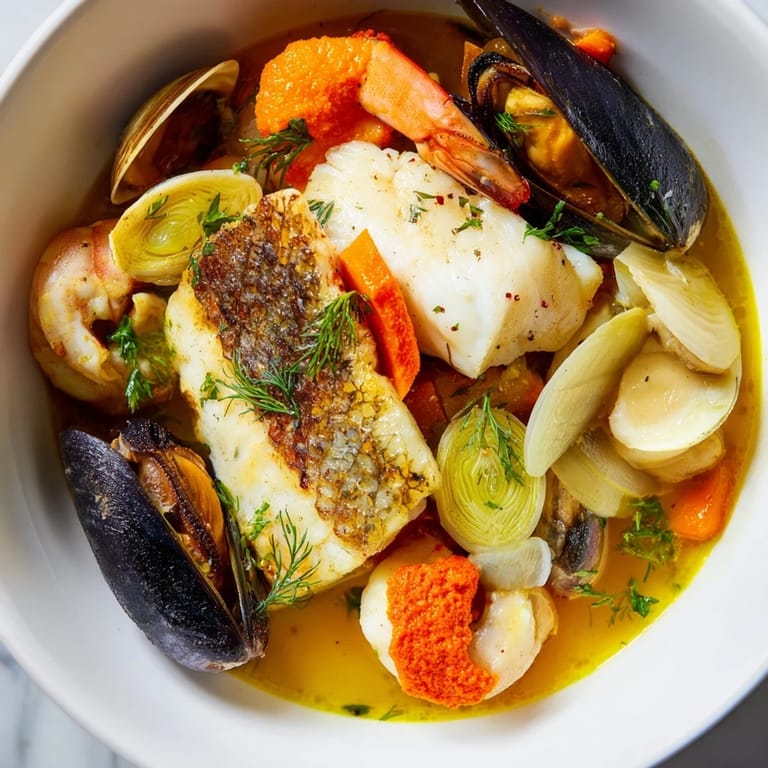
 Save
Save The first time I tasted authentic bouillabaisse wasn't from a recipe book—it was in a cramped harbor-side bistro in Marseille, where the owner's grandmother was still cooking in the back. One spoonful and I understood why this stew has survived centuries: it's not fancy or fussy, just the sea delivered to your bowl with saffron and soul. When I finally attempted it at home, I realized the magic wasn't in any single ingredient but in how they sang together, each one essential, none overshadowing the rest.
I made this for friends who were skeptical about seafood stew, and something shifted when they tasted it—suddenly they were asking for thirds and insisting I share the recipe. That's when I knew bouillabaisse wasn't just dinner; it was a conversation starter, a reason to linger at the table longer than planned, a dish that turns a regular weeknight into something worth remembering.
Ingredients
- Firm white fish fillets (monkfish, sea bass): These anchors of the stew stay delicate because they're added last; they're your proof that good seafood needs barely any interference.
- Oily fish fillets (red mullet): The richness here is what makes the broth taste like the Mediterranean—don't skip this or substitute it lightly.
- Mussels and shrimp: Buy them as close to cooking as possible; their freshness is non-negotiable and will shine through in every spoonful.
- Olive oil: Use good oil here, the kind you'd drizzle on bread by itself, because it matters more than you'd think.
- Onion, leek, fennel, carrot: This aromatic base takes time to soften properly—rushing it cheats you of flavor that builds the entire soul of the stew.
- Saffron threads: Pricey but worth it; those tiny threads carry the color and warmth that make bouillabaisse unmistakably itself.
- Orange zest: A quiet brightness that catches you off guard and makes you wonder what it is, then realize it's been there all along.
- Dry white wine: Something crisp that you'd actually drink, not cooking wine meant only for pots.
- Fish stock or water: If you have stock, use it; water works too, but the stew will taste slightly less generous.
- Egg yolk and mustard for rouille: These emulsify your way to a sauce so smooth it feels indulgent.
Tired of Takeout? 🥡
Get 10 meals you can make faster than delivery arrives. Seriously.
One email. No spam. Unsubscribe anytime.
Instructions
- Sauté the flavor foundation:
- Heat olive oil in a large, heavy pot over medium heat and add onion, leek, fennel, carrot, and garlic. Let them soften for 8–10 minutes, stirring occasionally, until they're translucent and smell sweet—you're building the base that everything else will rest on.
- Bloom the aromatics:
- Stir in tomatoes, orange zest, bay leaf, thyme, parsley, saffron threads, fennel seeds, peppercorns, salt, and pepper. Cook for 5 minutes so the saffron releases its color and the spices wake up.
- Deglaze and simmer the broth:
- Pour in white wine and let it bubble for 2 minutes to cook off the raw alcohol. Add fish stock or water and bring to a gentle boil, then lower heat to a simmer for 25 minutes uncovered—this is where the magic happens as flavors meld and deepen.
- Strain for clarity:
- Pour the broth through a fine sieve, pressing gently on the solids to coax out every bit of flavor. Return the strained broth to the cleaned pot; you're left with liquid gold.
- Cook the seafood:
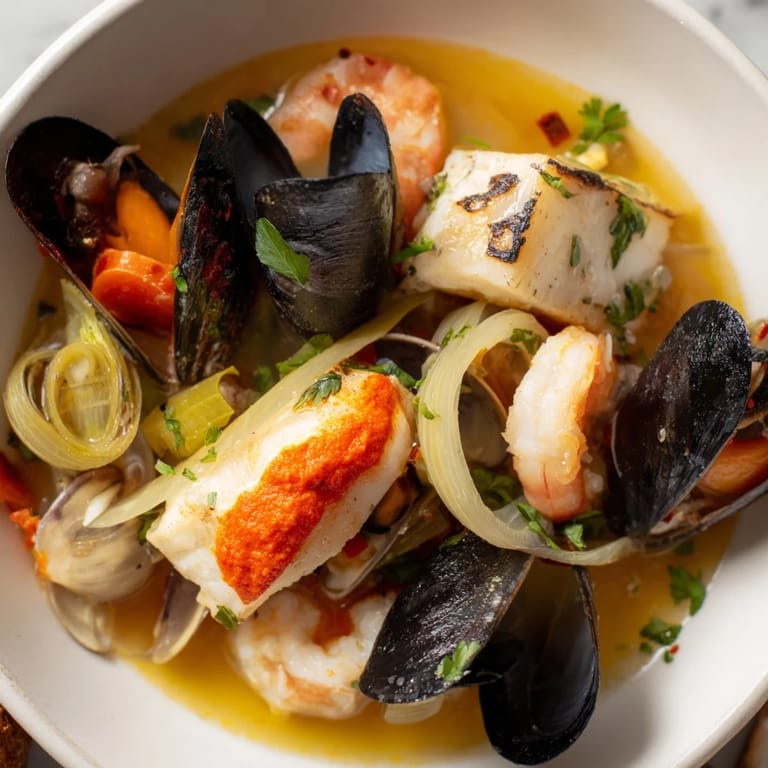
- Bring the broth back to a simmer and add firm white fish pieces first—they need 5 minutes to begin cooking. Then add oily fish, mussels, shrimp, and scallops, simmering for another 5–6 minutes until the mussels open and the fish is just cooked through, opaque at the center.
- Build the rouille:
- In a bowl, whisk egg yolk, minced garlic, chopped chili, saffron with its soaking water, and mustard until smooth. Slowly drizzle in olive oil while whisking constantly—the sauce will thicken and lighten as it emulsifies, becoming creamy and luxurious.
- Bring it all together:
- Ladle the bouillabaisse into warm bowls, top with fresh parsley, and serve with toasted baguette slices brushed with olive oil and a generous spoonful of rouille on the side.
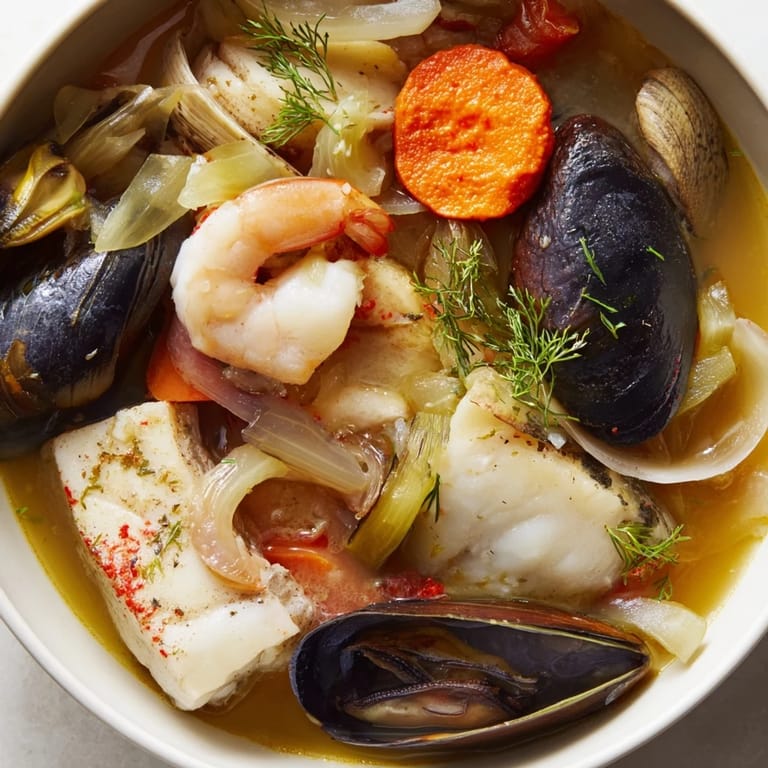 Save
Save The moment someone broke a piece of toasted bread, spread rouille on it thick, dunked it into the stew, and closed their eyes in satisfaction—that's when I understood why this dish has been made the same way for generations in Provence. It's not tradition for tradition's sake; it's because nothing needs changing.
The Rouille: A Sauce That Changes Everything
Rouille is technically an aioli with attitude—it's garlicky, saffron-colored, and confident in a way that simple mayo never could be. The first time I made it, I was terrified it would break while I whisked in the oil, but I realized the key is patience and a steady hand: add the oil slowly, and the emulsion holds like a promise. Once you've made it, you'll want to serve it on everything.
Choosing Your Seafood Wisely
Traditional bouillabaisse uses whatever the Mediterranean offers, so the variety matters more than hitting exact types. I've made this with whatever looked beautiful at the fishmonger that morning—sometimes sea bass and red mullet, sometimes a bit of halibut or even mussels from the farmer's market. The rule is simple: use the freshest you can find, and include at least three different types so the broth tastes complex and generous.
Serving and Variations
Bouillabaisse lives best in warm bowls with a chilled glass of Provençal rosé nearby—the wine cuts through the richness while complementing the seafood. For gluten-free guests, swap regular baguette for gluten-free bread; the stew itself is naturally pescatarian and adaptable. Rouille can be made a day ahead, so if you're feeding a crowd, that's one less thing to worry about in the moment.
- Make extra rouille because once people taste it, they'll want more on their bread than you expected.
- If a mussel doesn't open during cooking, discard it without hesitation—it's a sign it wasn't alive to begin with.
- Leftovers freeze beautifully if you keep the seafood separate and add it fresh when reheating.
 Save
Save This stew reminds me that the best meals aren't about impressing anyone—they're about taking time to cook something real and watching it bring people closer. Bouillabaisse is proof of that, one warm spoonful at a time.
Kitchen Questions
- → What types of fish work best in this stew?
Firm white fish like monkfish or sea bass and oily fish such as red mullet offer a balanced texture and flavor. Including shellfish like mussels and shrimp enhances the complexity.
- → How is the rouille sauce prepared?
Rouille is made by whisking egg yolk with garlic, chili, saffron, and mustard, then slowly incorporating olive oil until thick and creamy, creating a flavorful, garlicky mayonnaise.
- → Can this dish be made gluten-free?
Yes, simply serve with gluten-free bread instead of the traditional baguette to accommodate gluten-free diets.
- → What wine pairs well with this seafood stew?
A chilled Provençal rosé or a crisp white wine complements the saffron and seafood flavors beautifully.
- → How long should the stew simmer to develop flavor?
Simmer the broth uncovered for about 25 minutes before adding the seafood to allow the aromatic vegetables and spices to deepen the flavor.