 Save
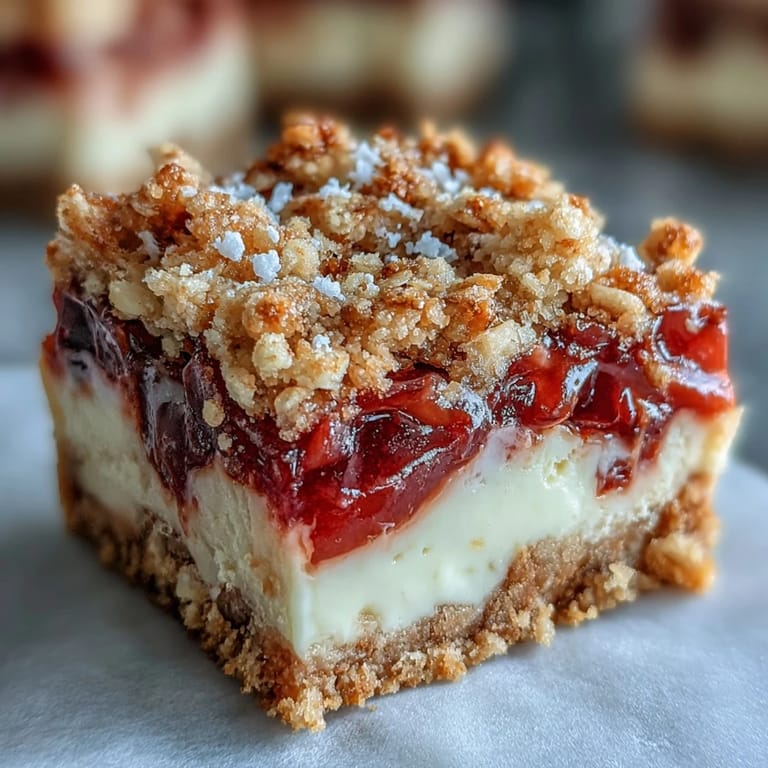
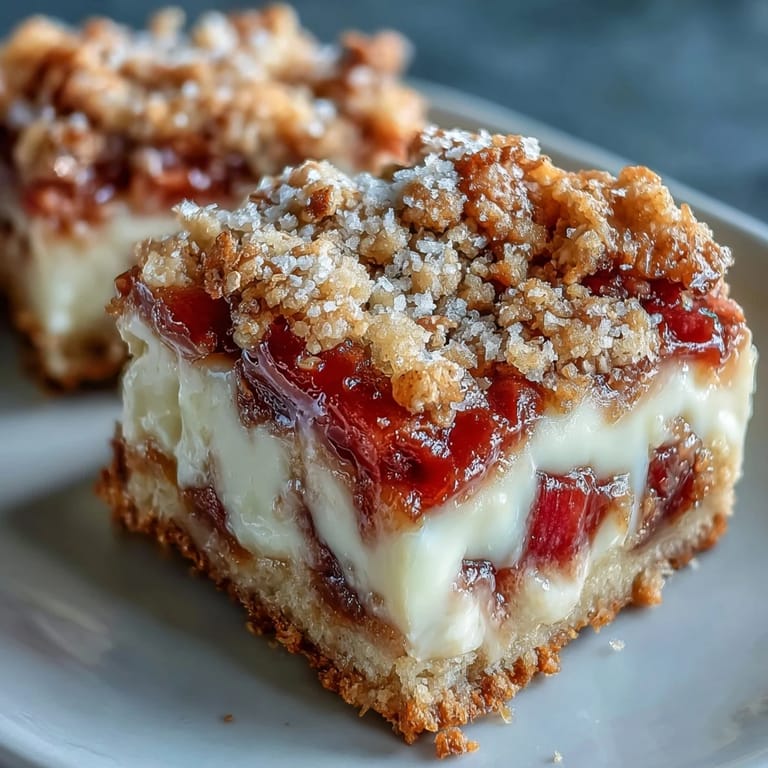
Save My mum always said rhubarb was too sour to enjoy on its own, but the first time I layered it with custard and crumble, something magic happened. The tartness softened against the creamy vanilla, and that buttery topping caught the light like edible gold. These bars became my answer to every spring gathering, the kind of dessert people actually remember asking for by name. There's something deeply British about the whole affair, reminiscent of garden parties and afternoon tea where someone always brings the showstopper.
I made these for my neighbour's daughter's graduation tea, and watching her face light up when she bit into one made me realise desserts are really just edible conversations. Her grandmother asked for the recipe three times that afternoon, and I kept forgetting to write it down because I was too busy watching people reach for seconds. That's when I knew I'd finally cracked the balance between tart and sweet.
Ingredients
- Fresh rhubarb, 400g trimmed and chopped: Spring rhubarb is pinker and less fibrous than summer varieties, so grab it early in the season if you can find it.
- Granulated sugar, 75g (for rhubarb) and 60g (for custard): These separate amounts matter because the rhubarb needs enough sugar to balance sourness without making the custard cloyingly sweet.
- Lemon juice, 1 tbsp: This brightens the rhubarb's flavour and adds depth that sugar alone cannot achieve.
- Cornstarch, 1 tbsp and 2 tbsp (for layers): It thickens without creating a gluey texture, and the two amounts serve different purposes perfectly.
- All-purpose flour, 250g: Standard flour works best here because you need structure without the heaviness of wholemeal varieties.
- Rolled oats, 100g: These add nutty texture and body to the crumble, plus they make the bars feel more homemade and rustic.
- Unsalted butter, 150g cold and cubed: Cold butter is essential for that light, crispy crumble texture, so don't skip the chilling step.
- Light brown sugar, 100g: This deepens the crumble's flavour compared to white sugar and creates a better colour.
- Salt, 1/2 tsp: A tiny pinch enhances every other flavour without announcing itself.
- Whole milk, 300ml: Full-fat milk creates the silkiest custard, so resist the urge to use lower fat options.
- Egg yolks, 2 large: Yolks alone make custard luxurious, while whole eggs can create a heavier texture.
- Vanilla extract, 1 tsp: Pure vanilla makes a noticeable difference here, so it's worth the investment.
Tired of Takeout? 🥡
Get 10 meals you can make faster than delivery arrives. Seriously.
One email. No spam. Unsubscribe anytime.
Instructions
- Prepare your pan like you mean it:
- Line your 23cm square pan with parchment paper, leaving generous overhang on two sides so you can lift everything out later without wrestling with hot metal. This small step saves your hands and your sanity.
- Soften that rhubarb gently:
- Combine the chopped rhubarb with sugar, lemon juice, and cornstarch in a saucepan, then cook over medium heat while stirring often. You'll notice the mixture go from chunky and syrupy to soft and glossy in about 8 to 10 minutes, which is exactly when you stop and let it cool.
- Build your crumble base:
- Mix flour, oats, brown sugar, and salt in a large bowl, then rub in the cold cubed butter with your fingertips until everything looks like breadcrumbs. This texture is your guideline, so don't overwork it or the crumble loses its light, crispy character.
- Press down the foundation:
- Take two-thirds of your crumble mixture and press it firmly and evenly into the bottom of the prepared pan to create a shortbread-like base. Set aside the remaining third for topping, and try to keep your hands cool so the butter doesn't melt prematurely.
- Bake the base until golden:
- Pop the pan into a 180°C oven for 15 minutes until the base is lightly golden and smells wonderfully buttery. Let it cool for a few minutes while you prepare the custard.
- Make silky custard without lumps:
- Heat milk until it steams gently, then whisk egg yolks, sugar, and cornstarch together in a separate bowl until smooth and pale. Slowly pour the hot milk into the egg mixture while whisking constantly to avoid scrambling, then return everything to the saucepan and cook over medium heat, stirring, until it thickens into velvety custard in about 2 to 3 minutes. Stir in vanilla and set aside to cool slightly.
- Layer your masterpiece:
- Spread the cooled rhubarb evenly over the baked base, then pour the warm custard over the top in a slow, steady stream. The layers might seem chaotic at first, but they settle beautifully as everything cooks together.
- Top with the reserved crumble:
- Sprinkle the remaining crumble mixture evenly across the custard layer, making sure there are no gaps so every piece gets that golden topping.
- Bake until golden and set:
- Return to the oven for 30 minutes until the crumble turns deep golden and the custard is just set but still has a tiny wobble in the centre. You're aiming for creamy, not rubbery.
- Cool completely before cutting:
- Let the whole pan cool to room temperature on the counter, then chill in the refrigerator for at least 2 hours so the layers set properly and cutting becomes clean instead of messy. Once chilled, use the parchment overhang to lift everything out, then slice into 16 bars.
 Save
Save These bars stopped being just a recipe the afternoon my friend's elderly mother had one with her tea and suddenly started telling stories about rhubarb crumbles from her childhood kitchen. Food does that sometimes, it unlocks memory and makes strangers feel like family for a moment. That's when I realised I'd made something worth keeping.
Why Spring Rhubarb Deserves This Treatment
Rhubarb arrives in spring like a tart, green-and-pink promise that winter is finally over, yet most people don't know what to do with it beyond stewing it with sugar. The real secret is pairing it with something rich and creamy that lets its sourness shine instead of drowning it. Custard is the perfect partner because it's luxurious enough to stand up to rhubarb's sharp personality while being gentle enough not to overshadow it. That balance is what makes these bars feel elegant rather than heavy.
The Science of Layering
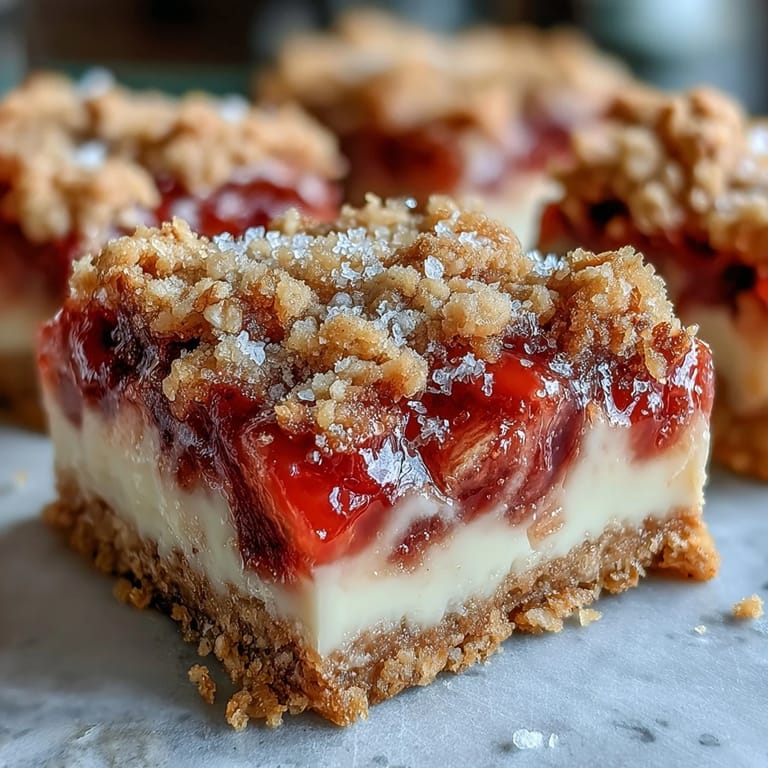
Each layer serves a structural purpose beyond just looking pretty in a cross-section. The shortbread base keeps everything from getting soggy by providing a moisture barrier, while the custard and rhubarb work together as a creamy, fruity filling that's thick enough to support the crumble topping without sliding around. The crumble on top bakes until crispy, creating textural contrast that makes every bite interesting. Once everything cools and sets, the bars hold together like they were always meant to be one thing, which is rather satisfying.
Serving and Storage Secrets
These bars are honestly best served at room temperature or slightly chilled, with a dusting of powdered sugar if you're feeling fancy or a scoop of vanilla ice cream if you're leaning toward indulgence. They keep beautifully in the refrigerator for up to three days in an airtight container, and they actually improve slightly on day two as the flavours meld together. If you need them to last longer, wrap individual bars and freeze them for up to a month.
- A light dusting of powdered sugar just before serving adds elegance without changing the flavour.
- Cold custard and crumble together create a texture contrast that's almost addictive.
- Make these on a weekday afternoon so you have time to chill them properly before serving.
 Save
Save These bars have become my spring signature, the kind of recipe that makes people ask you to bring dessert to gatherings before you've even finished cleaning up from last time. Once you make them, you'll understand why.
Kitchen Questions
- → Can I use frozen rhubarb instead of fresh?
Yes, frozen rhubarb works well. Thaw it first and drain excess liquid before cooking to prevent the bars from becoming too wet.
- → Why do the bars need to be chilled before cutting?
Chilling allows the custard layer to set completely, making it much easier to cut clean, neat bars without the layers sliding apart.
- → Can I make these bars ahead of time?
Absolutely. These bars actually taste better the next day as the flavors meld together. Store them covered in the refrigerator for up to three days.
- → What can I substitute for rhubarb if it's not in season?
Try using tart berries like raspberries or blackberries, or even tart cherries. You may need to adjust the sugar slightly depending on the fruit's sweetness.
- → How do I know when the custard layer is properly set?
The custard should be just set with a slight jiggle in the center when you gently shake the pan. It will continue to firm up as it cools and chills.
- → Can I make a gluten-free version of these bars?
Yes, substitute the all-purpose flour with a gluten-free flour blend and use certified gluten-free oats to accommodate gluten sensitivities.