 Save
Save There's something about the first warm day of spring that makes you crave something cold and alive on your plate. I discovered soba noodles by accident, reaching for them at an Asian market when I was overwhelmed by options, and the woman behind the counter mentioned they cook in minutes. That simple comment changed my lunch routine forever. Now, whenever I need something that feels both nourishing and effortless, I find myself making this salad—it's the kind of dish that tastes like you tried harder than you actually did.
I made this for a potluck once, skeptical that a cold noodle salad would hold its own against casseroles and baked pasta, but it was the first thing gone. A colleague came back for thirds and asked what was in the dressing, genuinely confused that something so creamy came from just peanut butter and a few pantry staples. That moment reminded me that simplicity, when done thoughtfully, beats complexity every time.
Ingredients
- Soba noodles (250 g): These delicate buckwheat strands cook quickly and have a subtle, nutty flavor that pairs beautifully with the sesame dressing. Look for 100% buckwheat if you're avoiding gluten, though most standard soba is wonderfully forgiving.
- Carrot (1 medium, julienned): The sweetness cuts through the richness of the dressing, and julienning it makes the salad feel more refined than a rough chop ever could.
- Cucumber (1 small, sliced thin): This adds cooling freshness and a subtle crunch that keeps each bite interesting.
- Red bell pepper (1, thinly sliced): The color and slight sweetness brighten the whole dish, and thin slices let the dressing coat them properly.
- Spring onions (2, finely sliced): They bring a mild onion bite that feels fresh rather than harsh, especially if you keep them mostly raw.
- Red cabbage (1 cup shredded): It stays crisp longer than most vegetables and adds a subtle earthiness that grounds the lighter elements.
- Peanut butter (3 tbsp): Smooth peanut butter creates the base of the dressing; its richness makes the whole salad feel indulgent even though it's light.
- Soy sauce (2 tbsp): This adds umami depth and salt, so taste as you go if you're using tamari or a reduced-sodium version.
- Rice vinegar (1 tbsp): The gentle acidity brightens everything without overwhelming the other flavors.
- Toasted sesame oil (1 tbsp): A little goes a long way—this is where the magic happens, bringing warmth and nuttiness that makes the whole dish sing.
- Maple syrup or honey (1 tbsp): Just enough sweetness to balance the salty and savory elements without making it feel like dessert.
- Fresh ginger (1 tsp grated): It wakes everything up with a subtle heat and brightness that makes the dressing feel alive.
- Garlic (1 small clove, minced): Mince it finely so it distributes evenly and doesn't create harsh bites.
- Water (1–2 tbsp): This thins the dressing to the right consistency, so add it slowly and taste as you go.
- Toasted sesame seeds (2 tbsp): Scatter these on top for crunch and a deeper sesame flavor.
- Fresh cilantro (2 tbsp chopped): The herbal brightness is optional but transforms the salad from good to something you'll think about later.
- Red chili (1 small, sliced): Add this only if you like heat; it's a whisper, not a shout.
- Lime wedges (for serving): A squeeze brightens everything and is essential if you're eating this the next day.
Tired of Takeout? 🥡
Get 10 meals you can make faster than delivery arrives. Seriously.
One email. No spam. Unsubscribe anytime.
Instructions
- Cook the noodles until tender but still with a slight bite:
- Bring a large pot of water to a boil and add the soba noodles, stirring gently to separate them. They'll cook in 5–7 minutes—watch the package instructions and taste after 5 minutes to be sure. When they're done, drain them in a colander and rinse under cold running water, using your fingers to gently separate them as you rinse, until they're cool and the water runs clear.
- Build the dressing with care, starting with the peanut butter:
- In a large mixing bowl, add the peanut butter, soy sauce, rice vinegar, sesame oil, maple syrup, ginger, and garlic. Whisk everything together slowly—the peanut butter can be stubborn at first, but it'll surrender to patience. Add water one tablespoon at a time, whisking between additions, until the dressing is smooth and pourable but still rich enough to coat the noodles properly.
- Bring everything together in a gentle toss:
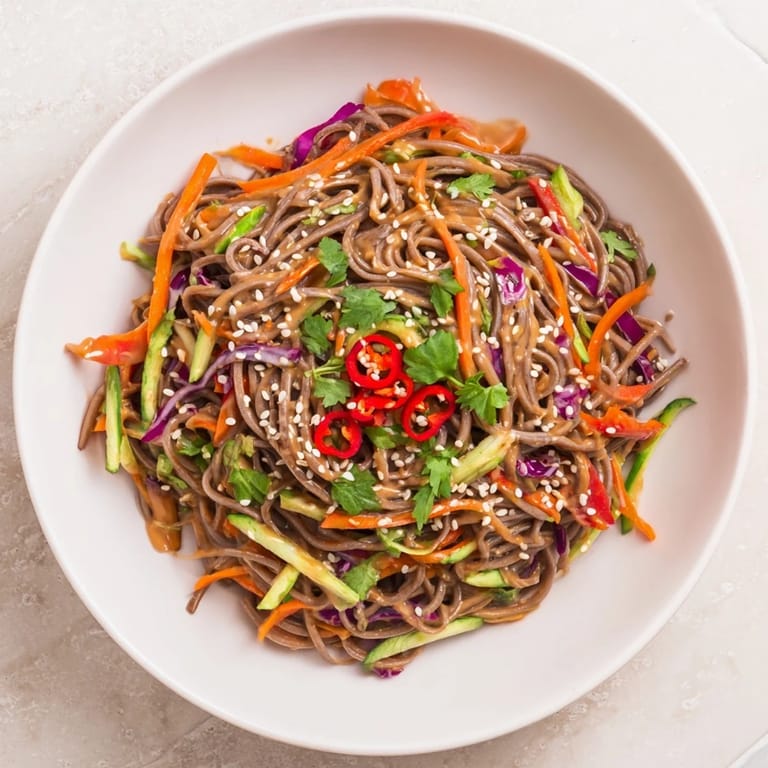
- Add the cooled noodles to the dressing, followed by the carrot, cucumber, bell pepper, spring onions, and red cabbage. Toss with enough confidence that everything gets coated, but gently enough that you're not breaking the noodles into fragments. Taste and adjust—more lime juice for brightness, more sesame oil for depth, more water if it feels too thick.
- Finish with care, serving right away or chilling:
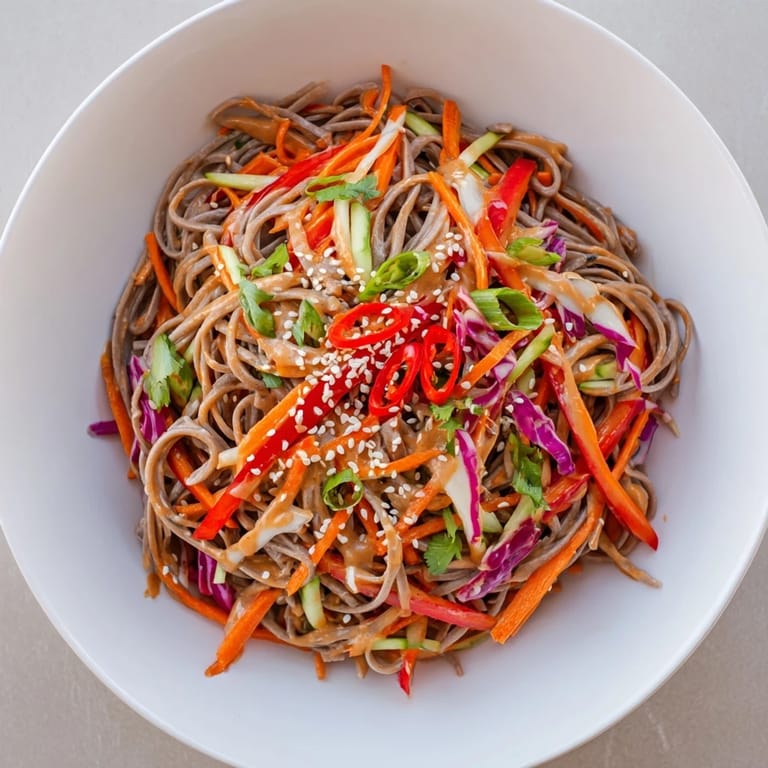
- Divide the salad among serving bowls and top with toasted sesame seeds, cilantro, and chili slices if you're using them. Serve immediately with lime wedges, or cover and chill until you're ready to eat, knowing it'll taste just as good cold from the fridge.
 Save
Save My best memory of this salad isn't from a special occasion—it's from a random Thursday when I made it for lunch, sat outside on the back porch with the sun warming my face, and realized I was genuinely happy about what I was eating. That's when I knew this recipe had earned its place in my regular rotation.
The Dressing Magic
The real secret to this salad lives in the dressing, which is essentially a creamy sesame-peanut sauce that bridges Asian flavors with something deeply comforting. What surprised me the first time I made it was how sesame oil transforms the whole experience—just one tablespoon creates a dressing that tastes like it came from a restaurant kitchen. The acid from the vinegar and the sweetness from the maple syrup keep it balanced rather than heavy, and the ginger and garlic make it feel sophisticated without requiring any fancy technique.
Making It Your Own
This salad is endlessly adaptable depending on what you have on hand and what you're in the mood for. If you want more substance, add grilled tofu, shredded cooked chicken, or a handful of edamame—each one shifts the salad's personality without changing its soul. I've also swapped vegetables based on the season: summer brings more cucumber and fresh herbs, while spring calls for snap peas and radishes. The framework stays the same, but the details can be yours to decide.
Storage and Next-Day Eating
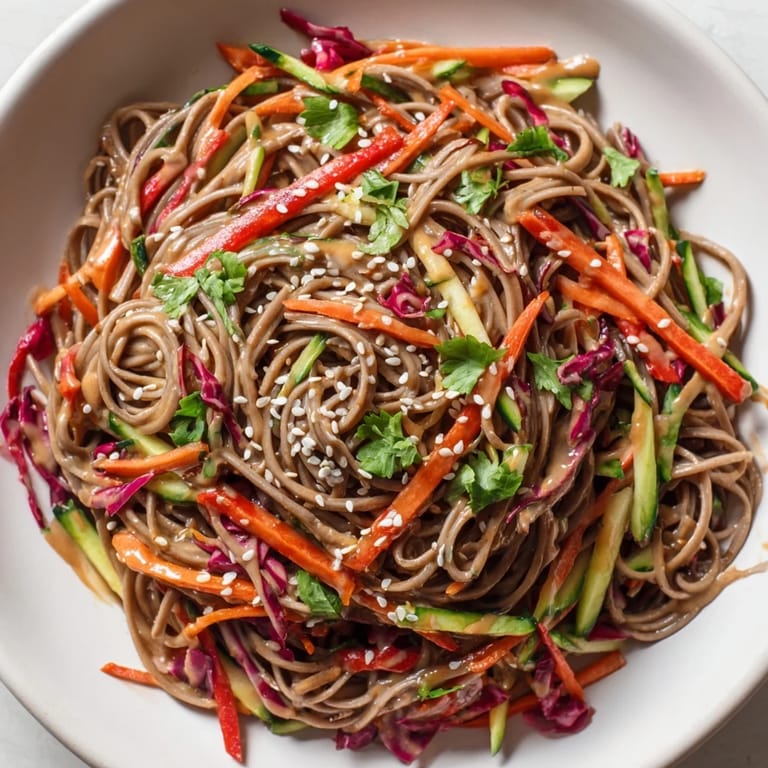
One of the best things about this salad is that it actually improves after a day in the fridge, as the noodles absorb more of the dressing's flavor. I've learned to keep the sesame seeds and cilantro separate until serving—they stay crispier that way and won't get soggy overnight. If the salad has been in the fridge for a day, refresh it with a squeeze of fresh lime juice and a splash of water to loosen the dressing back up, then retoss gently before eating.
- Store in an airtight container for up to 2 days, keeping garnishes separate if possible.
- Always taste before serving leftovers and adjust seasoning with more soy sauce, lime, or sesame oil as needed.
- If you're packing this for lunch, keep the lime wedges separate so you can add brightness right before eating.
 Save
Save This salad has become my answer to the question of what to make when I want something that feels good to eat and takes almost no time. It's the kind of dish that reminds you that sometimes the simplest combinations are the ones worth returning to again and again.
Kitchen Questions
- → How do you cook soba noodles to prevent sticking?
Cook soba noodles in boiling water for 5–7 minutes, then drain and rinse thoroughly under cold running water to remove excess starch and stop cooking.
- → What can replace peanut butter in the dressing for allergies?
Use tahini for a sesame flavor while keeping the dressing creamy and nut-free.
- → Can this salad be made gluten-free?
Yes, use 100% buckwheat soba noodles and tamari instead of soy sauce to ensure it is gluten-free.
- → How can I store the salad for later use?
Keep the salad refrigerated for up to two days and refresh it with a squeeze of lime before serving for best taste.
- → What garnishes enhance the flavor and presentation?
Toasted sesame seeds, chopped fresh cilantro, and thinly sliced red chili add texture, aroma, and a mild kick.
- → Is this dish suitable for vegans?
Yes, substituting maple syrup for honey makes it fully vegan and suitable for dairy-free diets.