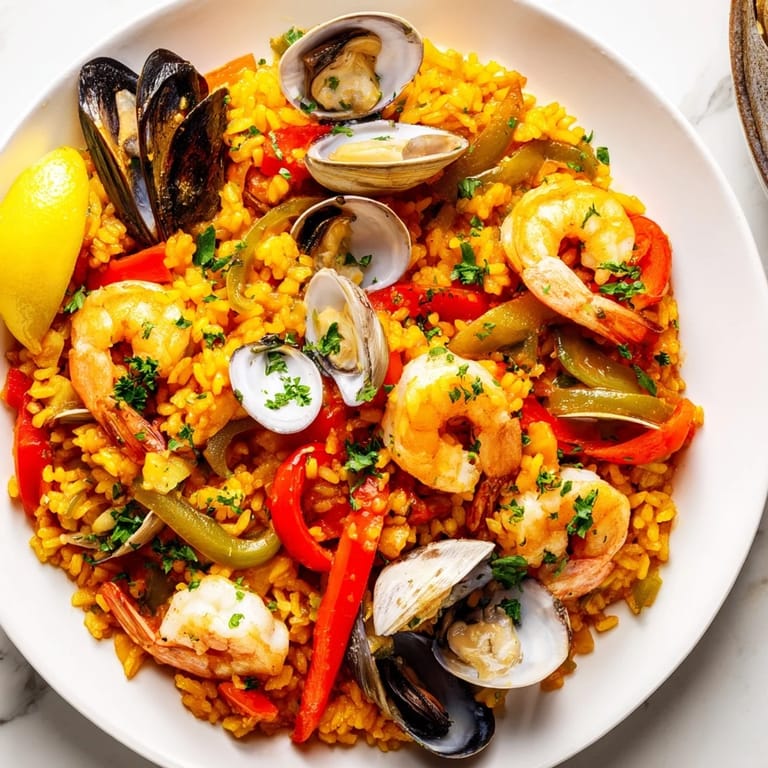
 Save
Save The first time I made paella, I was standing in my friend's kitchen on a Sunday afternoon, and she handed me a worn Spanish cookbook with notes scribbled in the margins. The saffron was expensive, almost intimidating, but when those golden threads hit the warm stock, the whole kitchen smelled like a memory I'd never actually lived. That's when I understood—paella isn't just rice and seafood. It's a conversation between ingredients, each one waiting for its moment to shine.
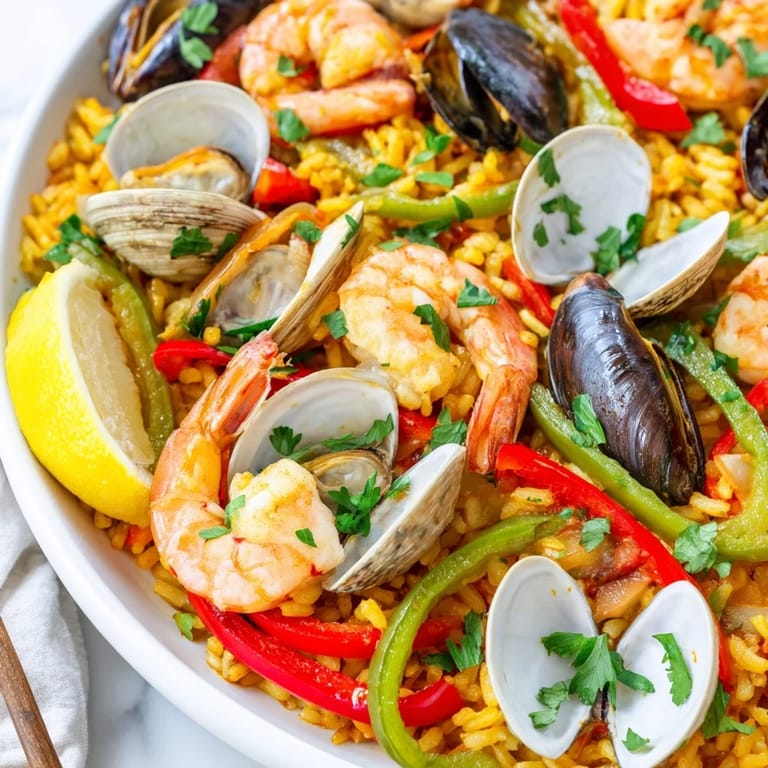
I made this for my partner on an evening when we both needed something warm and grounding. As the paella cooked, the kitchen filled with this amber-colored steam that made everything feel quieter, safer somehow. When I pulled off the lid and we saw the mussels had popped open, their shells glossy and dark, we both just stood there grinning like we'd pulled off something impossible—which maybe we had.
Ingredients
- Short-grain paella rice (Bomba or Arborio): This is non-negotiable—regular long-grain won't absorb the broth properly, and your paella becomes mushy sadness.
- Saffron threads: Yes, it's pricey, but a tiny pinch transforms an entire pot, so it goes further than you'd think.
- Fish or seafood stock: Homemade is dreamy, but good quality store-bought keeps things honest and still delicious.
- Large shrimp, mussels, and clams: Fresher is always better—ask the fishmonger when they arrived, and don't be shy about it.
- Bell peppers, onion, garlic, tomato: These build the flavor foundation, so don't rush mincing them fine.
- Smoked paprika: This adds a gentle warmth that feels like cooking over a wood fire, even on your stovetop.
- Olive oil: Use something you'd actually taste on bread—it matters here.
Tired of Takeout? 🥡
Get 10 meals you can make faster than delivery arrives. Seriously.
One email. No spam. Unsubscribe anytime.
Instructions
- Steep the saffron:
- Warm your stock in a saucepan and drop those golden threads in. Keep it steaming gently over low heat—this step is about patience and letting the saffron release its color and soul into the liquid.
- Build the base:
- Heat olive oil in your paella pan and coax the onion into softness over medium heat, maybe two minutes of gentle stirring. When it's translucent and sweet, add the garlic and breathe in that sharp, wonderful smell.
- Toast the vegetables:
- Slip in the bell pepper strips and let them soften for a few minutes until their edges turn glossy. Add your grated tomato and let it cook down until most of the liquid vanishes—this concentrates everything into pure flavor.
- Marry the rice:
- Pour in the rice and stir it constantly for about a minute, coating every grain in that oil and vegetable mixture. Dust with paprika, salt, and pepper, stirring gently.
- Add the stock without stirring:
- Pour in the warm saffron-infused broth, spreading the rice out evenly. This is the hard part—you have to leave it alone now. Resist the urge to stir. Trust the process.
- Nestle in the seafood:
- After about 12 minutes, when the rice has absorbed most of the liquid, arrange your shrimp, mussels, and clams right on top. Cover loosely with foil and cook for another 12-15 minutes until the rice is tender and the shellfish open up like little gifts.
- Rest and reveal:
- Remove from heat, keep it covered for five minutes. This resting time lets everything settle into itself, and when you lift that foil, the steam rises with this incredible aroma that makes everyone stop talking.
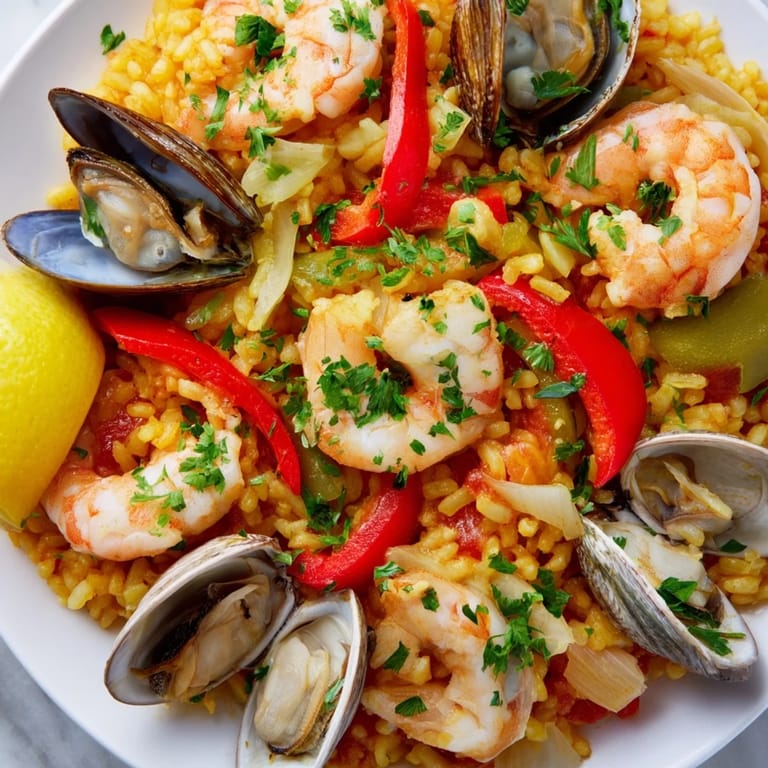 Save
Save There's a moment in paella-making when you can smell the saffron reaching its peak, when the seafood starts releasing its briny sweetness into the rice. That's when I know everyone's going to feel taken care of by this dish, like you've done something generous without trying too hard.
The Saffron Secret
Saffron can be temperamental if you don't respect it. Infusing it in warm stock for at least five minutes before adding the rice allows those threads to fully bloom and distribute their color evenly. I've found that slightly older saffron (three to six months) actually has more punch than fresh, so don't stress if your jar isn't brand new. The real mistake is trying to rush it or adding it directly to cold rice.
Timing and Heat Control
Medium-low heat is your friend here—too hot and the bottom burns before the rice cooks through, too cool and everything becomes a soggy mess. The first time I made this, I kept cranking up the heat because I was impatient, and the bottom of my paella stuck with this bitter, charred crust. Now I use medium heat initially to get the stock simmering properly, then drop to medium-low and trust that thirty minutes is enough. You might hear a gentle crackling sound from the pan toward the end, and that's actually good—that's the socarrat, the crispy golden layer that forms on the bottom.
Serving and Variations
Paella is one of those dishes that invites creativity while staying true to itself. I love finishing it with a shower of fresh parsley and bright lemon wedges, so people can add as much citrus as they want. Sometimes I'll toss in frozen peas right when the shrimp goes in, or swap half the seafood for chunks of firm white fish or squid if that's what I have. The structure stays the same, but the dish becomes yours. Pair it with a chilled Spanish white wine, something crisp like Albariño, and watch everyone's face light up.
- Add peas in the last five minutes for sweetness and color.
- Calamari or white fish can replace some of the shellfish without losing the soul of the dish.
- Lemon wedges are essential—don't skip them just because the recipe seems finished.
 Save
Save This paella has a way of turning an ordinary evening into something memorable. There's something about feeding people rice that's been kissed by saffron and nestled with seafood that makes them feel truly seen.
Kitchen Questions
- → What type of rice is ideal for this dish?
Short-grain varieties like Bomba or Arborio work best, as they absorb liquid well and maintain a tender texture.
- → How do I prevent the rice from becoming mushy?
Do not stir the rice once the saffron-infused stock is added; this helps form a proper crust and avoids mushiness.
- → Can I substitute the seafood in this dish?
Yes, firm white fish or calamari can replace some or all shellfish for a different texture and flavor profile.
- → What enhances the saffron flavor in the dish?
Infusing saffron threads in warm seafood stock before cooking intensifies the aromatic and vibrant color notes.
- → Are there any recommended pairings for serving?
A crisp Spanish white wine such as Albariño or Verdejo complements the bright and savory seafood flavors.