 Save
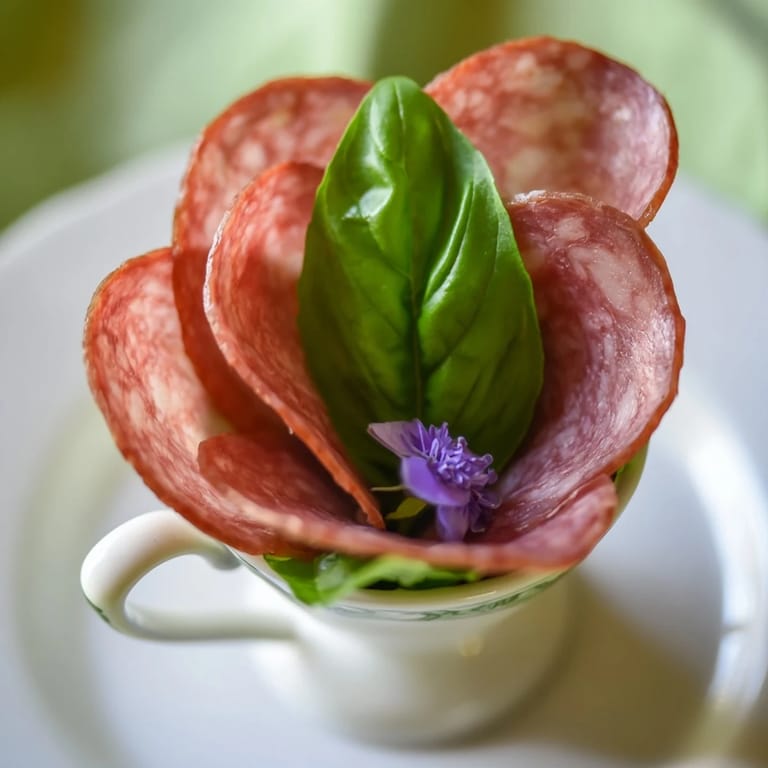
Save The first time I folded salami into a rose, I was standing in my tiny apartment kitchen, genuinely convinced I'd lost my mind. My grandmother had just sent me a photo of her friend's Victorian tea party, and something about those delicate teacups sparked an absurd idea: what if I could make something that fancy without actually knowing how to arrange flowers? Twenty minutes of fumbling with deli meat later, I had something that looked almost intentional, and when I served it to friends on actual porcelain, their faces told me I'd stumbled onto something special.
I made these for my neighbor's birthday potluck, and I watched them sit untouched for a solid ten minutes because everyone was too charmed by the presentation to dare eat them. When someone finally broke the ice and tasted one, the comment wasn't about the meat being fancy—it was that the simplicity of good salami and pepperoni, arranged with a little care, somehow tasted better than expected. That's when I realized this recipe isn't really about impressing people; it's about showing up with something that makes a moment feel a little more deliberate.
Ingredients
- 18 large, thin slices salami: The thinness matters more than the brand—if your slices are too thick, they'll crack when you roll them and the whole thing falls apart, so ask the deli counter for their thinnest cut.
- 18 large, thin slices pepperoni: Pepperoni has a different texture and holds its shape differently than salami, which creates nice visual contrast when the two types of roses sit side by side.
- 6 small porcelain teacups: Thrift stores are your friend here; real teacups feel more special than anything new and ceramic holds a gentle chill better than plastic.
- Fresh basil leaves or baby arugula, optional: These aren't just pretty—they add a whisper of flavor and keep the roses from sliding around inside the cups.
- Edible flowers like pansies or violets, optional: These should be completely dry when you use them or they'll wilt into the roses; source them from farmers markets or specialty grocers, never from florists.
- Assorted crackers, mild cheeses, grapes or berries, optional: These turn individual appetizers into a whole board moment, and they fill visual space on whatever you're serving from.
Tired of Takeout? 🥡
Get 10 meals you can make faster than delivery arrives. Seriously.
One email. No spam. Unsubscribe anytime.
Instructions
- Lay out your salami like petals:
- Arrange 6 salami slices in a line where each one overlaps the last by about a third, like roof shingles. You want them straight and organized at this point because the next part requires both hands.
- Roll into your first rose:
- Starting at one end, slowly roll the line into a tight spiral—imagine you're creating a snail shell. Stand it upright and gently coax the outer edges outward with your fingers to look more petal-like and less like a meat log.
- Create the pepperoni partner:
- Repeat the entire process with 6 pepperoni slices; you'll notice pepperoni is stiffer and holds its shape more aggressively, which actually makes it easier to work with than salami.
- Build your second set:
- Make another round of 6 salami and 6 pepperoni slices so you end up with 3 of each type total. By the third rose, you'll have found your rhythm and the petals will look noticeably more intentional.
- Line the cups with greenery:
- If you're using basil or arugula, tuck a small handful into the bottom of each teacup as a base; this prevents the roses from spinning and adds a fresh note when someone takes a bite.
- Nestle the roses into their teacups:
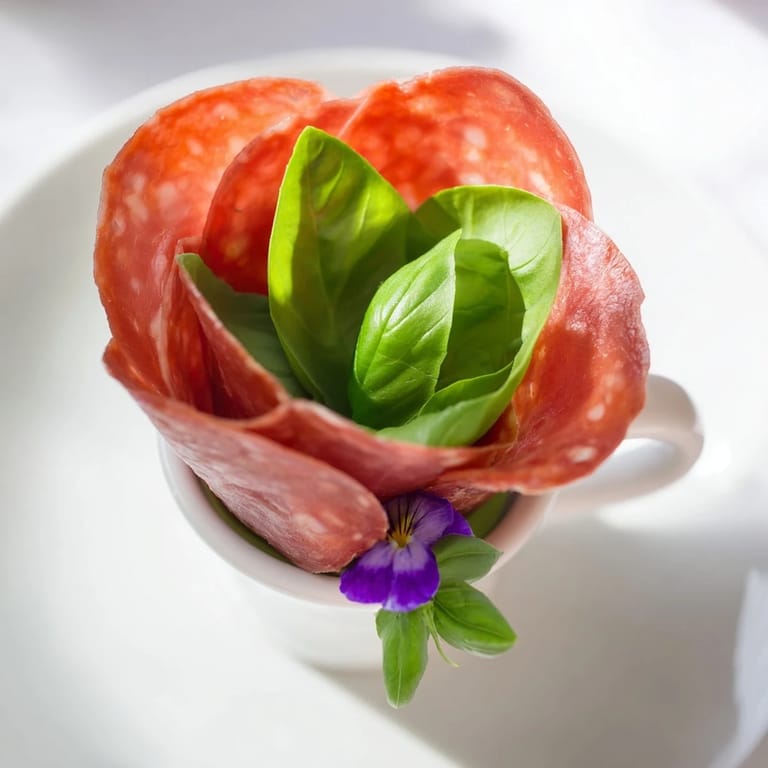
- Place each rose carefully inside a cup and fuss with the petals until they face outward and look full. Don't be precious about this—they're meant to look handmade, not perfectly symmetrical.
- Add the finishing flowers:
- If you have edible flowers, tuck one gently into the side of each rose where it won't immediately fall out but will be the first thing someone notices.
- Arrange on your serving board:
- Scatter the teacups across a board with crackers, cheese, and fruit filling the gaps; this makes the whole thing feel less like appetizers and more like an experience.
 Save
Save There's a specific kind of joy in seeing someone's eyes light up when they realize the beautiful thing in the teacup is actually something they can eat. One guest asked if I'd trained in some fancy culinary technique, and I had to admit the secret was just patience and a willingness to look a little silly while learning to roll meat. That moment made me understand that the best appetizers aren't about complicated ingredients—they're about caring enough to make something ordinary feel like an occasion.
The Art of the Roll
Rolling cured meat into roses feels less like cooking and more like origami with things you can actually eat. The motion is simple once you commit to it—one hand holds the starting edge steady while the other guides the line into a spiral. Most people overthink the tightness; I learned you want it firm enough that it holds its shape but not so tight that the outer petals crack when you spread them. The pepperoni is forgiving because it's naturally stiff, but salami requires a lighter touch and a little patience.
Temperature and Timing
Cold meat rolls cleanly, warm meat becomes clingy and tears in frustrating ways, so keeping everything chilled is honestly the most important technical detail. You can make these up to two hours ahead and just park them in the fridge, which means they're perfect for gatherings where you need one less thing to panic about while hosting. The roses won't dry out or change texture sitting in teacups, and if anything, they taste slightly better when the flavors have had time to settle together in that little ceramic container.
Variations and Swaps
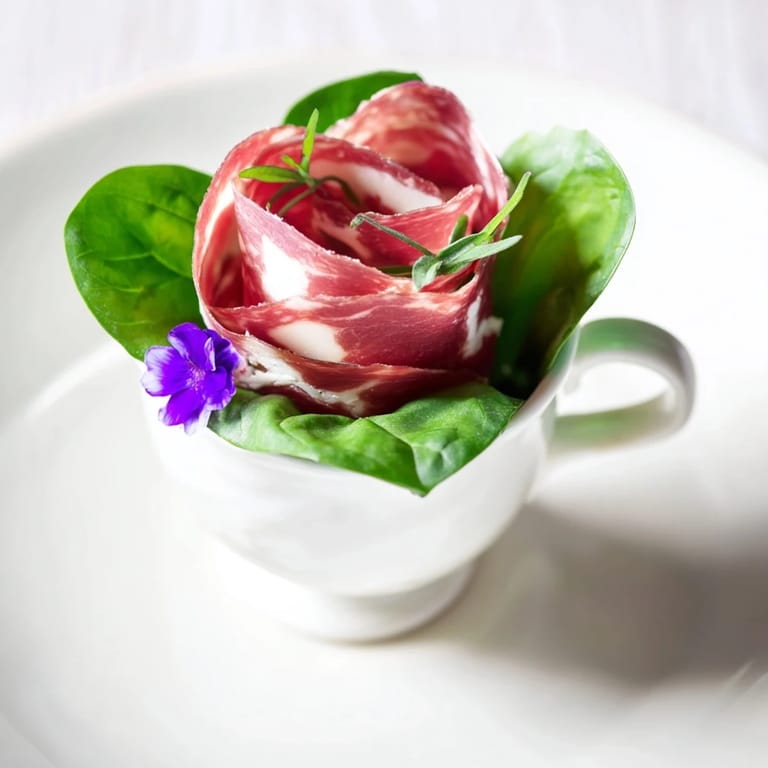
Once you understand the basic rolling motion, you can experiment with other cured meats—prosciutto creates incredibly delicate roses that look almost fragile, while coppa has more texture and depth. The teacup presentation works beautifully with any arrangement, but some people skip the cups entirely and stand the roses on a flat board, which gives a different but equally charming look. You can also get creative with the greens and flowers depending on what's available in your area; what matters is that everything sits together intentionally and tastes like someone cared about the presentation.
- Try a mix of different cured meats in one rose for subtle flavor variations that develop as you eat.
- Brush the meat lightly with a bit of olive oil and black pepper before rolling for an extra layer of flavor.
- Hunt for vintage teacups at thrift stores because each one being slightly different actually adds to the charm rather than detracting from it.
 Save
Save These roses remind me that the most memorable food moments often come from trying something a little unexpected and discovering it works. The magic isn't in the ingredients—it's in the teacup and the tiny decision to arrange something familiar in a way that makes people pause and notice.
Kitchen Questions
- → How do you form the rose shapes with salami and pepperoni?
Arrange overlapping slices in a straight line, roll tightly into a spiral, then gently loosen petals to mimic a rose's form.
- → Can other cured meats be used in place of salami or pepperoni?
Yes, alternatives like prosciutto or coppa work well and provide varied flavors and textures.
- → What is the purpose of lining the teacups with basil or arugula?
Lining adds fresh herb aroma and contrasts color, enhancing presentation and flavor balance.
- → How should the appetizer be stored before serving?
Keep assembled roses chilled in the refrigerator and serve within two hours for optimal freshness.
- → Are there complementary board accompaniments recommended?
Assorted mild cheeses, crackers, and fresh berries or grapes pair beautifully alongside the meat roses.
- → Is any cooking required for this preparation?
No cooking is needed; the appetizer relies on thinly sliced cured meats arranged into roses.