 Save
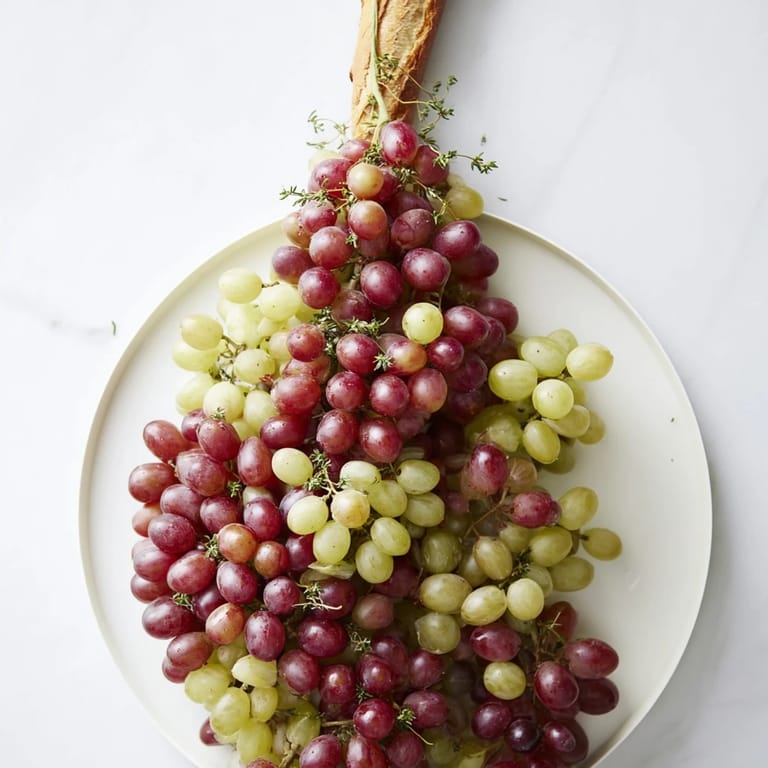
Save I'll never forget the first time I saw a grape cluster drop at a wine tasting in Tuscany. A server carried out this absolutely mesmerizing arrangement—grapes cascading down like nature's own sculpture, with a rustic bread stem that looked like it had grown right there on the platter. I was so captivated that I forgot to taste my wine. That moment stuck with me, and I knew I had to recreate it for my own gatherings. It turns out, it's far simpler to make than it looks, and it always becomes the conversation starter before anyone even takes a bite.
I served this for the first time at a small wine club gathering, and I watched as my friends actually paused mid-conversation to admire it before anyone touched a grape. There's a quiet joy in creating something beautiful enough to stop people in their tracks, something edible but also artistic. That night, it wasn't just about the food—it became the memory.
Ingredients
- 600g seedless green grapes: These are your foundation—choose ones that feel firm and have that slight bloom on the skin, which means they're fresh. The pale color creates a striking contrast when you layer them with the deeper reds.
- 600g seedless red or black grapes: The darker grapes give your cluster depth and visual drama. I learned the hard way that mixing varieties of similar ripeness matters—you want them all to hold their shape equally well.
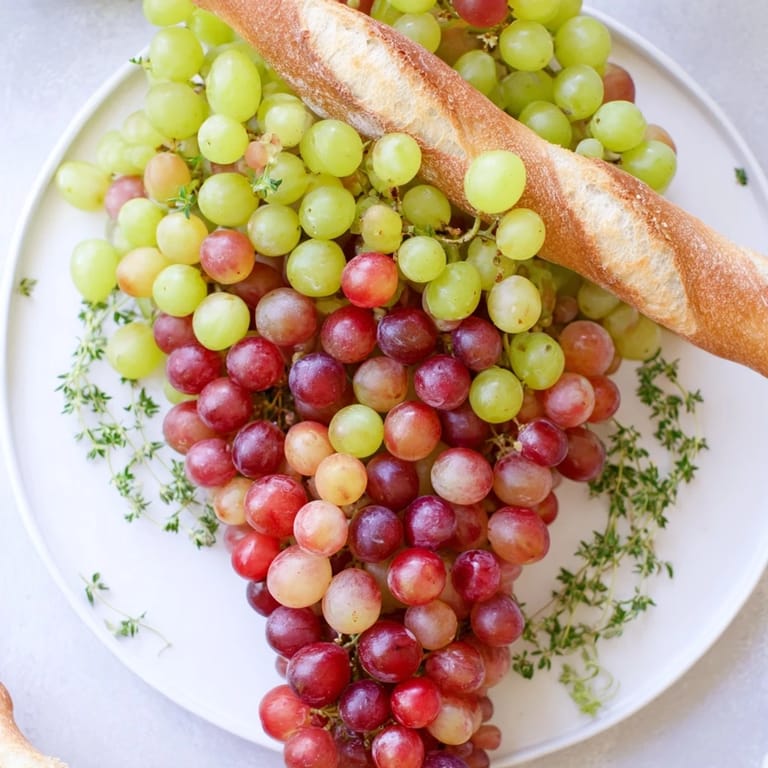
- 1 rustic baguette or 10–12 breadsticks OR 150g thin salami sticks: This becomes your stem, and here's the secret: if you're using bread, choose something with actual texture and crust, not a soft sandwich loaf. For salami, thin grissini-wrapped varieties give that authentic grapevine appearance.
- Fresh herbs like thyme, rosemary, or grape leaves (optional): These aren't just decoration—they add an authentic vineyard scent to your platter and give guests a hint of what's coming flavor-wise.
Tired of Takeout? 🥡
Get 10 meals you can make faster than delivery arrives. Seriously.
One email. No spam. Unsubscribe anytime.
Instructions
- Start with pristine grapes:
- Rinse your grapes gently under cool water, then pat them completely dry with a clean kitchen towel. Wet grapes won't grip together as well, and you want that cluster to feel secure. If some grapes have tiny stems still attached with 3–5 grapes together, leave them—these natural clusters add authentic texture to your arrangement.
- Build your cluster from the ground up:
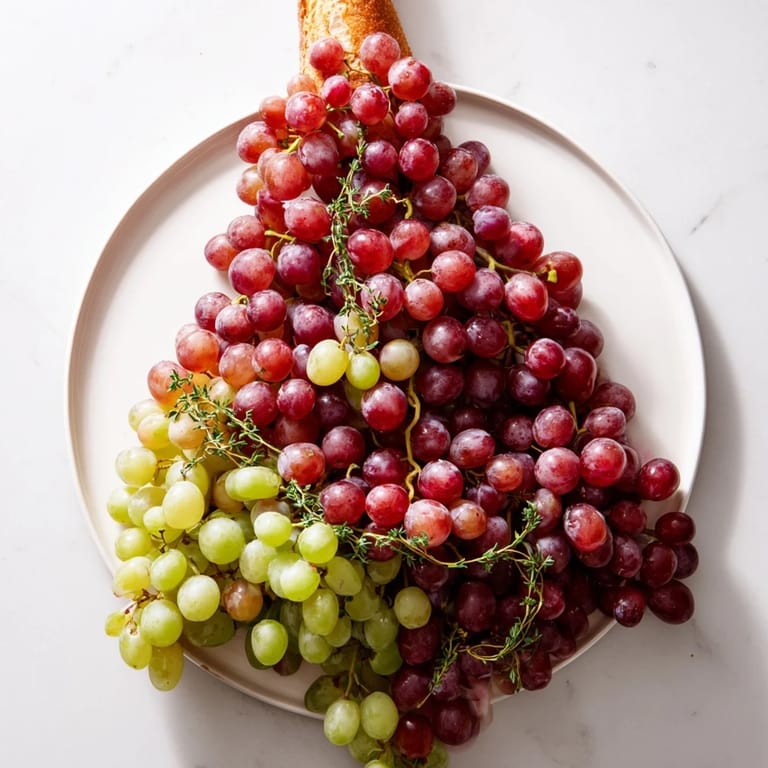
- Lay out your large platter or wooden board where you'll work. Start placing grape clusters at the widest point at the bottom, working in a tight teardrop or inverted triangle shape. Imagine you're building a grapevine cluster, with the fullest, roundest part at the base. Think of how water would naturally cascade if poured from the top—your grapes should follow that same flow downward.
- Create the stem:
- At the narrow top where your grapes taper, position your bread or salami stick vertically. If you're using a baguette, you can angle-cut the end to create a more dramatic point, like a natural vine stem. Breadsticks can be fanned or bundled together for texture. Salami sticks should be arranged in parallel lines to suggest the ribbed look of an actual grapevine.
- Add your finishing touches:
- Tuck fresh herb sprigs—thyme, rosemary, or actual grape leaves if you can find them—around the edges and nestled into the cluster. These add color contrast, aroma, and that unmistakable vineyard authenticity that makes guests lean in closer.
- Present with confidence:
- Serve immediately while everything is at its freshest. Let your guests know they can freely pull grapes and pieces of bread or salami directly from the cluster. That interactive element is part of the charm.
 Save
Save What I treasure most about this recipe is how it transforms a simple fruit into something that feels like an edible work of art. One guest actually asked if she should photograph it before eating it, and that question—that moment of pause between presentation and consumption—that's when I knew I'd created something memorable.
Making It Your Own
This is one of those recipes that loves creativity. I've experimented with interspersing small cubes of aged cheese between the grapes for a cheese board version, and I've seen others scatter toasted nuts throughout. The architecture stays the same, but your personal touches make it distinctly yours. Don't be afraid to play with what grows in your vineyard, so to speak.
Wine Pairing Wisdom
There's a beautiful symmetry to serving grapes with wine, and the pairing should complement your overall tasting experience. A crisp white wine like Sauvignon Blanc or Pinot Grigio echoes the freshness of the green grapes, while a sparkling rosé creates a celebratory mood. I've found that sparkling wines particularly delight guests because the bubbles feel playful when you're eating fresh fruit.
Styling and Serving Secrets
The platter you choose matters more than you might think. Wooden boards create warmth and authenticity, while white ceramic platters make the colors pop dramatically. I prefer natural wood because it reminds everyone of the vineyard origins. Position your grape cluster slightly off-center rather than dead middle—it feels more organic, more like something that could exist in nature. Leave breathing room around the arrangement; this isn't about filling every inch of the platter, but rather letting your creation have space to be admired.
- For maximum visual impact, arrange grapes in alternating rows of red and green as you build upward—think of a color gradient that guides the eye.
- If you're making this more than an hour ahead, keep it in a cool place but don't refrigerate; cold grapes lose their bloom and look less inviting.
- Have small appetizer plates or napkins nearby because guests will want to snack, and grapes do roll if you're not careful.
 Save
Save This recipe reminds me why I fell in love with cooking for others in the first place—it's not just about nourishment, it's about creating moments worthy of memory. Serve this and watch what happens.
Kitchen Questions
- → What types of grapes work best for this dish?
Seedless green and red or black grapes provide a vibrant color contrast and easy-to-eat clusters suitable for this presentation.
- → Can the stem be made vegetarian-friendly?
Yes, using rustic baguette or breadsticks creates a vegetarian stem, while salami offers a savory alternative.
- → How should the grapes be arranged for best visual effect?
Arrange grape clusters tightly in a teardrop shape, starting wide at the bottom and tapering toward the top for a natural vine appearance.
- → Are there any suggested garnishes to enhance the platter?
Fresh herb sprigs such as thyme or rosemary, or grape leaves, add aroma and visual appeal around the grapes and stem.
- → How can I make this suitable for gluten-free diets?
Use gluten-free breadsticks or omit the bread stem altogether, relying solely on the salami option.
- → What occasions suit this grape cluster presentation?
Ideal for wine tastings, parties, or as an elegant addition to cheese boards and entertaining spreads.