 Save
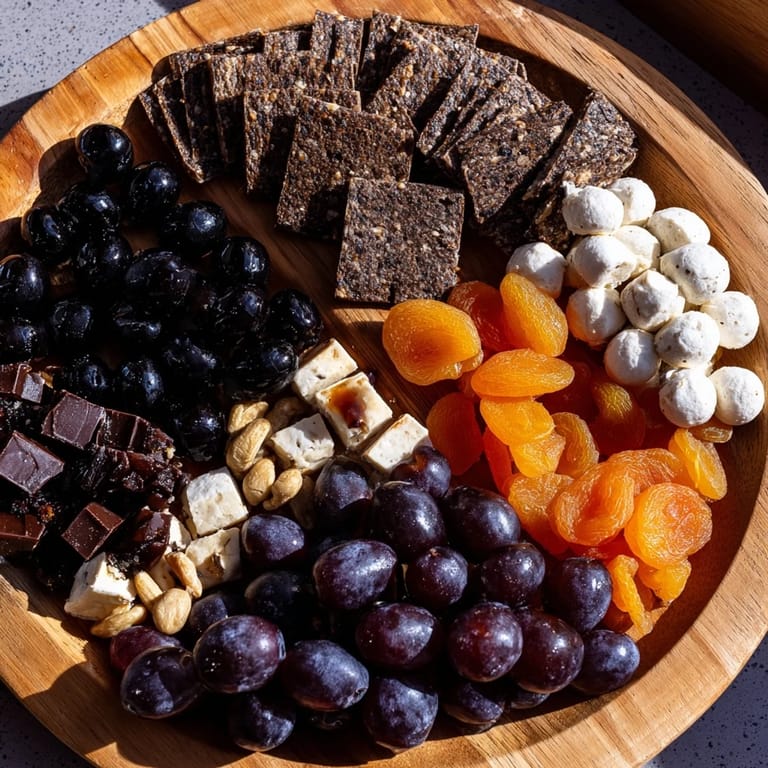
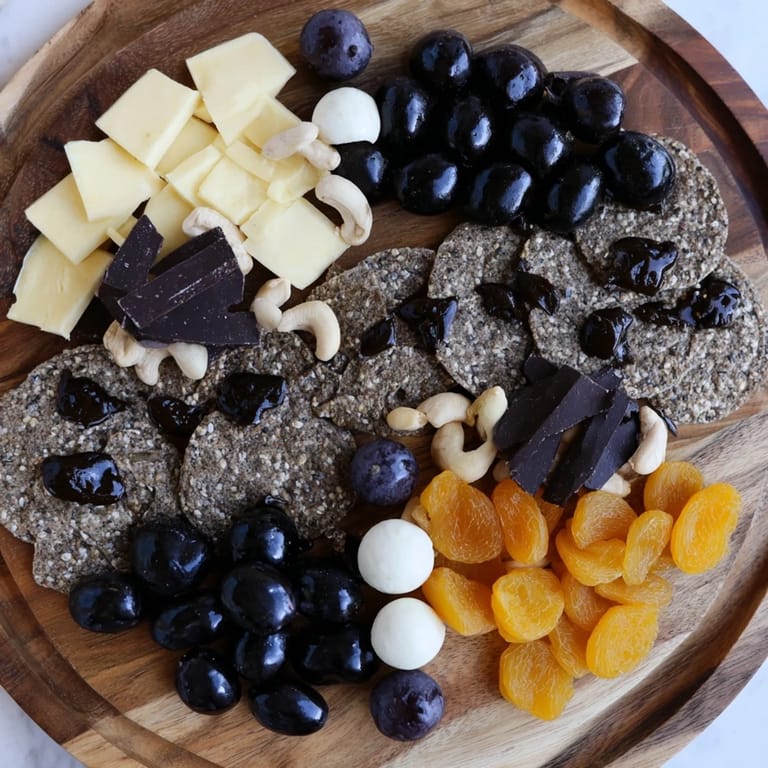
Save I discovered the magic of the Yin and Yang Balance Board at a dinner party where a friend presented this stunning circular platter that stopped everyone mid-conversation. The moment I saw how the dark and light ingredients swirled together in that perfect S-curve, I felt like I was holding edible philosophy in my hands. That night, watching guests gravitate toward different sides based on their mood—some craving the rich darkness, others seeking brightness—I realized this wasn't just an appetizer. It was a conversation starter, a moment of connection, and honestly, one of the most beautiful things I'd ever arranged on a board.
I'll never forget hosting my sister's book club and deciding to surprise them with this board. As they arrived, their eyes genuinely lit up—not just at the taste, but at the intention behind it. One guest told me it felt like eating art, and another spent ten minutes photographing it from different angles. That's when I understood: this isn't just food; it's a moment you're creating for people to remember.
Ingredients
- Black olives, pitted: These are your anchors of richness and saltiness on the dark side. I learned to pit them myself rather than buying pre-pitted—they taste fresher and you control the texture
- Dark rye crackers: They bring an earthy, slightly bitter note that balances the sweetness elsewhere. Look for ones with visible seeds for extra texture and visual interest
- Aged balsamic-glazed mushrooms: This is optional, but if you find them, they're worth it. They add umami depth and a sophisticated earthiness that elevates the whole board
- Black grapes or blackberries: Choose whichever feels fresher at your market. They add sweetness and juiciness to the dark side, preventing it from feeling too heavy
- Dark chocolate squares: Go for 70% cacao or higher—this is where dark chocolate's bitter sophistication shines. It's the surprise that makes people pause and smile
- White cheese: Goat cheese brings tanginess, brie offers creaminess, fresh mozzarella gives delicacy. Choose based on your mood—I usually do goat cheese for its beautiful contrast
- Rice crackers or water crackers: These are your blank canvas on the light side. They should be subtle enough not to overpower the cheese and delicate toppings
- Raw cashews or blanched almonds: Cashews feel buttery and luxurious; almonds are nuttier and more refined. Both work beautifully—trust your preference
- Dried apricots or white grapes: These bring brightness and natural sweetness. I prefer apricots for their chewy texture and golden color against white ingredients
- Honey: A light drizzle isn't just decoration—it ties the light side together with warmth and connects the sweet and savory in an elegant way
Tired of Takeout? 🥡
Get 10 meals you can make faster than delivery arrives. Seriously.
One email. No spam. Unsubscribe anytime.
Instructions
- Set your stage:
- Place your round board in front of you like you're about to create something intentional. Take a breath. This is your canvas.
- Mark the sacred curve:
- Using a small bowl or circular cutter as your guide, lightly trace an S-shaped curve down the center. Don't press hard—you're creating a whisper of a line to guide your hands, not etching it into stone. This is where the magic begins.
- Fill the dark side first:
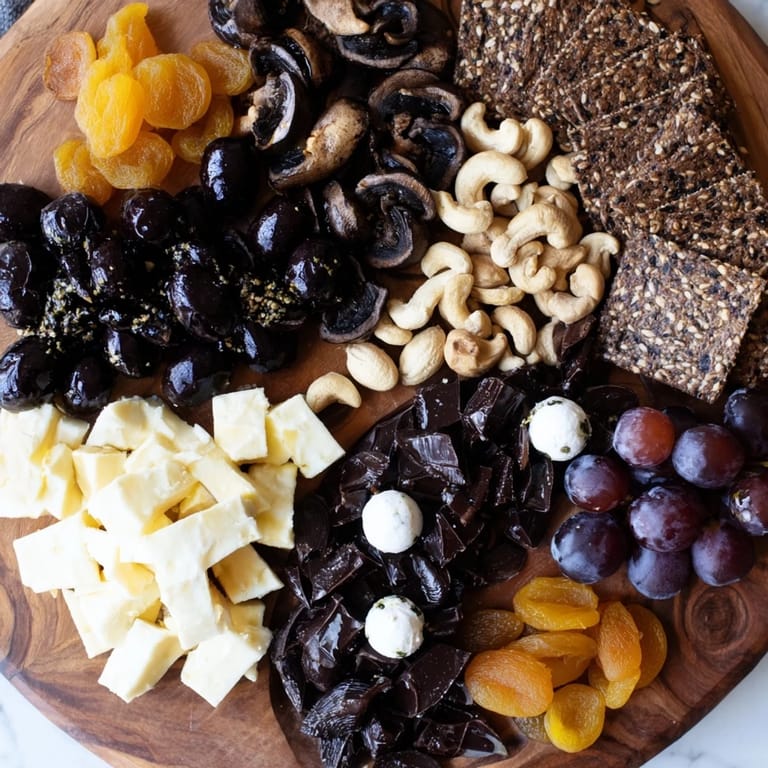
- Start with the black olives in small clusters, then scatter the dark rye crackers at angles so they catch light differently. Add the balsamic mushrooms in strategic spots for color variation. Nestle the blackberries or grapes into the gaps, and finally, place the dark chocolate squares where they'll peek out like little treasures. Work slowly here—you're arranging, not rushing.
- Balance with the light:
- Now move to the opposite half and begin with your white cheese. Slice or cube it, then arrange it so some pieces lean against crackers, creating natural height variations. The cashews or almonds go next, scattered for visual movement. Layer in the dried apricots or white grapes, letting some overlap slightly for depth. As you work, step back occasionally to see if the visual weight feels balanced.
- Add the yin-yang dots:
- Place a small round cheese ball or a single olive in the center of each swirl where the curves meet. This isn't just decoration—it's the completion of the symbol, the final intentional touch that transforms arrangement into art.
- Crown it with light:
- Drizzle the honey lightly across the light side. Let some catch on the cheese, some on the crackers. The golden trails are the finishing brushstroke.
- Present with presence:
- Step back and look at what you've created. Serve immediately, and watch how people's faces change when they see it. Invite them to try both sides, to find their own balance between dark and light, just as you did when arranging it.
 Save
Save What moved me most about this board was realizing that it became a metaphor everyone understood without explanation. A friend who'd been going through something difficult chose only the dark side at first, then slowly migrated toward the light as the evening progressed. Another guest, naturally optimistic, filled her plate with brightness but kept returning to the dark chocolate for depth. The board held space for everyone's truth, and somehow, that made it feel sacred.
The Art of Balance
What makes this board work isn't just the ingredients—it's the intention behind balance. Each element on the dark side has a mirror on the light side: salt answers to sweetness, richness meets freshness, bitter finds its complement in brightness. When you're arranging, think of it as a conversation between opposites that somehow create harmony. This is why people linger over this board longer than others. They're not just eating; they're experiencing a visual and culinary meditation on balance itself.
Adapting to Your Guests
The beauty of this board is its flexibility. Vegetarian? Already there. Vegan? Swap the cheese for cashew cream and use plant-based chocolate. Gluten-free? Use gluten-free crackers and no one will notice the difference—the focus shifts entirely to the whole arrangement. I've made this board for wine lovers, cheese enthusiasts, chocolate devotees, and people with food allergies, and each time it felt personal because I could truly make it theirs. The structure stays; only the details shift.
- Always check labels on packaged items, especially chocolate and crackers, for hidden allergens or unwanted ingredients
- If you're unsure about an ingredient someone's bringing, ask—this board is too beautiful to be shadowed by worry
- Remember that the visual impact matters as much as taste. Choose colors and textures deliberately, and your guests will feel that intentionality
Making It Your Own
After you've made this board once, you'll start seeing yin and yang opportunities everywhere. Fresh herbs tucked into the light side, edible flowers for color, roasted beets for the dark side, pomegranate seeds catching light. The template is just that—a beginning. Trust your instincts and your market's seasonal offerings. The most meaningful boards are the ones that reflect what felt fresh and right in that moment, the ones that carry a little piece of your kitchen's current story.
Pairing and Presentation
This board whispers for sparkling white wine or a light red that won't overpower the delicate interplay of flavors. The wine should enhance, not dominate, just as each ingredient on the board completes rather than overwhelms. I've also served it with tea—a light oolong pairs beautifully with the chocolate and nuts. The real magic happens when you set it down and give people permission to eat intuitively, to follow what calls to them, to create their own journey through dark and light.
- Chill your serving board slightly before arranging if you have time—it keeps cheese fresher longer
- Let guests arrange small plates for themselves rather than pre-plating. Part of the joy is choosing your own balance
- Use small spreaders or picks to help people navigate without their fingers disrupting the arrangement
 Save
Save This board taught me that food is never just about nourishment. It's about creating moments where people feel seen, where beauty and taste and intention all come together. Every time you make this, you're not just assembling ingredients—you're offering a moment of balance in an unbalanced world.
Kitchen Questions
- → How do I create the yin and yang division on the board?
Use a small bowl or circular cutter as a guide to lightly mark an S-shaped curve down the center of the serving board, creating two contrasting halves.
- → Can I substitute ingredients on the balance board?
Yes, cheeses and crackers can be swapped based on dietary needs or personal preference to maintain the balance of light and dark flavors.
- → Is this platter suitable for vegetarians?
Absolutely; the balance board features vegetarian-friendly ingredients like cheeses, nuts, fruits, crackers, and olives.
- → What is the best way to serve this platter?
Arrange the ingredients carefully on a large round board, serving immediately to enjoy the contrasting textures and flavors fresh.
- → Are there any allergen considerations for this platter?
Ingredients include milk, tree nuts, gluten, and possible soy in chocolate, so check for allergies before serving.
- → Can this board be paired with drinks?
It pairs well with sparkling white wine or a light red to complement the diverse flavors and textures.