 Save
Save My tía arrived at our kitchen with a box of guava paste one humid afternoon, her hands already moving through the motions of rolling cake before she'd even set down her purse. She didn't explain Brazo Gitano so much as demonstrate it, muttering about the meringue needing to be glossy, the cake needing to still be warm, the whole thing needing respect. Watching her work felt like witnessing a conversation between her hands and the dessert itself, one I'd been missing my whole life.
I made this for my neighbor's baby shower on a Saturday morning, and I was so nervous about the rolling step that I'd practiced it twice the night before with a regular dish towel. When it came out perfect—golden, delicate, exactly how it should look—she cried a little, and suddenly I understood why my tía made this cake. It wasn't just dessert; it was proof that you cared enough to learn something slightly difficult and do it anyway.
Ingredients
- Eggs, separated: Room temperature eggs whip faster and create more volume, which means a lighter, airier cake that practically melts on your tongue.
- Granulated sugar, divided: Splitting it between the yolks and whites lets each part do its job without weighing anything down.
- Vanilla extract: One teaspoon is enough to whisper through the cake without overpowering the guava, which wants to be the star.
- All-purpose flour: Sift it right before folding so you avoid those little flour pockets that can hide in your cake.
- Salt: A small amount stabilizes the egg whites and makes everything taste a little less one-dimensional.
- Guava paste: The heart of this dessert, melted gently with water to spread smoothly without tearing your delicate cake.
- Egg whites for meringue: Use the freshest eggs you have because these will be uncooked (or barely cooked if you torch them), and you want to feel confident about them.
- Cream of tartar: Optional but useful—it helps stabilize the meringue so it doesn't weep or collapse over the next few hours.
Tired of Takeout? 🥡
Get 10 meals you can make faster than delivery arrives. Seriously.
One email. No spam. Unsubscribe anytime.
Instructions
- Prepare your pan and preheat the oven:
- Set your oven to 180°C (350°F) and line a 10x15 inch jelly roll pan with parchment paper, then grease it lightly so the cake slides out easily. This step takes two minutes but saves you from disaster.
- Whip the egg yolks into clouds:
- Beat the yolks with half the sugar and vanilla extract until the mixture turns pale yellow and thick enough that when you lift the beaters, the mixture falls in ribbons. This usually takes about 3-4 minutes with an electric mixer and means you've incorporated enough air.
- Build the meringue base:
- In a separate, completely clean bowl, whisk the egg whites with the remaining sugar and salt (and cream of tartar if you're using it) until you see stiff, glossy peaks that hold their shape. Don't overbeat or they'll turn grainy and refuse to cooperate.
- Fold everything together gently:
- Pour the yolk mixture into the whites and fold it together with a spatula, cutting down the middle and sweeping along the bottom, rotating the bowl as you go. Sift the flour over the top and fold again until you don't see any white streaks, being careful not to deflate all that air you just created.
- Spread and bake:
- Pour the batter into your prepared pan and spread it evenly with an offset spatula. Bake for 12-15 minutes until the cake springs back when you gently press it with your finger and smells like warm vanilla.
- Roll while warm:
- The moment it comes out of the oven, invert it onto a clean kitchen towel that you've dusted with sugar, then peel away the parchment paper as carefully as you can. Starting from the short end, roll the cake up tightly with the towel, then let it cool completely on a wire rack so the structure sets.
- Prepare the guava filling:
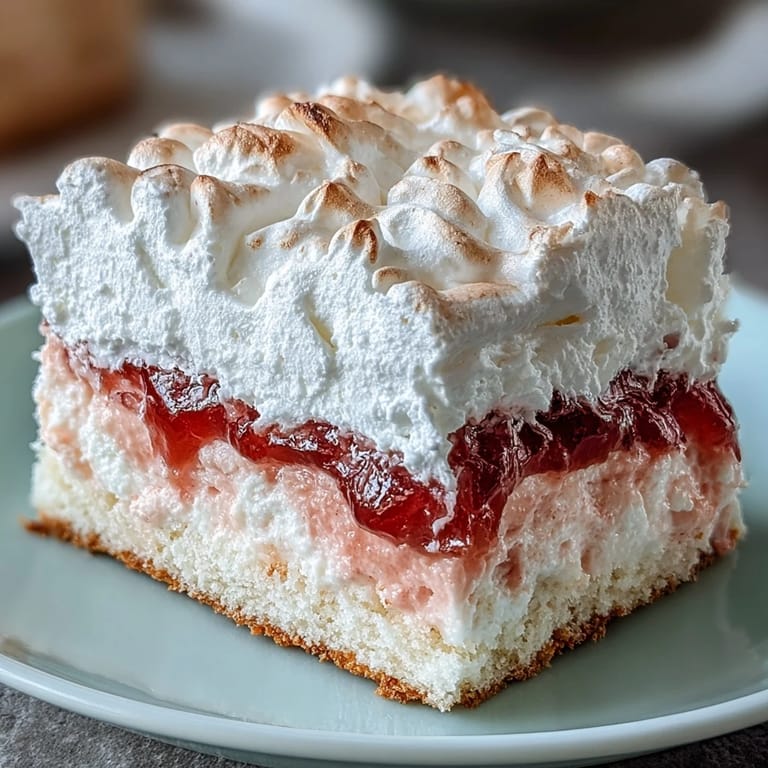
- In a small saucepan over low heat, melt the guava paste with two tablespoons of water, stirring until it's smooth and pourable. Let it cool to room temperature so it doesn't split your cake when you spread it.
- Unroll and fill:
- Carefully unroll your cooled cake and spread the guava filling evenly across the surface, leaving a small border around the edges. Roll it back up tightly (without the towel this time), and place it seam-side down on your serving platter.
- Make the meringue topping:
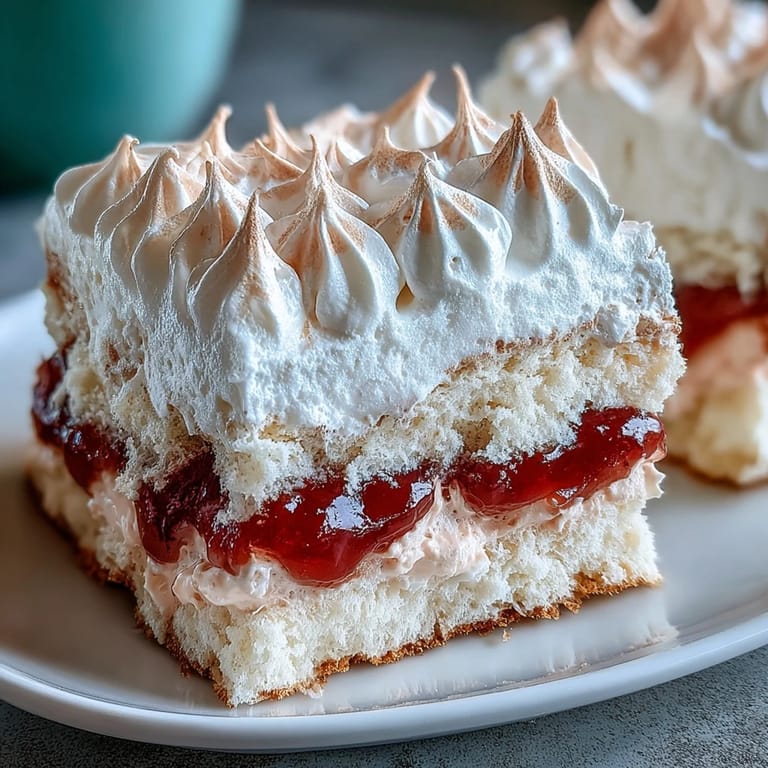
- In a clean bowl, beat the three egg whites until soft peaks form, then gradually add the sugar while continuing to beat until you have stiff, glossy peaks that stand straight up. Don't rush this part or you'll end up with separated, watery meringue.
- Crown your cake:
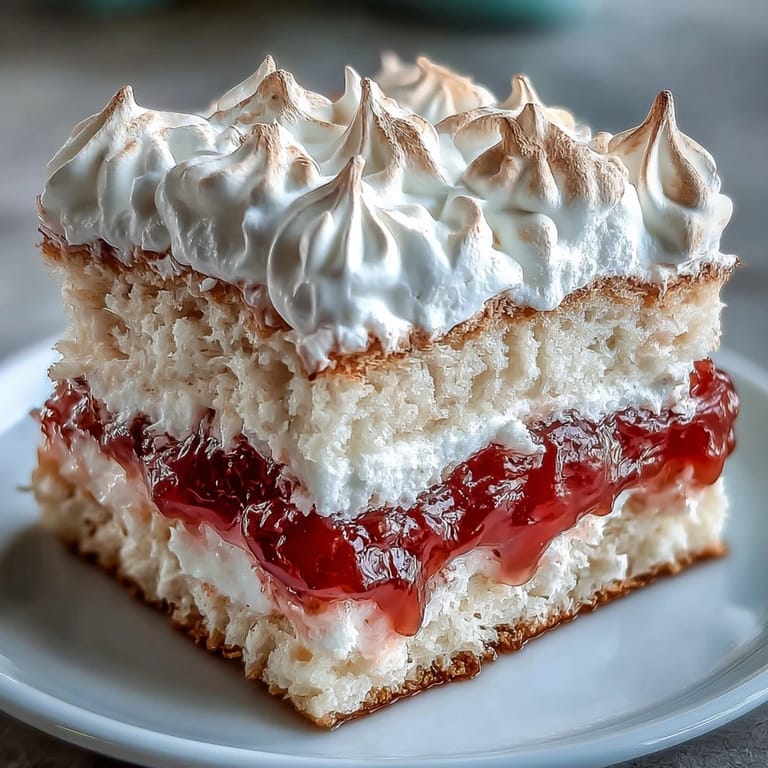
- Spread or pipe the meringue over the top and all the way down the sides of your cake roll, creating whatever peaks and swirls make you happy. If you have a kitchen torch, you can torch it lightly until it's golden and toasted, or place it under the broiler for 2-3 minutes, but watch it closely because meringue can go from golden to burnt in seconds.
- Chill and serve:
- Let the whole thing chill for at least 30 minutes before slicing, which gives the meringue time to set and makes cutting cleaner. Serve at room temperature or chilled, and try not to eat the whole thing in one sitting.
 Save
Save The best version of this cake I ever made was the one where I stopped worrying about making it look professional and just focused on the feeling of rolling it, the smell of guava filling, the satisfaction of peaks that actually stayed peaked. That's when people tasted not just a dessert but the attention I'd paid to every single step.
The Art of Folding
Folding is where most people either create magic or deflate their hard work, and I learned the difference the hard way. The trick is using a large rubber spatula, cutting down through the center of the bowl, sweeping along the bottom, and turning the bowl a quarter turn with your other hand, repeating until you don't see white streaks anymore. It's slower than stirring, which is exactly the point—you're incorporating the flour without knocking out the air bubbles that make this cake light enough to roll without cracking.
Why the Towel Matters
Rolling a delicate sponge cake hot from the oven seems impossible until you understand that the warmth makes it flexible, and the towel gives it structure. The towel isn't rolling the cake; you are, but the towel acts like a safety net, preventing cracks and helping you keep the roll tight. Once it cools, the cake holds its shape, and you can unroll it without everything falling apart into sad crumbs.
Guava Paste Variations and Storage
Guava paste is traditional, but I've made this with mango, passion fruit, and even a dulce de leche variation that my cousin swears is better than the original. The meringue works with any flavor because it's just sweetness and air, so feel free to experiment with whatever paste speaks to you or whatever you can find at your market.
- Store the finished cake in the refrigerator for up to two days, covered loosely with plastic wrap so the meringue doesn't stick to it.
- You can make the components ahead—the cake and filling a day early, meringue just before serving—and assemble when you're ready.
- If you're nervous about raw eggs in the meringue, torching it lightly brings the temperature up enough to feel safer, or you can skip the meringue and dust with powdered sugar instead.
 Save
Save This cake tastes like celebration even when you're making it on an ordinary Tuesday, which maybe is the real magic of a good dessert. It tells the people you serve it to that they're worth the effort, the planning, and the slightly nervous feeling of rolling a hot cake onto a towel for the first time.
Kitchen Questions
- → What makes Brazo Gitano different from other jelly rolls?
Brazo Gitano distinguishes itself through the signature Puerto Rican combination of guava paste filling and meringue topping. While most jelly rolls use whipped cream or buttercream, the sweet-tart guava provides authentic Caribbean flavor, and the torch-kissed meringue creates a beautiful visual presentation with a delightfully crisp exterior.
- → Why must the cake be rolled while warm?
Rolling the sponge while still warm is essential because the cake remains pliable and less prone to cracking. As it cools rolled up with the towel, it "remembers" this shape, making it much easier to unroll, fill, and re-roll later without breaking the delicate structure.
- → Can I prepare Brazo Gitano in advance?
Yes, this dessert actually benefits from chilling. You can prepare it up to 24 hours ahead, storing it refrigerated under a cake dome or loose plastic wrap. The meringue may weep slightly over time, so torch it just before serving for the best presentation and texture.
- → What can I substitute for guava paste?
Mango paste, membrillo (quince paste), or thick raspberry jam make excellent alternatives. For a nutty variation, try spreading dulce de leche mixed with toasted chopped nuts. Each substitution will create a unique flavor profile while maintaining the roll's essential character.
- → How do I prevent the meringue from weeping?
Ensure your egg whites are at room temperature before beating, and add sugar gradually while beating continuously. Using cream of tartar helps stabilize the meringue. If possible, apply the meringue shortly before serving, or store in a very cold environment to minimize moisture separation.
- → Is a kitchen torch necessary for this dessert?
A kitchen torch creates the most controlled browning effect, but you can achieve similar results by placing the assembled roll under a broiler for 1-2 minutes, watching constantly. Alternatively, skip the browning entirely—the pristine white meringue still creates an elegant snowy appearance.